
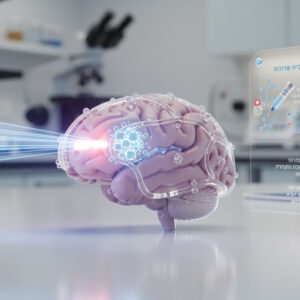
Israeli researchers at Hebrew University have pioneered a non-invasive technique to breach the blood-brain barrier, opening pathways for Alzheimer’s treatments that were previously inaccessible. By deploying focused ultrasound waves alongside microscopic gas bubbles, the method temporarily permeates the brain’s protective shield, enabling drugs to reach amyloid plaques at the disease’s core. This development, detailed in a January 2026 Jerusalem Post article, marks a potential shift in tackling neurodegeneration.
The blood-brain barrier, a fortress of tightly packed endothelial cells, has long thwarted drug delivery to the brain, limiting therapies for conditions like Alzheimer’s. Hebrew University scientists, led by team members including Prof. Uri Shmueli and Dr. Eyal Zussman, administered ultrasound pulses that cause injected microbubbles to oscillate and create fleeting gaps in the barrier. In mouse models, this allowed a dye to infiltrate targeted brain regions, visualized through MRI, proving the technique’s precision.
Overcoming Decades of Drug Delivery Barriers
Alzheimer’s afflicts millions globally, with amyloid-beta plaques and tau tangles evading most pharmaceuticals due to the barrier’s selectivity. The Hebrew University approach builds on prior ultrasound research but refines it for clinical viability, targeting specific hippocampal zones vulnerable in early disease stages. “This could revolutionize treatment by delivering antibodies directly to plaques,” the researchers noted in their study published in Theranostics, as reported by the Jerusalem Post.
Clinical translation remains the next frontier. While preclinical results show no lasting barrier damage and reversible effects within hours, human trials are essential to confirm safety and efficacy. The team plans Phase I studies, drawing interest from pharmaceutical giants eyeing combination therapies with anti-amyloid drugs like lecanemab.
Preclinical Precision and Safety Data
Experiments involved C57BL/6 mice injected with Definity microbubbles, followed by 1.5 MHz ultrasound at 0.6 MPa peak pressure. Post-sonication MRI with gadolinium contrast revealed enhanced permeability in sonicated areas, quantified via signal intensity ratios. Histology confirmed intact neurons and vessels, with barrier integrity restored by 24 hours, per Jerusalem Post coverage.
This method echoes earlier work, such as a 2023 Hebrew University study on mitochondrial targets for Alzheimer’s, reported by the Jerusalem Post. That research proposed therapies controlling cellular deterioration, complementing today’s delivery innovation. Separately, a 2024 Hebrew University effort mapped 1.65 million brain cells to predict Alzheimer’s trajectories 20 years ahead, per The Times of Israel.
Building on Israel’s Neuro Research Momentum
Posts on X highlight broader excitement around Israeli science, with the Jerusalem Post sharing advances like a 2023 molecule curing Alzheimer’s symptoms in mice, covered by The Times of Israel. Recent web searches reveal no direct updates on this ultrasound trial as of January 2026, but sentiment on X underscores Israel’s role in neurodegeneration, including a 2024 bacillus Calmette-Guérin vaccine trial for prevention, noted in the Jerusalem Post.
Funding from the Israel Science Foundation and Hebrew University supports scaling. Challenges include optimizing bubble dosage to avoid inflammation and ensuring uniform coverage across human brain sizes. Industry insiders watch closely, as this could pair with 2025 treatments slowing progression, though access remains limited to the wealthy in Israel, per Ynet News.
Pathways to Human Trials
The technique’s modularity allows integration with existing drugs, potentially amplifying efficacy of infusions like aducanumab. Researchers emphasize MRI guidance for real-time targeting, minimizing off-target effects. A 2024 Jerusalem Post piece on diagnostic bridges to treatment underscores this synergy, quoting experts on innovation pipelines.
Regulatory hurdles loom, with FDA and EMA prioritizing non-invasive brain therapies post-COVID vaccine precedents. Collaborations with firms like Insightec, pioneers in focused ultrasound for tremors, could accelerate. Web updates confirm ongoing trials for similar tech in glioblastoma, bolstering confidence.
Industry Partnerships and Investment Surge
Hebrew University’s ecosystem, including its 2023 mouse cure via novel molecules, positions it centrally. X discussions amplify these feats, with Jerusalem Post posts garnering thousands of views on cancer and diabetes breakthroughs signaling investor appetite. A 2025 Ynet report flags equity issues in Israel’s pricey Alzheimer’s infusions, urging basket inclusion like oncology drugs.
For insiders, the ultrasound-microbubble combo’s cost-effectiveness—under $10,000 per session versus gene therapies—promises scalability. Early detection from Hebrew U’s cell mapping enhances timing, projecting interventions pre-symptoms. This convergence could redefine Alzheimer’s pipelines, blending delivery, diagnostics, and prevention.
Global Stakes and Future Trajectories
from WebProNews https://ift.tt/NkLyz8j


No comments:
Post a Comment