
Amazon’s Silent Listener: How Bee’s AI Wearable is Reshaping Personal Tech Post-Acquisition
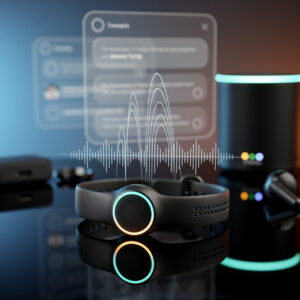
In the fast-evolving world of wearable technology, Amazon’s acquisition of Bee in July 2025 marked a significant pivot toward integrating artificial intelligence into everyday devices. Bee, originally a startup known for its discreet bracelet that captures audio from users’ daily lives, has undergone substantial transformations under Amazon’s umbrella. This move not only bolstered Amazon’s AI portfolio but also raised questions about privacy and utility in personal assistants. Drawing from recent updates, Bee’s integration into Amazon’s ecosystem has introduced features that blend seamlessly with services like Alexa, promising a more intuitive user experience.
The acquisition, first reported by TechCrunch, involved Amazon snapping up the company for an undisclosed sum. Bee’s core product—a wrist-worn device that records conversations and generates transcripts—aligned perfectly with Amazon’s ambitions in voice-activated tech. Post-acquisition, development has accelerated, with Bee’s team focusing on enhancing AI capabilities to process audio without storing raw data, emphasizing a privacy-first approach. This shift addresses early concerns highlighted in coverage from The Verge, where the device’s constant listening feature sparked debates on surveillance.
Industry insiders note that Amazon’s strategy here is to create a cohesive AI network, where Bee serves as a mobile extension of home-based assistants. Recent integrations allow the wearable to sync with Amazon’s cloud services, enabling real-time task management and reminders derived from casual conversations. For example, mentioning a grocery list in a chat could automatically populate an Amazon shopping cart, streamlining e-commerce interactions.
Advancements in AI Processing and User Privacy
Since the buyout, Bee has rolled out updates that refine its audio analysis algorithms, making them more accurate in noisy environments. According to a detailed piece in Engadget, the company has been “busy” incorporating machine learning models trained on diverse datasets to better understand accents and contexts. This evolution is crucial for global adoption, as wearables must cater to varied linguistic patterns without compromising on speed or battery life.
Privacy remains a cornerstone of these developments. Amazon has implemented end-to-end encryption for transcripts, ensuring that only processed insights are stored, not the original audio. This approach mitigates risks associated with data breaches, a topic extensively discussed in forums like Reddit’s technology subreddit, where users expressed mixed sentiments about the acquisition. While some praised the innovation, others worried about Amazon’s data-handling track record.
Furthermore, Bee’s software now includes customizable privacy settings, allowing users to define “no-record” zones or times. This feature, inspired by user feedback post-acquisition, demonstrates Amazon’s responsiveness to consumer concerns. Insiders suggest this could set a new standard for ethical AI in wearables, potentially influencing competitors like Apple and Google.
Integration with Amazon’s Broader Ecosystem
Bee’s wearable has evolved beyond mere recording; it now acts as a proactive assistant. Recent firmware updates, as outlined in About Amazon, introduce voice notes that convert spoken ideas into actionable items, such as calendar events or to-do lists. Co-founder Maria de Lourdes Zollo shared insights on how this fosters a “personal AI companion” that anticipates needs based on habitual patterns.
The device’s compatibility with Apple Watch apps, a holdover from Bee’s pre-acquisition days, has been expanded to include Android integrations, broadening its market reach. This cross-platform strategy is seen as Amazon’s bid to challenge dominant players in the wearable space, where fitness trackers have long overshadowed AI-focused gadgets.
On the hardware front, prototypes hint at sleeker designs with improved microphones and longer battery life. Sources from Phandroid describe how Bee now generates daily insights, summarizing key moments from a user’s day without requiring manual input. This feature turns passive recording into active productivity tools, appealing to professionals who juggle multiple tasks.
Market Implications and Competitive Dynamics
The acquisition’s ripple effects extend to Amazon’s overall AI push. As detailed in GeekWire, Bee is part of a larger effort to extend Alexa beyond smart speakers into wearables and mobile apps. This multi-device approach aims to close the gap with rivals like ChatGPT and Gemini, offering seamless AI experiences across platforms.
Industry analysts point out that Bee’s technology could revolutionize sectors like healthcare, where continuous monitoring of patient-doctor interactions might improve record-keeping. However, regulatory hurdles loom, particularly around data privacy laws in the EU and US. Amazon’s proactive stance, including compliance with GDPR, positions it favorably, but ongoing scrutiny from watchdogs remains a challenge.
Social media buzz on X (formerly Twitter) reflects growing excitement, with posts highlighting Bee’s potential for creative applications, such as aiding writers by transcribing brainstorming sessions. While some users jest about living in a “Bee Movie timeline,” others seriously discuss its implications for personal data sovereignty, underscoring the device’s cultural impact.
Innovations Driving User Adoption
Post-acquisition innovations include enhanced natural language processing, enabling Bee to discern sarcasm or emotional tones in conversations. This subtlety, not present in earlier versions, enhances the accuracy of summaries and suggestions. Drawing from Forbes, the acquisition is viewed as a strategic bet on wearable AI differentiating Amazon in a crowded market.
Battery efficiency has seen marked improvements, with new models lasting up to 48 hours on a single charge, thanks to optimized AI chips developed in collaboration with Amazon’s hardware teams. This addresses a common pain point in wearables, where power consumption often limits functionality.
User testimonials, shared across platforms, praise Bee for its role in memory augmentation—helping recall details from meetings or casual talks. For remote workers, this has proven invaluable, integrating with tools like Microsoft Teams or Zoom to provide post-call recaps automatically.
Challenges and Future Trajectories
Despite these strides, challenges persist. Privacy advocates, as noted in various online discussions, continue to question the ethics of constant audio capture. Amazon counters this by emphasizing opt-in features and transparent data policies, but rebuilding trust will take time.
Economically, the acquisition’s value is evident in Amazon’s stock performance post-announcement, with shares seeing a modest uptick amid AI enthusiasm. Insiders speculate that Bee could contribute to Amazon’s revenue through premium subscriptions for advanced features, similar to Alexa’s paid tiers.
Looking ahead, potential expansions include visual capture via integrated cameras, though this remains speculative. Partnerships with third-party apps could further embed Bee into daily life, from fitness tracking to smart home controls.
Evolving Role in Consumer AI
Bee’s journey under Amazon illustrates a broader trend toward ambient computing, where devices anticipate needs without explicit commands. This paradigm shift, fueled by advancements in edge AI, reduces reliance on cloud processing and enhances responsiveness.
Comparisons with competitors reveal Bee’s unique edge: its focus on conversational intelligence over biometric data. While Fitbit and Apple Watch dominate health metrics, Bee carves a niche in cognitive assistance, potentially appealing to knowledge workers and creatives.
Feedback loops from users are driving iterative improvements, with Amazon hosting beta programs to test new features. This user-centric development model ensures that Bee evolves in line with real-world needs, fostering loyalty in a fickle tech market.
Strategic Insights for Industry Players
For other tech giants, Amazon’s Bee strategy offers lessons in acquisition integration. Swiftly merging startup innovation with established infrastructure has accelerated time-to-market for new features, a tactic worth emulating.
On the investment front, venture capitalists are eyeing similar AI wearable startups, anticipating more consolidations. The success of Bee could spark a wave of funding in voice AI, reshaping priorities in tech funding cycles.
Ultimately, Bee’s post-acquisition path underscores Amazon’s commitment to dominating personal AI. As the device matures, its influence on how we interact with technology—blending seamlessly into our lives—will likely define the next era of consumer electronics.
In reflecting on these developments, it’s clear that Bee is not just a gadget but a harbinger of AI’s deeper integration into personal spheres. With ongoing refinements, Amazon positions itself at the forefront of this transformation, balancing innovation with ethical considerations to win over skeptics and enthusiasts alike.
from WebProNews https://ift.tt/x978eKN


No comments:
Post a Comment