30-second summary:
- Recent data from Roku shows that 85% of Americans are now streamers. Making them feel excited about some new CTV app is not a piece of cake but also not totally unfeasible.
- In the dark, dark woods of AdTech, Connected TV (CTV) apps are a dime a dozen. This may sound spooky enough for a proper Halloween horror story.
- The market is currently dealing with many potentially brilliant content creators having cold feet when thinking of launching their own CTV channels.
- Alex Zakrevsky, CEO of Allroll, helps you overcome these fears.
In the dark, dark woods of AdTech, Connected TV (CTV) apps are a dime a dozen. This may sound spooky enough for a proper Halloween horror story. In reality, the impressive growth of the CTV market strengthened the competition and endowed it with many “survival of the fittest” features. As a result, the fact that the number of connected TV devices in the US reached 400 million this year, as per Leichtman Research Group, is not that appealing and comforting for channel owners anymore. The market is currently dealing with many potentially brilliant content creators having cold feet when thinking of launching their own CTV channels. To overcome these fears, it’s important to embrace them first.
1. Failing to start
There is a belief that developing a channel from scratch requires either proficient coding skills or paying a fortune to those who have such skills. So, instead of starting, let’s say a Roku channel, content producers tend to be terrified of the prospect of coding or not being able to make ends meet. To lower the level of anxiety, it’s always useful to look at available options.
If watching someone building a channel for you is the most preferable model, specialized agencies are the best choice to make. These companies usually have their own in-house developing teams and charge a set price or a revenue share, which gives room for maneuver. Alternatively, there are freelance developers whose price tag normally starts from $25/hour on Upwork.
The downside of both solutions is that they will depend on developers’ availability and may eventually turn out to be slow-moving and quite pricey. Yet, they will definitely help have less on one’s plate. At the same time, there are ways of developing a CTV app without going bankrupt or going full-on with programming languages.
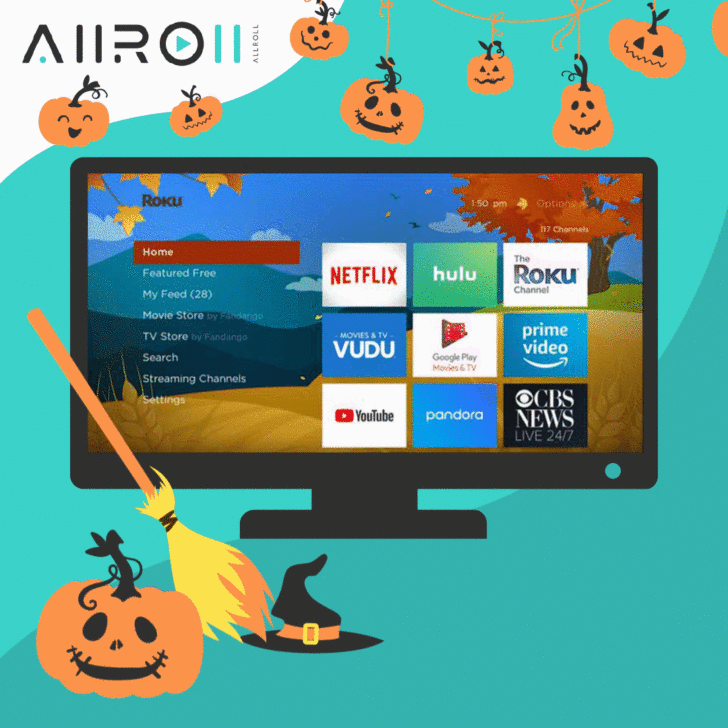
In addition to custom channel development, some CTV platforms, such as Roku or Amazon Fire, offer their no-coding solutions for channel owners. Roku, for example, has its on-the-house model called Direct Publisher. Yes, this tool limits customization, monetization, and third party analytics options, but it does save time, money, and, more importantly, keeps channel owners with no coding experience sane. As a compromise between basic and advanced features, there’s a moderately-priced service for developing Roku channels that is cloud-based and code-free. Instant TV Channel costs $45.95/month. It creates and maintains a video feed as well as offers a range of customization opportunities. Consequently, if coding isn’t a channel owner’s strong suit, it’s needless to pay millions or spend months trying to make sense of programming. What’s crucial is the idea that drives a publisher and the content that will drive potential viewers.
2. Being mediocre
As CTV ad spend is surging and has already increased by 19% this year, based on IAB’s figures, more and more publishers are getting on board each day. This makes creating original content pretty challenging. Ultimately, channel owners are surrounded, on the one side, by fears of meeting their channel-doppelganger and, on the other side, being ‘eaten alive’ by channels-giants, like Netflix, Animal Planet, and others. Sounds quite dramatic, doesn’t it? If someone is still wondering whether there’s any space left for new apps in the CTV universe, it’s worth checking on how many people delightfully watch channels, which others would not even think of, in the screensavers or special interest sections on the Roku platform.
As for the chances of becoming a copycat of your own concept, great minds do think alike but most of the time not so literally. Therefore, becoming a successful channel owner calls for out-of-the-box thinking, doing some research, and being generally both strategic and brave.
3. Having zero installs
Recent data from Roku shows that 85% of Americans are now streamers. Making them feel excited about some new CTV app is not a piece of cake but also not totally unfeasible. So, if there is a genuine fear that no one will ever install a new Roku channel, here are several promotional techniques for not letting this happen.
First of all, it’s essential to make as many people as possible aware of a new channel via a website, emails, and social media. This is absolutely free, a bit time-consuming but worthwhile. Secondly, it’s important to attend online/offline events and accept all networking opportunities where a channel owner can meet potential viewers and introduce a channel to them. Then, it’s good to think of collaborating with like-minded channels so as to make friends with indirect competitors and promote each others’ content.
Additionally, it would be beneficial to be included in one of those guides with top new channels one should install. For this purpose and in general, getting feedback on the content from influencers can be really game-changing. Finally, in case there’s a request to level up the current promotional approach, it’s time to consider monetization.
Roku has its self-serve platform for growing publishers’ audiences using the tailored display and video ads. While its CPM rates can range significantly with no guaranteed number of installs, the platform is quite flexible in terms of budgets and can meet various needs and wants. What’s more, there’s the Allroll marketing platform aimed to drive viewers to Roku channels by the means of advanced targeting options and personalized advertising messages. It provides higher apps’ exposure and, ultimately, + 60% installs with the same budgets as those required for the native platform. So, there’s definitely a lot one can do to enhance the channel’s results without getting overwhelmed.
4. Surrendering to YouTube
When talking about video channels, there is always an elephant in the room. This elephant’s name is of course YouTube. Some publishers are still skeptical about CTV platforms, thinking their videos will never perform there as well as they do on good old YouTube. They might as well imagine having to stick to one platform to have windfall gains. In fact, there’s much more to this than meets the eye.
No matter how successful, YouTube is just a service. At least for a content owner and not an employee of YouTube. Thus, there is no need to choose between different stages on which to play the content. On the contrary, it is better to use as many platforms as one can manage to reach out to as many viewers as possible. This is the smart way of promoting video content, raising brand awareness, and maximizing profit in the soaring digital space.
5. Getting lost in streaming obscurity
It’s not particularly a secret that the world of streaming is currently run by four major operating systems: Roku, Amazon Fire, Android TV/Google TV, or Apple TV. The first two have the biggest share of 100.2 million (Roku) and 72.7 million (Amazon Fire) users, according to eMarketer. The rest of the players are of somewhat a lower caliber. Picking one platform for an app may seem like a tough job, bearing in mind their characteristics resemble each other in so many ways. For instance, Roku uses Audience Network with broad geolocation options for targeting and a revenue share model for monetization within its Direct Publisher mode. In the meantime, Amazon Fire’s code-free Amazon Creator offers extensive data on consumers’ preferences collected from Amazon devices and a commission-based monetization. This may rightly seem quite confusing.
The reasonable tactic for not getting puzzled by the best bets is to follow the audience. People mainly prefer streaming platforms that relate to an operating system they are plugged into in their everyday lives. So, if they have an Amazon Prime account that they actively use or they are fond of Alexa, these consumers are likely to go for Amazon Firesticks in their streaming experience.
Similarly, Apple products’ adepts will favor Apple TV, whereas Android users will stand for Android TV. Roku is sort of a black sheep in this family, as it has always been solely TV-oriented. Though, it’s extremely user-friendly, very affordable and its devices were voted the best of this crowd on numerous occasions. Without beating about the bush, knowing your audience is the key.
Takeaways
The CTV market has been on the rise offering publishers more advanced opportunities to reach their viewers. Meanwhile, the stakes of being bog-standard or outdated got higher, as the competition became more severe. This left some content producers panicked about their chances to succeed instead of being focused on bringing new creative ideas to life. After all, living in fear is counterproductive. Hence, the best method of facing fears is to meet them in person. The launch of a new CTV app will consist of a series of important rendezvous on each of the steps: a platform or platforms to use, development strategy, content ideas, promotional tools, and monetization models. It’s vital to pay attention to every single decision throughout this journey. Now, time to get down to business.
Alex Zakrevsky is the CEO of Allroll marketing platform for CTV/OTT channel owners. Innovator, product lover, CTV, and programmatic enthusiast. He believes that the quality of the product always wins.
The post Five fears of channel owners: What spooks you about creating your own CTV app? appeared first on Search Engine Watch.
from Search Engine Watch https://ift.tt/3oIQxOj


