Thursday, 1 October 2020

The latest news in SEO and WordPress: September 2020

Another month, another SEO news webinar at Yoast HQ! For the uninitiated, in these webinars, Jono Alderson and myself, run through the most important bits of news relevant to us and to you. We cover many SEO topics and expand on internet marketing and the state of the web itself. Plus, we’re having a ton of fun doing so and you get to ask your questions as well. One regular viewer already called the webinar one of the best hours of his month!

Stay on top of the latest changes in SEO by getting a Yoast SEO academy training subscription. This also gives you the opportunity to watch earlier videos of SEO News and develop vital SEO skills by completing a variety of courses.

What’s new in Google

The most important news from Google is them trying to aim for ‘safer’ search results. With everything that’s going on right now, it makes sense for them to highlight this. From the outside at least, it looks like Google is doing everything it can to make sure that the search results won’t be vandalized with the upcoming election — and everything after that. To do this, they need to become even better at separating fact from fiction.

How does Google corroborate facts? How does it validate them? These days, everything happens so fast and not everyone is speaking the truth. But what’s truth? They are investing a lot in technologies to understand those sentiments. BERT, for instance, helps them understand language better. And in the background, Google’s fact checking Schema can help them distinguish facts from fake news.

As this technology evolves, it is has other consequences. As a site owner, you will also come into contact with this. It is going to be more important to be truthful and you have to prove that you know what you are talking about. You won’t be able to rank anymore if you are trying to be someone you aren’t, for instance. If you tell people the grass is purple while the consensus is that it’s green, you’ll strike out.

Google hiding search terms in ads

Google has made it harder to get precise keyword data for your ads. That’s really important in the ads world because some of those keywords might be expensive to bid on, and you might end up bidding on keywords that you don’t want to be bidding on because it’s not a good fit because of an error. Or you might be missing data on small keywords that convert really well, but now you have no idea. Very annoying. We’ll be flying largely blind like when Google removed organic keywords.

This move won’t make Google more money. If nothing else, I think this will cost Google money, which is why I think that they’re doing this for legal reasons.

Google also launched a couple of new search features, one being the new nearby filters for products. This shows stores around you that are selling that product you want right now. It even mentions that it is available for curbside pickup. This is really cool, as it might get people to take their bike and go to the store to pick it up instead of ordering online. I know I would!
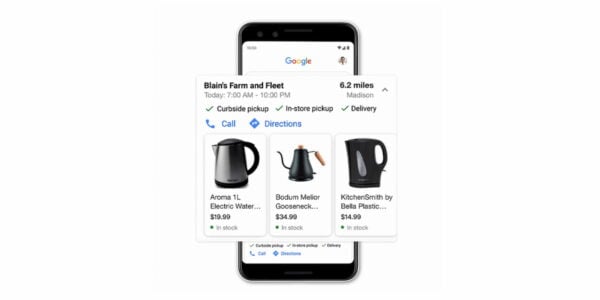
Google’s new nearby shopping filter on mobile

New Schema for licensing images and eCommerce

More Schema is always a good thing. We’re obsessed about Schema because this is the future of how we communicate with search engines. This month, Google added new image licensing labels to Google Images, powered by Schema. These give the owner of an image the chance to highlight the license of a particular image in Google. It gives them more control over how people can uses these images and even make money from it by selling them on a dedicated page. We’re looking to see if we can get this built in to WordPress.

If you have an online store, Google now also lets you describe your shipping details for use in Google Shopping. Google uses the shippingDetails Schema to understand what your delivery times are or what you charge for shipping.

What’s new in Bing and Microsoft

Bing has been quite busy improving their search experience using AI. Their autosuggest and Also Asked features should now be much smarter. Also, as mentioned last time, there are new goodies to be found in the Bing Webmaster Tools. This time it’s a solid URL Inspection Tool that let you uncover issues.

Microsoft as a sole licenser of GPT-3

Microsoft has teamed up with Open AI to exclusively license to the GPT-3 language model, which is a topic that we talked about in our August webinar. The GPT-3 stuff certainly is incredible, and if Microsoft is commitment to using it at any layer of their technology, they can build some awesome stuff. Something to keep a close eye on.

What’s new in Facebook

Facebook is under a lot of scrutiny right now and we’re also not very excited about the two bits of news we discussed.

Breaking the embeds

Starting on October 24, you can no longer simply drop a link to your Facebook or Instagram post in your WordPress post and see an embed appear. Facebook is killing the API that handles that. In it’s place, every site will need an API key to have that work. Luckily, there are plugins that will allow this to keep on working. But WordPress can’t ship with an API for this, so you’ll have to do it yourself.

Facebook and Instagram embeds should remain working for stuff that’s already embedded, but we’re not 100% sure that they will, new embeds will become impossible without a plugin. Of course, all of this is an ongoing desire to have everything happen within the walled garden of Facebook itself.

Facebook Business Suite

Which brings us to the next topic of more walled garden stuff: Facebook’s Business Suite. We’ve seen this coming for a while. You can now use Facebook as the singular resource for your business. They really want you to see Facebook as the everything-you-need eCommerce solution. Facebook doesn’t want you to have a website, and they don’t want you to be in the Yellow Pages. For Facebook, Facebook is where you need to be. I’m not too delighted about more walled gardens.
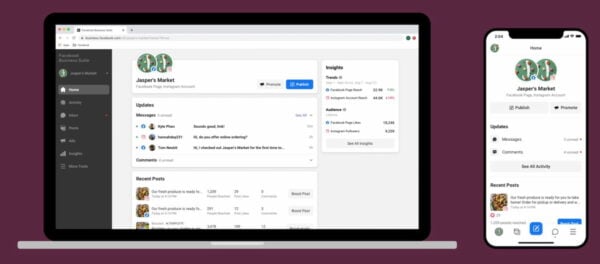
Facebook Business Suite combines a lot of features

Let me remind you of one of my golden rules: own your own online property. Have a website where you can do whatever you want. Don’t be tricked into having everything on a third party platform just for the sake of convenience.

What’s new in WordPress

WordPress is at the heart of everything we do and we try to communicate about that. We not only build a plugin that helps you gain success in the search engines with your WordPress site, but we are actively helping build WordPress itself. At the moment we have four people working fulltime on WordPress and the fifth one — an awesome lead for our WordPress team, Francesca Marano — started today.

Google launches the Web Stories WordPress plugin

Google has released a Web Stories plugin for WordPress that allows you to build web stories that look like the example below in the search results. This is some of the best UI I’ve seen built on WordPress. Plus, it’s all open technologies. Much of the stuff Facebook and Instagram do goes against the thought of the open web, while this is very open web. It’s an open source competitor or equivalent to Instagram’s story format. Visual storytelling is a thing and this Web Stories plugin will help everyone build cool stories on your own website.
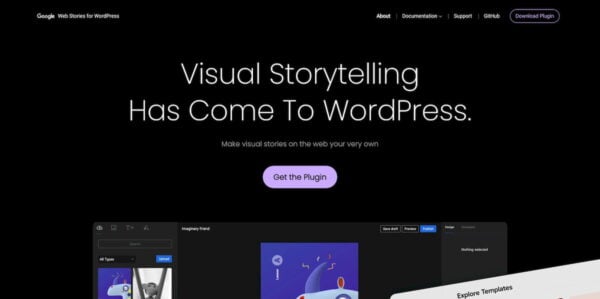
The Web Stories plugin enables visual storytelling on your own website

The team at Google, impressively, built this in a relatively short time, and it shows you how much Google is invested in the WordPress ecosystem, which makes me very happy.

What’s new in Yoast SEO

On the day of the webinar, we launched Yoast SEO 15.0. While that sounds like a huge deal, it’s actually just a continuation of our versioning. That’s not to say this is a small release, which it isn’t, but might be interpreted as one. I am actually very happy with Yoast SEO 15.0 as it gives you a couple of great new tools and improvements.

For one, we’ve completed our Gutenberg roadmap and finally have everything from the Classic Editor meta box ported over to the block editor sidebar. Yes, you can do all your post improvements and settings from the sidebar. We’re big fans of the block editor so where very excited to bring you this.

In addition, we also launched a table of contents block for the block editor. This is a very simple, but powerful feature that lets you drop in a TOC with the click of your mouse/tap of your finger. The contents are generated automatically with IDs — which also lets you get jump links for your content in Google. Last but not least, Yoast SEO 15.0 comes with full Arabic word form support in the Premium analysis.

Other news

We can’t list everything we talked about in the SEO news webinar, but there are a couple of asserted bits of news that I wanted to highlight.

Cloudflare and the Wayback Machine

Cloudflare is on fire. It is a business that bring some of the most cutting edge technologies to the make. It offers a lot of services to improve the performance of your site, while also keeping it safe from hackers. At Yoast, we use their tools and we love them. If don’t know who they are, please check them out. They are building the future of the web and we owe them for doing that.

Cloudflare is announcing new features and technologies left and right, but I wanted to mention the partnership they struck with the Wayback Machine. There used to be a feature where if your website goes down thanks to a crash at your hosting, Cloudflare would continue to serve a version of your website from their cache. This meant, your visitors get to see a cached version of your site while you fix. They’ve improved that so works with the Wayback Machine. Now, they can get a much more up-to-date and much more accurate version of your site. It’s nice partnership that makes websites more robust and a bit more secure.

That shared hosting research

Last month, there was an article doing the rounds which led to a lot of discussions. It was a comprehensive and pretty well done study on the ranking differences between sites hosted on a shared hosting platform and sites on a hosted platform. The theory has always been that sites that potentially share hosting with spammers, malware spreaders, porn and other low quality, and maybe even harmful sites would be detrimental for performance in the search results.

With the necessary caveats, this research proved that theory to be true — although it is hard to make any judgments based on this. Of course, John Mueller from Google already said this isn’t how it works and there’s no value in this. But, we all know that’s not entirely true.

Even if this is flawed research, it is further evidence of one of our arguments to win at SEO: invest in a good hosting plan! It’s not that shared hosting is bad, but if you make money with your website don’t skimp on proper hosting. Every dollar you invest in this will pay dividends. Get better hosting is what we say to everyone. Do it!

That’s it for the SEO news in September

Join us next time for another SEO news webinar! Sign up for Yoast SEO Academy and you’ll automatically be invited once we’ve planned a new date for our next webinar. Thanks for reading and we hope to see you soon!

The post The latest news in SEO and WordPress: September 2020 appeared first on Yoast.


from https://ift.tt/34geUcz

How to Include Your Customer Support Team in Your Marketing Strategy

Organizational silos tend to be one of the biggest issues that prevent large and small businesses from innovating.

That is quite understandable: It is hard to innovate your business or marketing operations when information exchange among different departments is hardly ever happening.

It is especially sad when your customer support team is isolated as that team is likely to have crucial insights to share with the rest of the company. 

After all, your customer team is always at the forefront of customer interactions. For them your target audience is not mere numbers inside Google Analytics reports; they see and talk to real people on a daily basis.

Information exchange is crucial to a successful marketing strategy, and yet, the overwhelming majority of businesses (about 80% of those surveyed) say they lack any efficient process making cross-team information exchange possible.

If you really want to create a customer-centric marketing strategy, start by including your customer support team in that strategy.

1. Get your customer support team’s input on your buyers’ personas

Obviously, your customer support team talks to your customers on a daily basis. They are likely to know your target audience best!

With their help, you can make more informed decisions when putting together your buyers’ personas.

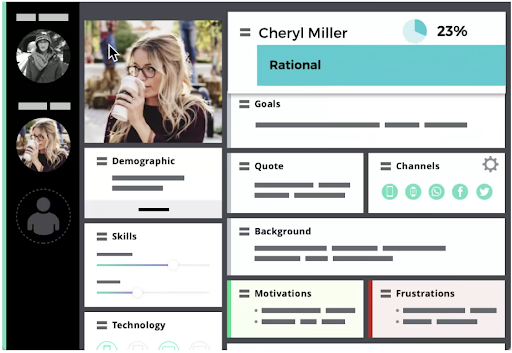
UXPressia offers a free persona building tool that includes a collaborative feature allowing various teams to work together. The collaboration is real-time, and several people may work on the same persona simultaneously:

UxPressia team building module

Additionally, you may want to involve your customers into more activities helping create more detailed personas:

  • Surveying your customers: Here is an easy and free way to create surveys and collect answers
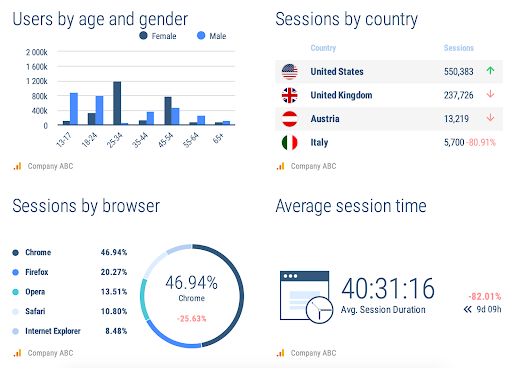
  • Getting access to basic analytics reports: Most customer support teams are completely unaware of how much traffic the site is getting and where it is coming from. Yet, having that information may help your team better understand your customers, and hence relate to their struggles and needs. Tools like Whatagraph allow you to put together easy-to-digest visual analytics report and email those to your various teams:

Whatagraph Analytics Report

Whatagraph makes web analytics reports visual and easy to understand. It is a good idea to set up weekly reports being sent to your team for them to know the basic demographics of your site visitors and how they engage with your pages.

2. Make your customer support team part of your content creation process

Customer-centric content strategy should include diverse content types targeting your customers’ interests and answering their questions.

Customer-facing content types include:

These need to fit your buyer personas.

Your customer support team should contribute their insight on each stage of customer-centric content production:

  • Brainstorming: Encourage your customer support team to keep a record of all questions they are receiving via email, phone, or on social media. These questions can be turned into great content ideas!
  • Creation: Ask your customer support team to supplement existing content ideas you are planning to develop with additional questions, ideas for visualizations that may be helpful, etc.
  • Revision: Get your customer support team’s feedback on already written pieces and ask if they feel those would answer your customers’ questions in full

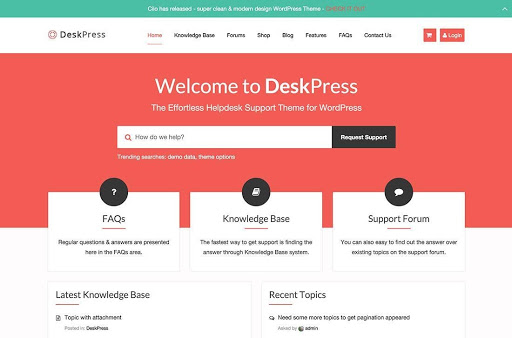
Going forward, you may want to turn multiple individual content assets into a lead generation project, like a course or a wiki. Here’s a nice collection of themes, plugins, and tools to create a knowledge base, a wiki or a FAQ section.

DeskPress themes, plugins, and tools

3. Include your customer support team into your social media marketing

These days the majority of your customers are very likely to choose social media to publicly request help or ask for help understanding your site. In fact, providing customer support through social media has lots of benefits:

  • Increased brand loyalty: Promptly answering a complaint increases customer advocacy by 25% (while failing to respond decreases customer advocacy by 50%)
  • Saving some money: Solving an issue on social media has been found 83% cheaper than doing it through a call center interaction. (Source)
  • Higher ROI: When a customer hears back from a brand on Twitter, they’re willing to spend 20% more on a product in the future. (Source)

When trying to use social media as a customer support channel, businesses are always faced with one problem: How to get the customer support team on social media without them having to spend hours trying to find actual customer support questions.

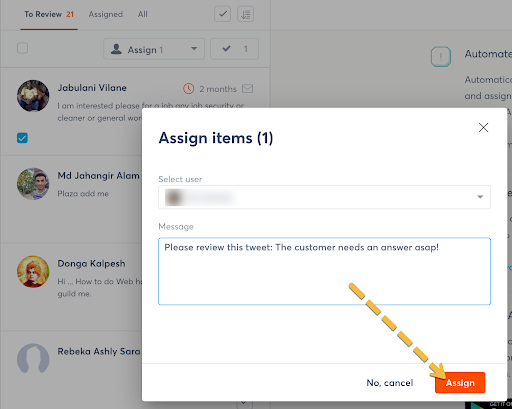
Agorapulse is a powerful platform that solves that problem by turning your social media listening process into a task management dashboard. With it your social media marketing team can do their job of promoting brand awareness while assigning social media mentions that sound like customer support questions to your customer support team:

Agorapulse social media management

It is also not a bad idea to include your customer support team into your competitor monitoring for them to know how they are handling public customer interactions.

Bonus: Keep an eye on your team’s progress

Finally, you are pretty sure your customer support team is both busy and efficient but just how busy and efficient are they?

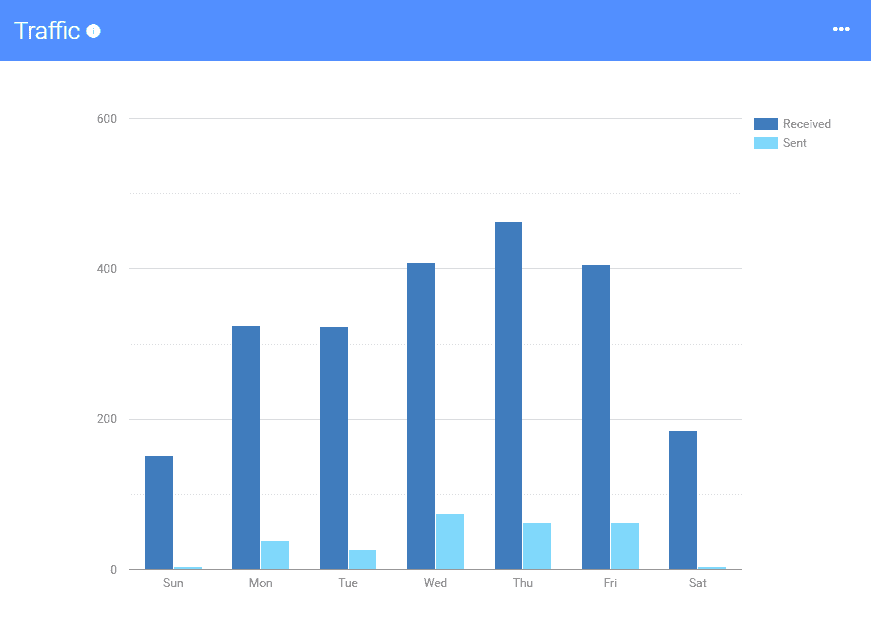
Email Analytics is an easy way to analyze your team’s activity. It connects to your Gmail or G Suite account to pull some data and turn it into graphs. The tool shows:

  • Which days of the week are the busiest in terms of emails received and replied
  • Which days tend to be the slowest (These are the days when you may want to include your team into your marketing efforts by asking for their input on content planning)

The tool will also help you identify less efficient team members and how fast your team tends to reply to your customers.

Email Analytics

Use the Email Analytics tool to identify which team members may be good candidates to be included in your marketing strategy.

Conclusion

In fact, your customer support team is likely to be your company’s biggest asset: After all, they talk to your current buyers on a daily basis accumulating priceless knowledge of what worries and triggers them. 

I like how Kristen LaFrance put it when discussing holiday marketing commerce strategy:

48% of 2018s BFCM sales came from existing customers, not new customers. Don’t risk a good chunk of these sales by focusing too heavily on “the industry” and turning a blind eye to your own customer base.

Trust your own customers, trust your customer knowledge

In our times of deep data access and easy access to industry trends and competitive intelligence, it is too easy to forget that what matters most is your actual customer and your company’s unique knowledge of them.

And who may possibly have more customer knowledge than your customer support team?

It is a shame they are so often disconnected from the rest of the company.

Use the ideas and tools above to include them into your marketing strategy and you may find them even more efficient and motivated!

The post How to Include Your Customer Support Team in Your Marketing Strategy appeared first on Content Marketing Consulting and Social Media Strategy.


from Content Marketing Consulting and Social Media Strategy https://ift.tt/3cMOWRS

Ecommerce Product Releases: October 1, 2020

Here is a list of product releases and updates for late-September from companies that offer services to online merchants. There are updates on social commerce, AI marketing, live streaming, personalization, conversational commerce, and installment payments.

The post Ecommerce Product Releases: October 1, 2020 appeared first on Practical Ecommerce.


from Practical Ecommerce https://ift.tt/3jjs5zK

Three uncommon on-page SEO analysis techniques (That move the needle)

30-second summary:

  • On-page SEO is one of the most effective ways to boost your organic search engine rankings, improve your website’s user experience (UX) offerings, and grow your business consistently.
  • But, without understanding your audience and measuring your results, how can you make changes or create strategies that actually make a difference? In short, you can’t.
  • To help you enhance your search engine optimization activities and grow your business, here we explore three uncommon on-page SEO analysis techniques, complete with examples, that you should use to your advantage.

With so many on-page elements to optimize, knowing where to start and what to prioritize can seem impossible. But don’t worry, because we’re going to show you three unique on-page SEO analysis techniques, as well as the exact tools we use at Bubblegum Search, to make the entire process easy and effective in equal measures.

Once you’ve got the insights and discoveries gained from these practical on-page analysis techniques, we’re confident you will earn higher engagement, increased rankings, and more conversions.

Disclaimer before we get started, we’d just like to say that we’re not affiliated with any of the tools mentioned in this guide—they’re platforms we find helpful for on-page SEO analysis techniques and other great alternatives likely exist too.

1. Improved UX content and functionality

Studies show that just one dollar invested in user experience (UX) offers an average return on investment (ROI) of $100 ( that equates to an ROI rate of 9,900%).

By making enhancements to the usability of your website pages, you will create a frictionless user experience.  If you understand your users’ intent through analysis and research, you will ensure the messaging, design elements, and layout of your webpage provide an answer to a specific question. 

In doing so, you’ll simplify the user experience by guiding the visitor through their journey, helping them to achieve their goal. Let’s look at our example:

To test specific performance and functionality-based elements of your web or landing pages, the Unbounce Landing Page Analyzer is a powerful tool:

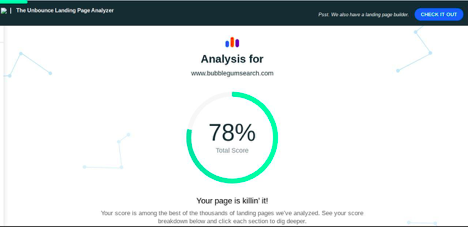
On-page SEO analysis techniques - Unbounce landing page analyzer

By entering a specific URL and outlining your page’s target key terms, Unbounce’s intuitive algorithm will provide a report that offers an overall page score while drilling down into relevant UX-centric elements.

In addition to page speed performance, content relevance, and trust & security ratings, Unbounce’s on-page analyzer tool offers a score on Message Match.  

When it comes to SEO, content really is king. If your on-page copy is rich, engaging, and fulfills its promise, you will increase your chances of ranking well for relevant search terms exponentially.

As Unbounce quantifies all of these essential UX and performance-based elements, you can benefit from a clear-cut snapshot of the elements that are currently working well and what needs improvement.

As you can see from the example, the overall page score of 78% suggests that the Bubblegum Search homepage is well optimized for UX and SEO. The report also shows that while trust and Message Match is at 100%, the page could benefit from improved conversion-centric design.

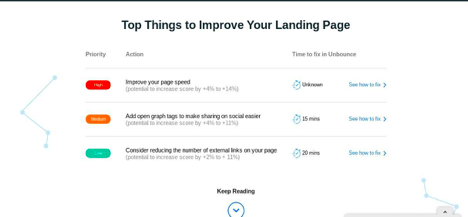
In addition to these invaluable insights, Unbounce’s page report also provides a color-coded priority list of detailed actions to help optimize overall page performance

on-page SEO analysis techniques - Unbounce site analysis

These data-driven insights are based on specific tactics and strategies you can use, designed to make your web pages more engaging, more functional, and as a result, optimized for improved SEO performance.

2. Multimedia and content enhancement

Not only does inspiring, value-driven content drive engagement but it also helps in creating a healthy, SEO-boosting backlink profile.

Compelling copy, eye-catching imagery, videos, and well-designed on-page multimedia content make powerful on-page SEO boosting assets.  

One of the most effective methods of analyzing the success of your on-page content, in terms of user engagement, is through heat mapping.

Heatmaps are essentially interactive data visualization tools that provide practical insight into how your website visitors interact with your web page and the content contained within it.

With heat mapping, you can learn about user intent and ultimately understand how to optimize your webpage content better for maximum SEO success.

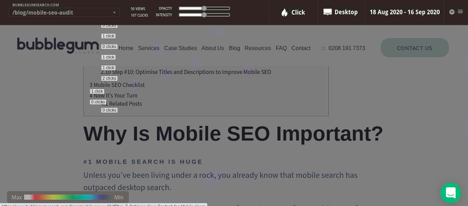
On-page SEO analysis techniques - Heat mapping

From the Mouseflow heatmap (screenshot above), you can gain a definitive snapshot of where users are focusing their attention, scrolling, and clicking when engaging with any of your pages. 

By focusing on click and scroll rates, you can see the percentage of visitors that drop off before ever seeing the curtain content lower down on the page.

If the content further down the page earns a lot of clicks or attention but a low percentage of views, positioning this copy higher up the page, for example, will help offer more value, increase user satisfaction, and boost dwell time, enhancing the overall performance of the content as a result.

When it comes to understanding the value and relevance of your on-page content, heat mapping is invaluable—and an Onpage SEO analysis technique worth your time and investment.

3. Mobile-first design optimization

We live in a time where there are more smartphones on the planet than humans

To succeed in today’s world, adopting a mobile-first approach is essential—and if you fail to optimize your website’s content for tablets and smartphones, your SEO rankings will suffer.

While many CMS’ like WordPress optimize your website content for the mobile experience relatively swiftly and simply, not every platform optimizes web pages for every screen size. 

And, by making sure that every aspect of your website is 100% optimized for mobile, you will boost your Mobile SEO rankings while driving more organic traffic to your website.


To understand the specific actions you must take to optimize your on-page content for mobile devices, analytical tools like Window Resizer (a Chrome extension that will help you get your screen resolutions just right) and WooRank will perform audits and provide data on the specific elements of your website that need changing to enhance your content, functionality, and user experience or fix existing errors, which include:

  • Mobile-only 404 links
  • Design elements and images that don’t fit the screen
  • Unplayable multimedia content
  • Poorly formatted text
  • Blocked JavaScript, CSS, and image files
  • Slow loading times

While an experienced web developer will carry out many of the responsive design-based improvements and fix any technical errors, by using mobile optimization analysis software, you can pinpoint any issues on mobile or tablet and work with them collaboratively to ensure the best possible outcome.

Bonus

To achieve complete mobile optimization success, check out our mobile SEO audit checklist.

By exploring these on-page SEO analysis techniques, you will connect with actionable metrics, data, and insights that will make your online offerings more engaging, boosting your brand authority and improving your organic search rankings in the process.

Invest in on-page SEO analysis techniques and you will remain relevant, adaptable, and visible in a digital landscape that is ever-changing. Don’t get left behind—the time to act is now.

Do you have any practical Onpage SEO tips of your own? Please share them with us by leaving a comment below.

Matt Cayless is an SEO Consultant at Bubblegum Search. He is an expert in Search Engine Optimisation having worked on campaigns for some of the world’s biggest brands and has a passion for helping SMEs grow online. When he’s not chasing the Google algorithm he can be found training for his next marathon. You can find him on Linkedin.

The post Three uncommon on-page SEO analysis techniques (That move the needle) appeared first on Search Engine Watch.


from Search Engine Watch https://ift.tt/2HND8DB

Pivoting with SEO: How Wildgoose reinvented itself during the COVID-19 crisis

30-second summary:

  • Distinctly’s SEO Manager, Matt Finch provides insight on how the team worked with events company Wildgoose to pivot quickly in the face of the COVID-19 pandemic.
  • When lockdown began, Wildgoose’s sales and pipeline took an immediate downturn, with a year on year drop in sales of 62% for the month of April.
  • Operational costs were tightened along with evaluations of the marketing and tech spend, and Wildgoose was forced to downsize its workforce by over 50%.
  • The company had to act quickly, having just launched a new website in anticipation of a record-breaking 2020.
  • What were the make or break moments and how did Wildgoose turn around the situation? Let’s find out, we hope you’re ready to make notes.

Matt Finch, SEO Manager at Distinctly, provides insight on how the team worked with events company Wildgoose to pivot quickly in the face of the Covid-19 lockdown.

Founded in 2003, Wildgoose is a global leader in corporate events and team building, winning numerous awards for the thousands of experiences it delivers across the world annually. When lockdown began, Wildgoose’s sales and pipeline took an immediate downturn, with a year on year drop in sales of 62% for the month of April.

Operational costs were tightened along with evaluations of the marketing and tech spend, and Wildgoose was forced to downsize its workforce by over 50%. The company had to act quickly, having just launched a new website in anticipation of a record-breaking 2020.

A swift decision was made to repurpose Wildgoose’s offering into a set of remote team building activities to connect people virtually. This pivot would ultimately prove not only to protect the company’s immediate future but to help it thrive, and was backed up by an SEO campaign from Distinctly with three-month areas of focus in place.

What focus areas were targeted?

  • Using SEO experience to predict changing search keyphrases after lockdown for queries at the top of the conversion funnel – weekly analysis using specialist SEO tools to tweak the optimization and hone phrases towards the key converting audience.
  • Focus link building activity to build the authority and organic visibility of the brand new remote team building pages.
  • Driving product awareness through an expert comment from Wildgoose founder Jonny Edser talking around the new products.

What was achieved?

The move has led to an overall increase in organic traffic of 56% and a sales increase of 158%, since the company’s lowest point in April. In addition:

  • 40 backlinks returned from relevant HR and business publications via linkable asset press release promotion.
  • Features in Forbes, the Chartered Management Institute, and Thisismoney.co.uk.
  • Wildgoose has seen a huge spike in demand for its virtual events, with recent web traffic figures up by 54% YoY and website conversions up 158% YoY in the 3 months since launch.
  • The same is happening with total revenue figures, with an increase of 180% in gross profit from April to May and 26% from May to June.
  • The website is now ranking in the top three search results for key traffic-driving queries including “virtual team building uk”, “virtual away day”, “virtual treasure hunts”, “virtual team quiz”, “remote team building solutions”, “team quizzes for work” and “virtual team escape room”.
  • The virtual team building products received excellent reviews and an average rating of 5* on TrustPilot. This is particularly crucial when encouraging people to enquire about a new product.

How it was done: Rethinking Wildgoose’s business model

Within days of the main revenue drivers effectively disappearing, Wildgoose founder Jonny Edser and the team were working on a way to secure the future of the business. The solution they came up with meant they could not only reshape their existing offering but take advantage of the sudden upswing in demand for virtual communication during the lockdown.

Jonny Edser says,

“By working proactively to deliver a brand new portfolio of remote team building activities that could be used to motivate employees while they worked from home, we could successfully evolve in this new socially-distanced world. At the same time, we could help thousands of companies to keep their teams engaged and connected during an uncertain and challenging period.

Having invested heavily in industry-leading technology in the years prior – and incorporated a new tech division in 2019 – we found that Wildgoose had a real headstart on competitors in the market who were all trying to switch their team building offering to something more technology-based.”

Using SEO for a successful launch

Before coronavirus, Wildgoose wasn’t ranking in the search results for any queries relating to “remote”, “virtual”, or “online”. With the business model shifting, search visibility needed to follow suit, so this needed to change as soon as possible. Wildgoose’s new products were one of the first to market, but they needed to be put in front of the right people.

Matt Finch, SEO Manager at Distinctly, says,

“The speed at which the market was evolving made traditional SEO more challenging than usual. We were (and still are) tweaking the optimization of the key Wildgoose pages a couple of times per week, as new data keeps showing up in Search Console . digital PR promotion of the new Wildgoose products were identified as key targets.”

Keyphrase and content optimization

People’s searching habits have changed since lockdown set in, so traditional keyword research has had to change with it. Instead:

  • Distinctly set about ‘guesstimating’ what people might be looking for, optimizing the key product pages for short-tail keywords and ‘top of the conversion funnel’ queries.
  • Once these started ranking, Google Search Console could then be used to see exactly what search terms were bringing users to Wildgoose’s product pages.
  • The pages could then be better optimized around these terms, becoming more targeted.
  • This was checked multiple times per week, representing the extraordinary circumstances (normally it would be once a month to once a quarter for websites in stable verticals).
  • This meant that new product and hub pages could rank highly for people’s new search queries. Rather than targeting “team building activities”, the site could now target and rank for specific, long-tail keywords like “remote team building solutions”, “virtual team building for employees working remotely”, “virtual away days” and more.
  • Speed was of the essence in the race to get ranking, as not many sites were originally targeting these queries.

Digital PR and link building

Wildgoose’s unusual experience of redesigning its business offering meant there were unique data and content that could be used in relevant publications to promote the new products. A survey into people’s experiences of remote working secured coverage and backlinks in over 40 HR and business publications, allowing links and authority to be built into the new product and category pages, aiding ranking chances.

An effective internal linking structure was also utilized, meaning pre-existing powerful pages were funneling authority to the new pages to boost them further.

MD Jonny Edser was promoted as an expert in the field of virtual team building, leading to features in Forbes, the Chartered Management Institute, and Thisismoney.co.uk. All of this combined to show Google that Wildgoose was leading the way in the field, and so deserved to rank highly for its new target keywords and queries.

Turning Wildgoose’s fortunes around

Wildgoose is now firmly focussed on the future, with a renewed energy around product development and new gameplay formats. The company is streamlining its sales and operational processes and scaling its business model based on updated forecasts for the months ahead. Expect to see more traditional team building activities made virtual over the coming months.

Matt Finch is SEO Manager at Distinctly, an award-winning search marketing agency.

The post Pivoting with SEO: How Wildgoose reinvented itself during the COVID-19 crisis appeared first on Search Engine Watch.


from Search Engine Watch https://ift.tt/34dyZjL

Top 17+ Metrics to Evaluate Content Marketing Success

Once upon a time, measuring content marketing success relied on assumptions and fuzzy conclusions. In a digital world, that was supposed to changed. But now the numbers overwhelm. CMWorld presenters pick the metrics that matter most. Continue reading

The post Top 17+ Metrics to Evaluate Content Marketing Success appeared first on Content Marketing Institute.


from Content Marketing Institute https://ift.tt/2Sj5s2o

New WordPress core team lead: Francesca Marano

I’m very excited to announce that Francesca Marano is joining team Yoast as our new WordPress core team lead. When we recently added two WordPress core contributors to our team, we hinted that we were looking for more people. We feel that to be in line with our core values of sharing and collaboration and making the web better, we need to do more. One of the roles we had to fill was for WordPress core team lead. The team is growing and it felt like the right time to hire a lead.

Avatar of Francesca Marano
Francesca Marano

Finding a lead for a team like this isn’t easy. You need someone who has experience leading people and projects. But you also need someone who knows WordPress like the back of her hand and can navigate all of its teams and intricacies with ease. When I realized we might able to hire Francesca I got very excited. She’s the perfect fit. We were on a call together and we quickly realized that we could (and probably will) talk for hours. But we also realized that we also should do this.

What does Francesca have to say?

In Francesca’s own words:

Team Yoast was my unofficial team since I joined the WordPress Community. I met Taco Verdonschot on the first day of the Community Summit back in Philadelphia in 2015. I had never been to a WordPress event before and being there on my own was quite intimidating. Taco made me feel at ease right from the start. In the following years we crossed paths many times with Yoasters. Sometimes we were at events with large teams, sometimes just a couple of people from different companies coming together as part of the same community. As peers and friends.

So I am very excited to become a Yoaster officially from today: this new role will allow me to contribute all my time to WordPress, a platform that gave me a lot, personally and professionally, and do it with some of the best minds in the community. Yoast’s commitment to give back to WordPress is unparalleled. I have a lot to learn and I can not wait to dig in.

Francesca has spent the last few years at SiteGround, which is a company that we’re good friends with, so we wanted to make sure all was good with them. I’m happy to see they were supportive of her joining our ranks and want to thank them for that.

Welcome Francesca!

With that, please join me in welcoming Francesca Marano to team Yoast. Let’s have some fun together while working on a better web!

The post New WordPress core team lead: Francesca Marano appeared first on Yoast.


from https://ift.tt/2SgUtGM