Showing posts with label Single Grain. Show all posts

Thursday, 12 November 2020

SEO Strategy for Startups: How to Win in 2021

SEO is still a viable channel for startups heading into 2021. However, make no mistake – it’s getting more difficult. In this guide, I am going to break down exactly how your startup can build a foundation for long-term SEO success.

But here’s the problem:

Modern search engines and their algorithms have become vastly more sophisticated, and therefore the SEO techniques that used to work many years ago no longer work today.

The so-called “SEO experts” told digital marketers that they needed large volumes of content and backlinks in order to be successful. While some of that is true, it’s a gross oversimplification of how modern SEO actually works. You can’t just pump out tons and tons of content and expect to win. Search engine optimization is more surgical than it’s ever been – meaning that quality is more important than quantity.

Don’t believe me? This is the exact SEO process I am using to grow organic traffic at Nextiva (we’re a business VoIP system with superpowers). Here is a snapshot of our organic keyword growth to prove that this really works if you follow the process:
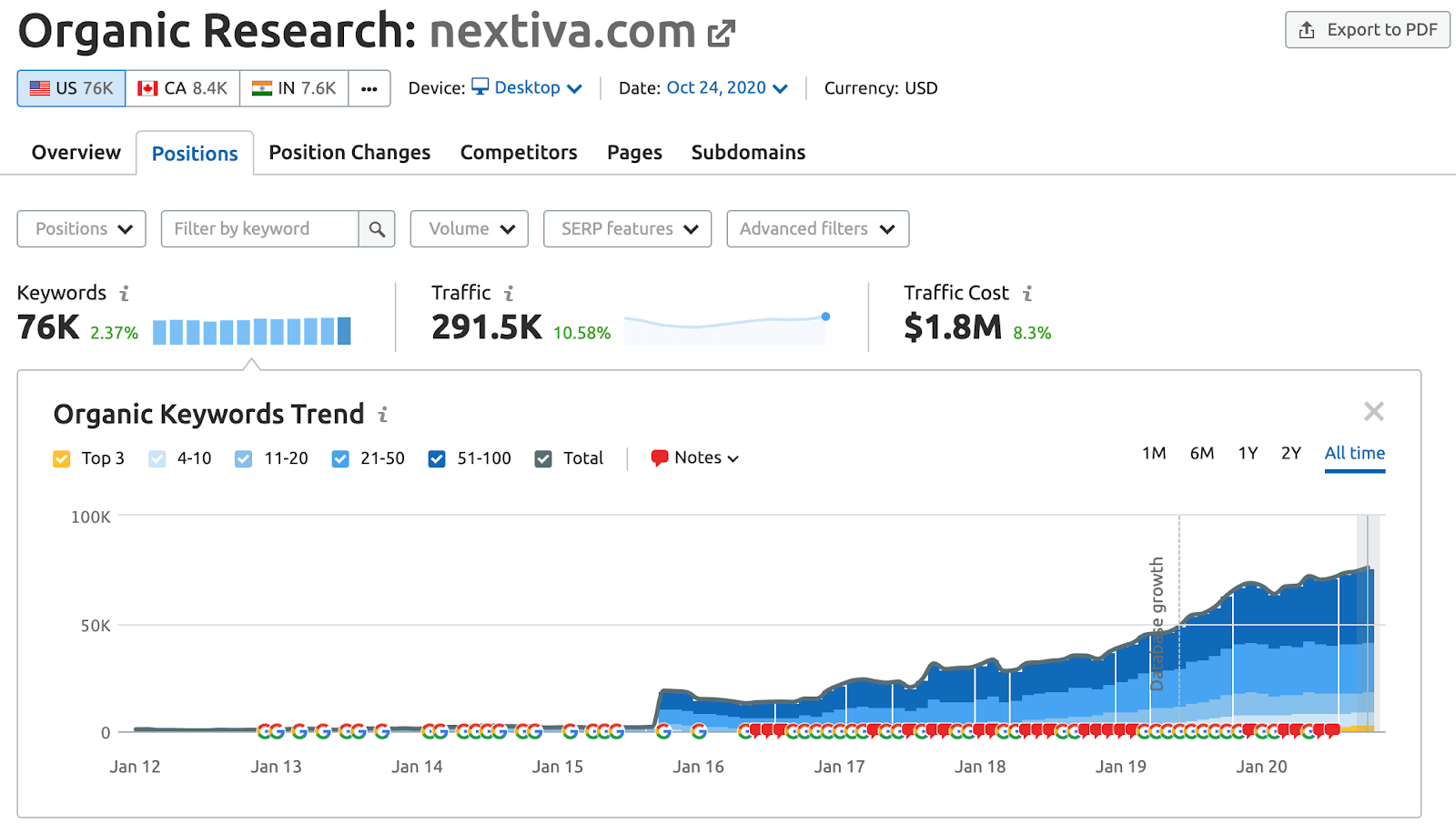
1 Nextiva Organic Traffic Growth

Click here to download it for free right now!

TABLE OF CONTENTS:


10 Golden Rules for Startup SEO Success

These are the top ten rules you must follow to see success for your startup's SEO strategy.

1) Set Your SEO Goals (& Be Realistic about the Outcomes)

This depends on the nature of your business and how you generate revenue. For example, if your business generates revenue by monetizing online ads or affiliate commissions, you may want to focus on organic traffic generation and content marketing.

If local SEO matters, I guarantee that your customers are doing “near me” searches as well as mobile and voice search:
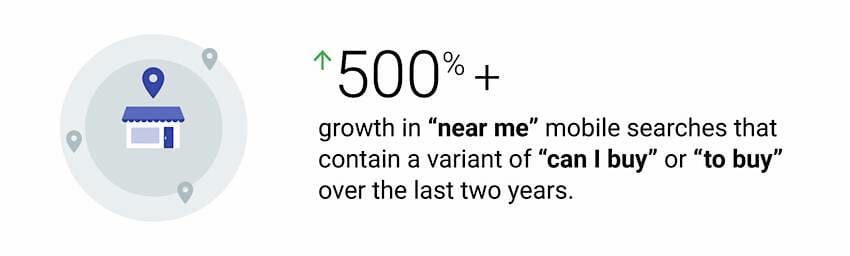
Near me searches

You might even approach SEO in unexpected ways. When I led the search engine optimization team at Pipedrive, we drove a ton of sign-ups optimizing for a specific keyword that wasn’t even directly related to our product:

We ranked #1 for a high-volume keyword – “sales management” (9,900 search volume) – just by focusing on solving a problem for a key customer segment.

My final advice on this: Don’t spend too much time trying to forecast SEO or predict how much organic search traffic you should be getting. Remember, you’re a small business and you can’t afford to not be executing. You’re better off experimenting and learning by doing. Get in the trenches and go make something happen!

If you’re a marketing manager and need help laying out your OKRs, you should look at some goal templates for inspiration.

Dive Deeper: 10 Effective SEO Techniques to Drive Organic Traffic in 2020

2) Create a Basic Measurement System

Determine which metrics to measure as well as how and why you should do so. Build a strategy around these metrics, but don’t go too crazy. You don’t need anything too fancy or too complicated.

Then take key actions such as:

Dive Deeper: Google Analytics for Content Marketing: How to Track and Improve Your ROI

3) Crawl Your Website and Fix Technical SEO Issues 

This step should be taken particularly if you’ve been producing content for a while.

Search engine crawlers will index all your site’s webpages and validate backlinks based on the HTTP response code. There are several SEO tools you can use, like Screaming Frog (which has a freemium version), in order to crawl your website. This guide from SEER Interactive will help you make sense of the spreadsheet-formatted report.

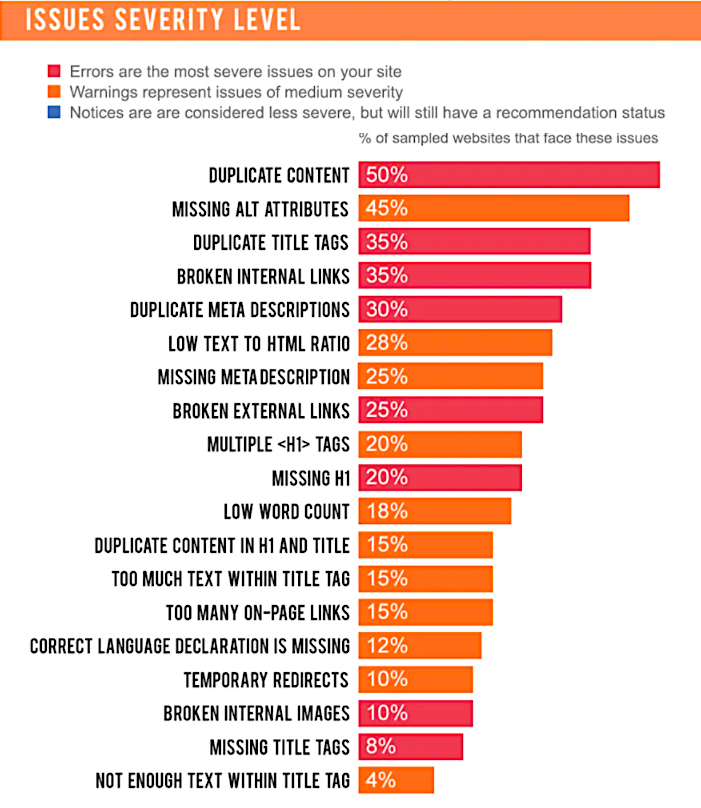
Common things to look for in a crawl report are:

SEMrush issues severity level

Dive Deeper: How to Fix 15 Common On-Site Technical SEO Issues

4) Audit all User Experience (UX) Aspects on Your Website

UX is an SEO ranking factor. They don’t tell you that in school!

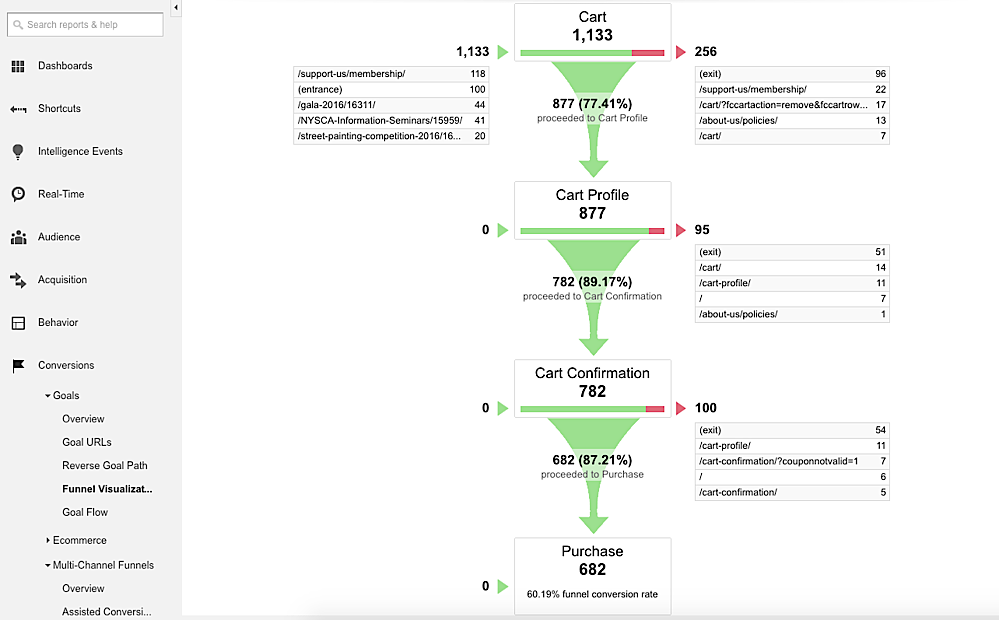
Poor navigation, incompatibility with mobile screens, and other issues that impede the user's experience on your website will destroy your search rankings. Here are some countermeasures:

funnel-visualization-report

Dive Deeper: 7 Mistakes in UI and UX That Are Costing You Engagement

5) Perform On-page Optimization

This process involves aligning your content marketing strategy with specific search terms, topics and user context.

Here’s a mini checklist I created to help you track your on-page optimization efforts:

  • Target Search Term
  • SERP Analysis (can you even rank?)
  • Title Tag
    • Target search term present
    • <60 characters
    • Buzzwords for CTR
  • Meta Description
    • Contains target search term
    • Compelling CTA that encourages high CTR
  • H1 Tag (keyword optimized)
  • H2 Tag (secondary keywords)
  • Body Copy
    • Contains specific keyword in first 200 words
    • Has natural keyword density
    • Contains Latent Semantic Indexing (LSI) keywords
  • Content Length (comprehensively answers the searcher’s query)
  • Content Structure (easily readable and scannable)
  • Content Assets (rich/interactive media?)
  • Canonical Tag (specified to the correct URL)
  • URL Structure
    • Contains target keyword
    • Has clear taxonomic organization
    • Does not contain stop words (this is okay in certain cases)
    • Does not contain underscores
    • Less than 100 characters
  • Internal Links
    • Contains 1-2 deep links to relevant content
    • Has specific keyword-relevant anchor text
    • Is implemented naturally
  • Outbound Linking (contains 1-2 links to authoritative & relevant sites)
  • Image Optimization
    • File names contain target keyword
  • Social Metadata Optimization
  • Alt Tags Contain Target Keyword
  • Appropriate Image Dimensions Specified

ClickFlow, Single Grain's SEO experimentation tool, is great tool to help with a lot of your on-page optimization. You can easily test the effectiveness of each web page to increase your organic traffic without the hassle of building links or writing more content by:

  • Testing new title tags and meta descriptions to grow your traffic in weeks, not months

Title Tags and Meta Descriptions

  • Rank your content #1 in search engines by nailing on-page optimization

Business Impact of Every On-Site Change You Make

  • Identify “Content Decay” and refresh old posts to win back traffic

Refresh Old Posts to Win Back Traffic

Dive Deeper:
* What Is Content Decay and How It Affects Your SEO
* Why You Should Update Content – Or Risk Losing The Traffic You Have [Case Study]

6) Evaluate Branded Search Opportunities 

This is where brand awareness starts. You must protect your startup’s reputation on review sites and other places around the Internet.

Google your brand’s name and evaluate the search results that come up:

  • Check for bad press and negative reviews.
  • Ensure that the metadata you created for your site appears on the results and clearly describes your brand/products.
  • Ensure that sitelinks and social accounts are properly set up and aligned.
  • Maximize mark-up opportunities.
  • Review the bottom of the search engine results page and evaluate what searchers care about when searching for your brand.
  • Use auto-suggest to explore long-tail keywords that contain your brand name.
  • Check for competition using “alternatives to” and “versus” queries:
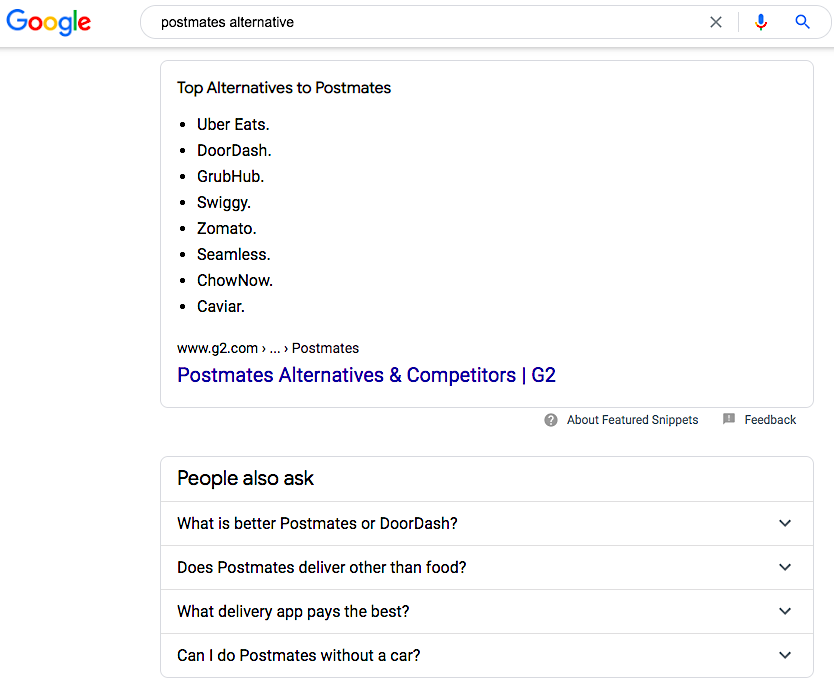
Alternative queries

Dive Deeper: 3 Steps to Create a More Effective Reputation Management Strategy

7) Find Long-tail Keywords to Rank For

Long-tail keywords are 3-5-word phrases with low search volume that are used to capture relevant traffic to a website. They target niche audiences instead of mass audiences. Some examples of long-tail keywords are:

  • White Adidas shoes with green stripes
  • Where can I find my windows product key?
  • Best vacation spots in April

This 30-minute keyword research hack from Moz can help you find long-tail keywords to rank for. Remember to always break out your keyword research by topic clusters:
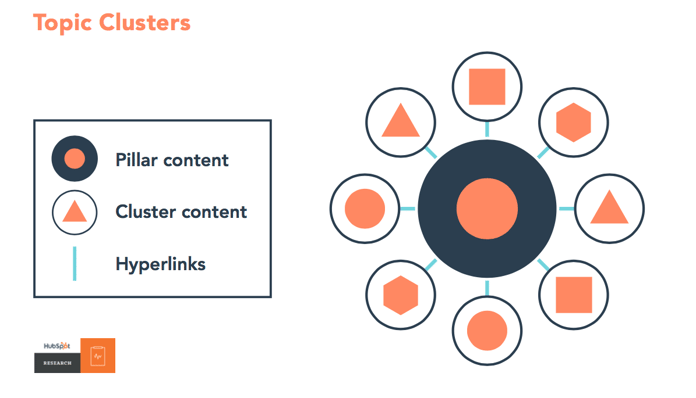
Doing so will allow you to build topical authority while focusing on relevant keywords that are low difficulty but still winnable.

Make sure long-tail optimization is part of your content marketing strategy. I’d recommend using a free tool like:

Dive Deeper: Why You Should Use Long-Tail Keywords in Your SEO Campaign

8) Prioritize Content Opportunities

You can prioritize content and keywords using different criteria such as high search volume, low difficulty, strong CTR opportunity and high relevance.

You should also think about “how to” style searches, since this usually reflects highly actionable content that will teach your target audience how to do something tactical, and it will naturally gain free backlinks.

For example, this guide I produced targeting “how to become a songwriter” earned a natural backlink from newsweek.com – which is a 90 DR website!

pasted image 0

Link building can be a pain in the butt, but here’s an easy way to build backlinks in a very targeted and cost-effective manner.

Some of my top SEO tips for acquiring great backlinks:

  • NEVER pay for backlinks.
  • Search your brand name, domain name and founder’s/exec's names for unlinked brand mentions.
  • Find relevant directories and round-up articles and make sure your site is mentioned and linked there.
  • Find out where and how your competitors are getting backlinks, then get similar backlinks from those sites. Just make sure they’re high quality.
  • Do interviews and get influencers involved.
  • Don’t waste time sending thousands of cold emails in an effort to go for high-volume link acquisition.

Dive Deeper:
* The Marketer’s Guide to Link Building
* How – And Why – To Build A Backlink Portfolio
* The Easy Guide to Broken Link Building for SEO
* The Ultimate Guide to Link Building with Content for SEO

10) Stay Updated on SEO News, Trends and Google Updates

Staying up to date on SEO news, Google updates and various marketing trends (like Single Grain's “Marketing Trends You Can't Ignore” series) will ensure that you don't miss any critical information that can help your startup business grow and thrive:
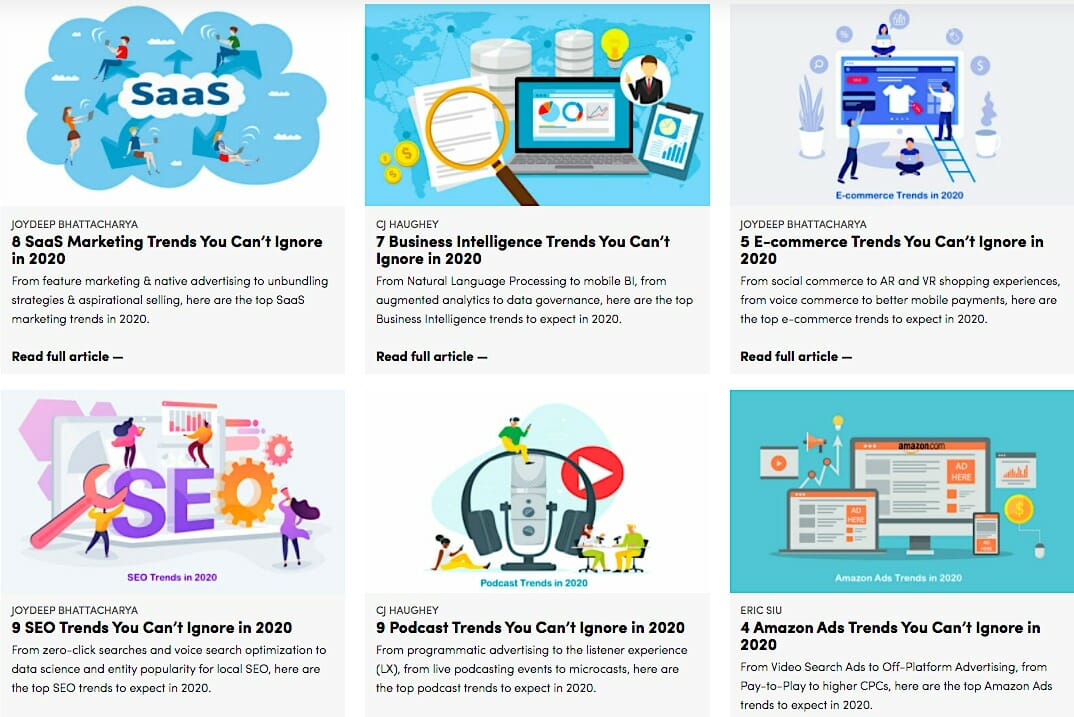
Single Grain's marketing trends collection

Here are some of my favorite blogs/sites that I've subscribed to so that I can stay in the know:

Dive Deeper: How to Prepare Your Site for the New Google Page Experience Update

Click here to download it for free right now!

Frequently Asked Questions (FAQs) about SEO for Startups

These are the questions about search engine optimization that I get asked most often, so I thought I'd include them all here.

Is it true that SEO efforts take at least 6 months to work?  

This is a classic “it depends” answer, but typically, yes, it takes 6-12 months to start seeing results for your SEO efforts.

If you are a small business with a tight budget, getting leads via paid channels such as Google Ads (PPC) can become untenable, despite being much faster than SEO. If you have a lot of cash to play with, you definitely want a joint SEO and PPC strategy working together.

Dive Deeper: How Long Does It Really Take to Rank on Google?

How should I go about link-building for my startup?

Here’s the reality: You should focus on street cred. Find out what type of connections your CEO or investors might have and try link building with “warm” connections. Don’t waste hours sending thousands of cold emails for backlinks.

If you have a small SEO team, leverage them as well for link connections. Have them tap previous colleagues to form link partnerships. Again, warm relationships will yield better results and you’ll spend less time spinning your wheels with cold outreach.

Dive Deeper: How to Sustainably Build Quality Links by Building Relationships

Is social media an SEO ranking factor?

No, not directly. However, promoting your content on social media is a good idea, as you should always be thinking about content distribution as a way to drive up engagement to your content. Unfortunately, though, everyone knows that unless you pay for boosted promotion, organic social media alone is not effective enough to get your content seen by the eyeballs that want to consume it.

Dive Deeper: Google’s 200 Ranking Factors [Infographic]

Isn’t SEO too competitive for startups?

Well, everything is competitive in digital marketing today, so you shouldn’t let that stop you. Whether it’s Google Ads, content creation, launching something on Product Hunt, growing a podcast, etc., it’s going to be saturated no matter what. But the longer you wait, the more you hurt yourself, so you might as well get in the game now and start building a foundation.

Isn’t SEO too expensive for startups?

Not true. You don’t need costly softwares or overpaid consultants. Just invest time and sweat equity into your SEO efforts, and you’ll see incremental gains with big payoffs. According to HubSpot’s research, SEO is the lowest risk, highest ROI B2B marketing channel.

Google keeps changing the algorithm. Is it too hard to keep up?

Here’s the bottom line: Don’t be a marketer who studies the gossip tabloids.

You don’t want to become one of these algorithm chasers. Instead, follow the fundamentals of white hat search engine optimization best practices, serve the intent of your target audience, and you will be fine! If you’re really worried about the algorithm, just follow Moz’s tracking updates.

Dive Deeper: How to Understand Searcher Intent and Use It to Boost SEO Rankings

Can thin content rank for competitive keywords?

Depending on the website’s topical authority and website strength, absolutely. I have seen thin homepages rank for competitive search terms simply due to the fact that it’s a homepage and naturally gets tons of backlinks.

However, let’s look at an actionable example of a landing page that ranks for the search term “LMS for compliance training” (Learning Management System). It’s not impressive by any means, but because of page authority and backlinks, the webpage is able to rank. It's a simple WordPress template, but it gets the job done.
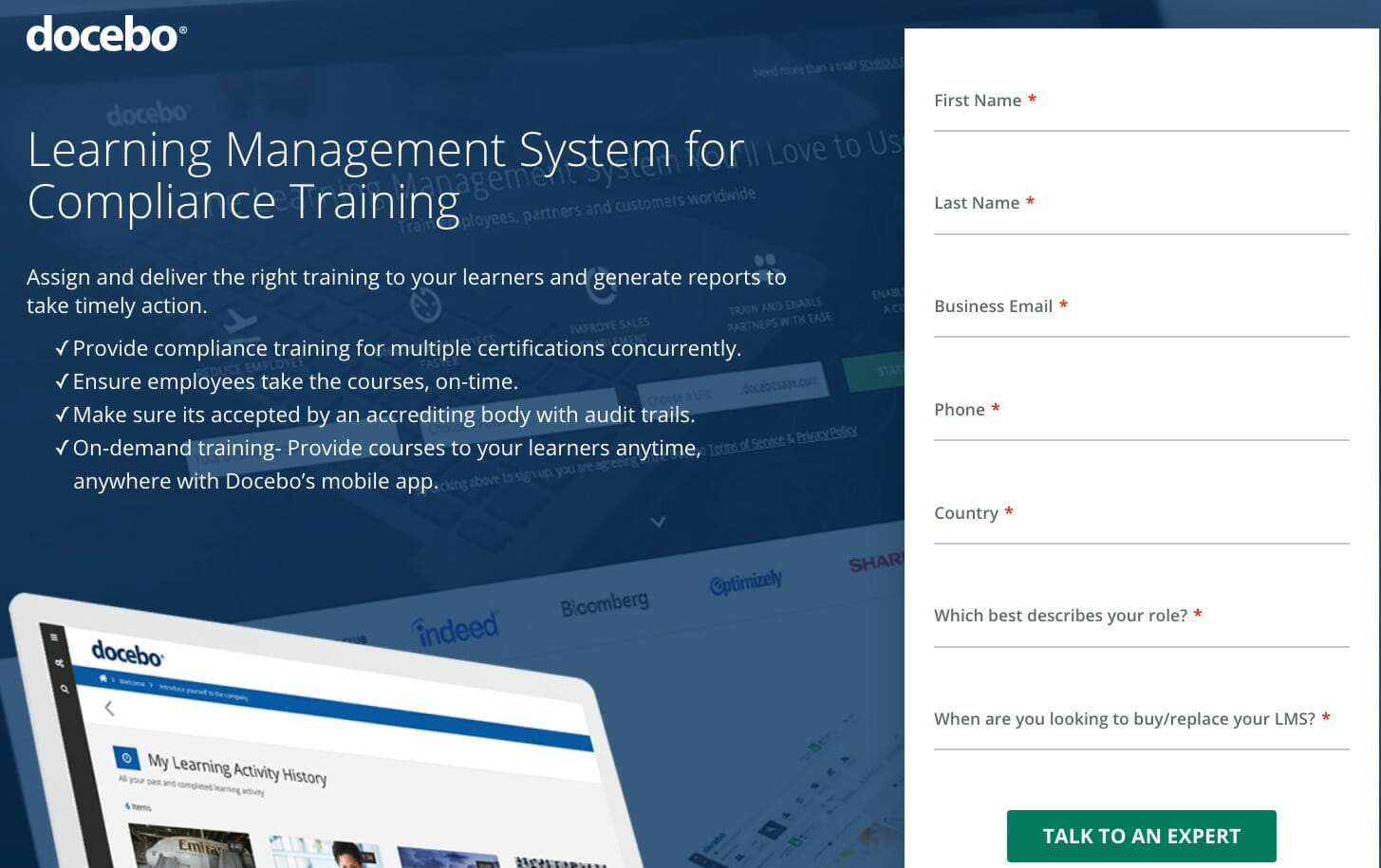
pasted image 0 1

Should I mostly be producing blog content or landing pages?

Well, you need both. Certain queries won’t rank with landing pages, and other queries won’t rank with blog articles.

For example, Nextiva ranks very high for “What Is VoIP” because we created an awesome blog article that explains everything there is to know about VoIP (Voice-over Internet Protocol):
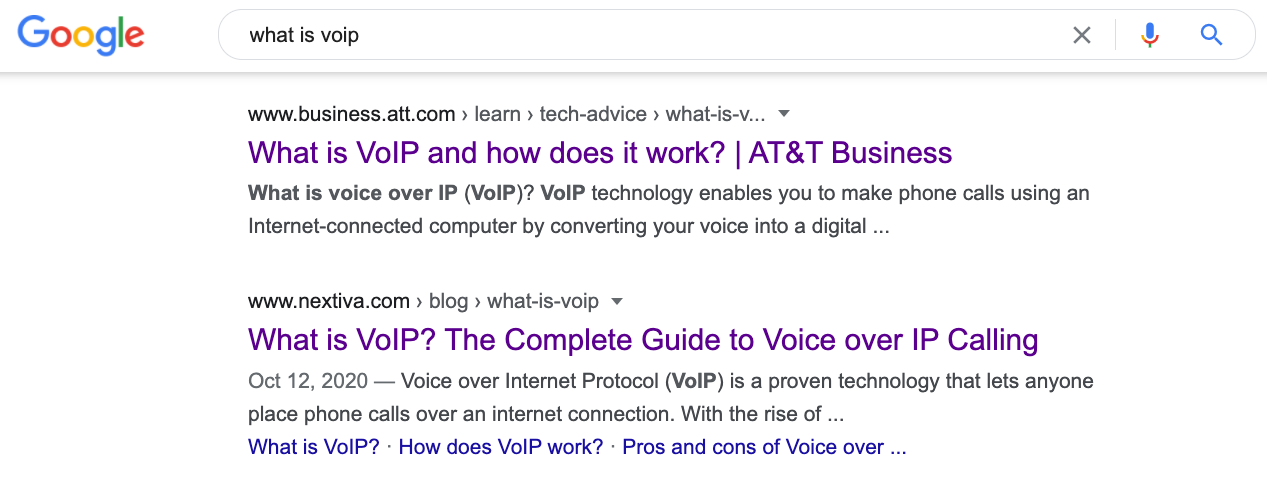
2 What is VoIP

Dive Deeper: The Ultimate Guide to Creating a High-Converting Landing Page in 2020

Should I be going after keywords with the highest search volume?

Not all the time! Why? Because keywords with the highest search volume often have the most difficulty. In other words, they’re super competitive. As a startup, you probably have a younger website, meaning it will not have the authority needed to compete against more established behemoths in your niche.

Does bounce rate matter for SEO?

Meh. Bounce rate is a slippery slope.

I would pay attention to metrics like “average time on page” rather than “bounce rate”. If a visitor stays on your webpage for seven minutes, consumes all the content, and then leaves, is that a positive or negative experience? It seems like a good one to me because they were highly engaged and probably got all the information they needed.

That being said, if visitors are pogo sticking your content (hitting the back button after they land on your webpage), that’s a bad sign.

Does my website’s domain authority matter for SEO?

Unfortunately yes, it does. The stronger your domain authority, the easier it will be for your site to rank for competitive search terms and topics.

However, it’s not a one-size-fits-all rule. Don’t be discouraged just because your website has a low domain authority. You can still rank for good keywords with a low domain authority if you focus on long-tail keywords to drive maximum SEO efforts.

Another important thing to remember is that as your brand awareness naturally progresses, so will your domain authority.

Dive Deeper: Starting From the Bottom: How to Build Up Your Domain Authority from Scratch

Can I still grow my website’s search traffic if I have a lot of technical issues?

Yes, you definitely can. I have seen some of the worst technically flawed websites rank for a ton of great search terms and yield tremendous amounts of search traffic. However, I would not recommend this. It used to work for a 1990s-style content strategy, but it probably won’t work in today’s competitive SEO landscape.

What are some common issues that will hurt my search rankings?

  • Poor UX/website navigation
  • Low-quality content
  • Low-quality links
  • Not serving the intent of searchers
  • Not understanding the problems of your target audience
  • Slow page speed (having a slow website will cause visitors to get frustrated and leave)
  • Poor content strategy (for example, having very similar or repetitive content)
  • Keyword cannibalization
  • Outdated content
Click here to download it for free right now!

The post SEO Strategy for Startups: How to Win in 2021 appeared first on Single Grain.


from Single Grain https://ift.tt/38ONezF

Tuesday, 10 November 2020

What Is Phygital Marketing?

Pop quiz: Which is more important, the in-store customer experience or your digital marketing efforts?

In other words: Online or offline?

This is actually a trick question. 👉🏽  Both online and offline are essential. Many businesses struggle more than they need to because they’re focusing almost exclusively on one or the other when they’d benefit from a much more integrated approach.

That’s where “phygital” marketing comes in: Physical + digital = phygital

In this post, we’re going to discuss everything you need to know about phygital marketing and how to create a strategy for your business.

Book My Free Marketing Consultation


What Is Phygital Marketing?

Phygital marketing is the merging of online and offline marketing strategies to create one cohesive experience that’s both strengthened and curated for each customer.

In today's digital atmosphere, it's easy to think that online is the only environment that really counts. Not so.

  • 63% of shopping begins online, but 49% of Americans still prefer shopping in physical stores.
  • 82% will browse on mobile even while they’re in a physical store, looking for reviews or deals even before speaking with a sales associate.
  • And offline spending that’s been influenced by a mobile experience has exceeded $1 trillion.

Phygital marketing is all about creating a seamless and personalized customer experience, and there are plenty of different ways to do this, including drive-throughs, click & collect, in-store lockers and online reservations.

☝🏽 This strategy has evolved from what originally began as multichannel marketing, which is the practice of having campaigns on multiple platforms. You might have a distinct content marketing strategy for SEO, social media profiles for discovery, and PPC campaigns to drive sales.

✌🏽 Multichannel marketing then evolved into the now ever-present omnichannel marketing. This is the practice of having a single, personalized user experience across all channels and devices.

An omnichannel experience may include banks that allow users to make appointments or deposit checks on their mobile devices, or sites that allow users' carts to be carried from desktop to mobile effortlessly. The shopping experience is made to be as effortless as possible.

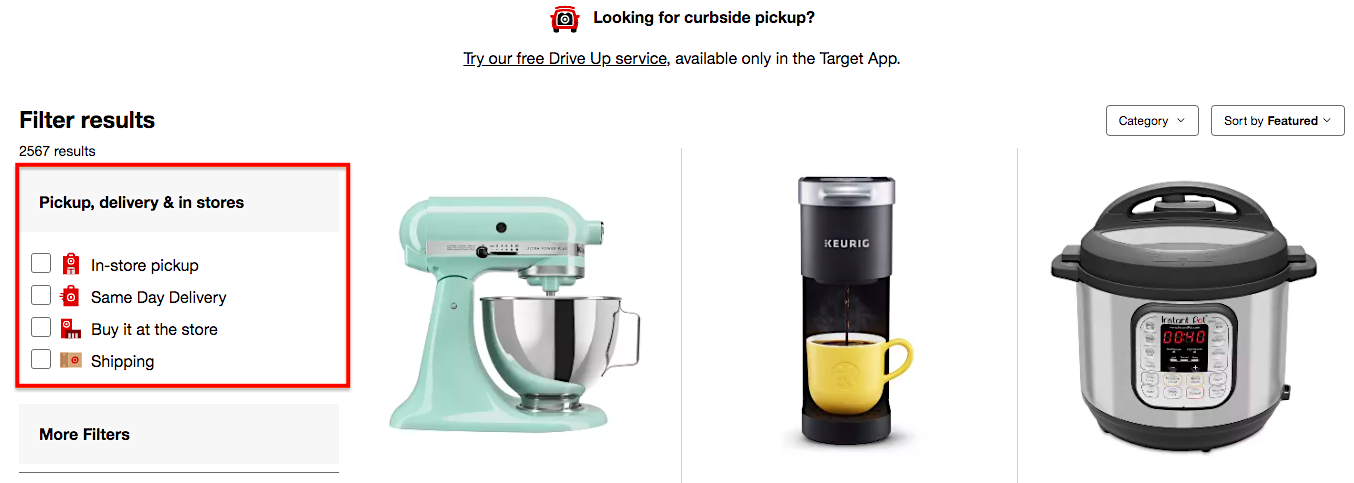
🤟🏽  And now phygital marketing has evolved from omnichannel marketing. It’s not just about creating solid online experiences, but about extending that customer-centric seamlessness into physical storefronts, too – like Target does:

Target

If a user is online using your mobile app to research products, can they see how many of the item is in-stock near them and reserve it for in-store pickup? And if they’re in the store, can they scan a product’s QR code in the store’s app to so that they can add it to a wishlist and purchase it later?

These functions all give the customer more options to make shopping super-convenient for them, and contribute to a more positive user experience.

Learn More:
* Attention Marketing: 10 Tips to Acquire More Customers
* How to Use Engagement Marketing to Acquire More Customers
* What Is Feature Marketing? The Complete Guide for 2020
* How to Use Event Marketing to Generate Leads & Close Sales
* What Is Category Design in Marketing (& Why Is It an Important Strategy)?
* Neuromarketing 101: How Neuroscience Affects Customers’ Buying Behaviors

Benefits of Phygital Marketing & Experiences

The biggest benefit of phygital marketing is that it creates an improved user experience regardless of where and how they’re shopping.

It can increase overall purchases both online and in-store, too. Consider this:

  • Certain people prefer to shop in a brick-and-mortar store because you can touch and try on products, talk to a human clerk right away and purchase without any dreaded last-minute add-on fees.
  • Other customers prefer to shop online because you can browse global stores, have items shipped right to your front door and avoid crowds.

But phygital retail appeals to (and markets to) both types of shoppers because it's no longer a case of one or the other, but rather an integration of both as the customer sees fit (more on this later).

Phygital marketing has been a game changer for the businesses who have used it in the past, especially during peak sales seasons like Black Friday, Cyber Monday, and the general holiday season. Customers are able to discover new products, research them quickly, and make a purchase via whichever method works best for them in that moment.

And while it does improve the user experience, it definitely can help your staff out, too. If it’s easy for people to scan a QR code to get more product information, you may need fewer sales associates on the floor, for example.

Phygital marketing has practically become a necessity for some businesses during the COVID-19 pandemic, with a large number of shutdowns and/or social distancing requirements in place that impacts how customers shop in physical stores.

With customers wanting to come in to your store quickly (or not at all), offering seamless online and in-store experiences is crucial. Many businesses have adapted to increasing their digital strategy and functionality to make up for this, along with offering new features like curbside pick-up options.

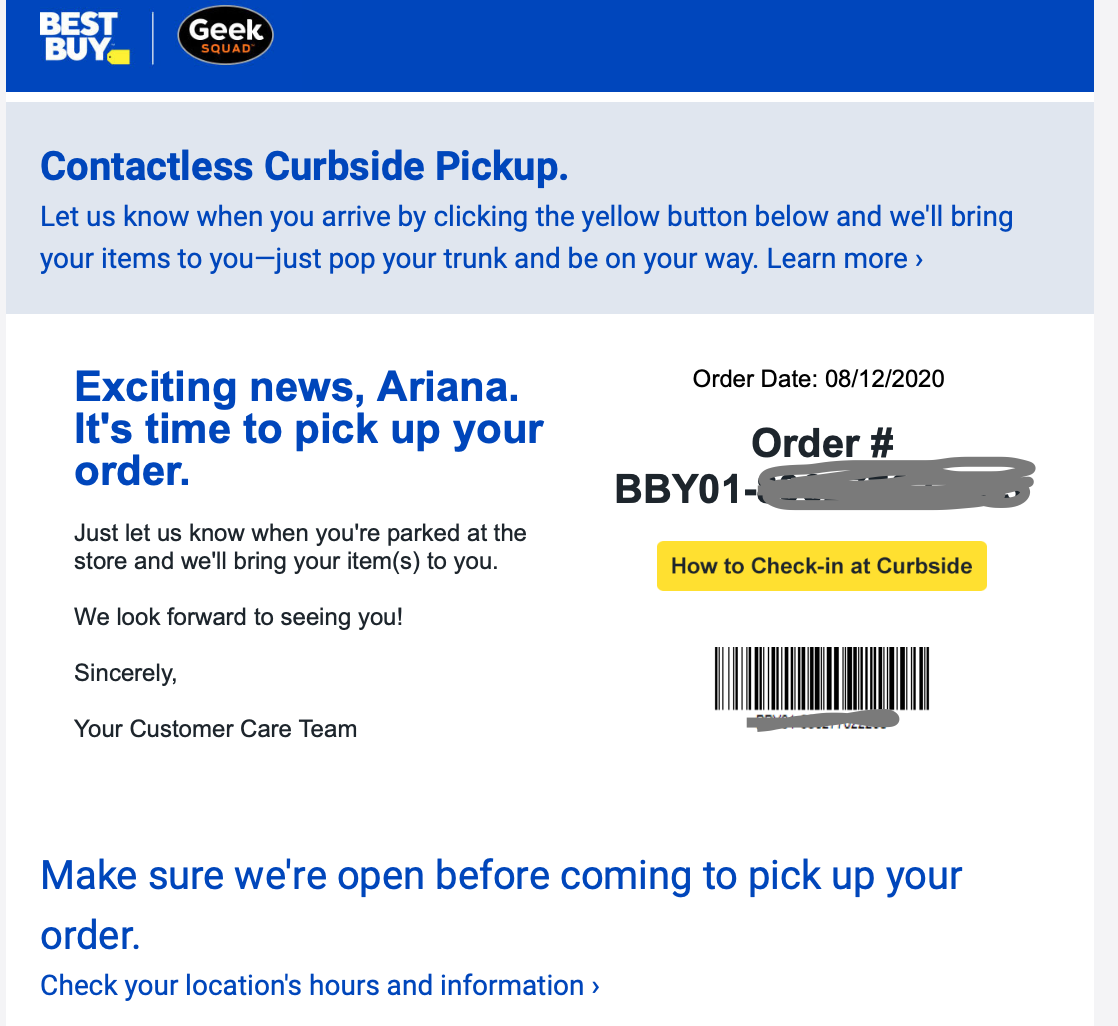
Last month, my laptop died and I needed a new one the next day. I was able to look at my local Best Buy’s inventory online, find a MacBook that was available, and order it for curbside pick-up the next day.

I got an email instructing me to click on a CTA when I had arrived, which took me to a page to describe my car and location. I got my laptop much faster than if I’d had to order it online for shipment which, as an immunocompromised person in an active hotspot, was my only other option.

Screen Shot 2020 09 18 at 1.22.19 PM

Even beyond the pandemic, giving your customers new ways to shop at your store (virtually or otherwise) is a solid strategy.

The more convenient and personalized the shopping experience is to your customers' needs, the better.

Drawbacks of Phygital Retail

There aren't many disadvantages to phygital retail.

The only real con is the time it may take to set it up and synchronize the off- and online versions. If your site or app doesn’t currently have online-order-for-pick-up but you want to offer that, you’ll need to work with a developer.

Likewise, if your physical store wants to add digital aspects, it will take some time and money upfront. Both of these situations are well worth it.

Take the periodical industry, for example:

  • With the rising popularity of the Internet, the New York Times has transformed itself into a purely digital publication.
  • France's paper, Le Figaro, has been able to keep its offline presence while adding an online version: When an online article is not available for free, customers can pay a fee to read it or buy the physical newspaper in a brick-and-mortar shop.
  • Another French newspaper, Le Canard Enchaîné, has managed to remain 100% offline with no negative impact on their business performance.  

Fortunately, once you make these changes, all you need to do is maintain the functionality moving forward.

Book My Free Marketing Consultation


Phygital Technologies

It's not enough that you offer both on- and offline shopping options for your customer; you must let them know. When someone is online, you have to advertise your physical store features and benefits, and when someone is in your store, you have to advertise your digital features and benefits.

There are different types of technology that you can use to help improve the phygital experience for your customers. Let’s look at some of the most popular ones.

Artificial Intelligence (AI) 🤖

AI has had an increasingly large role in marketing and customer experiences for a while now, and it can help you with phygital marketing, too.

Examples of AI in phygital marketing include:

  • Optimizing your website to show users relevant products that are available in-store once they’ve added to their cart.
  • Offering automated helpdesk chatbots, which can resolve basic customer concerns or hand off more personalized issues to human customer service representatives.
  • Adding QR codes to hardcopy magazine and newspaper ads. The user scans the code, which sends them to the digital location to make the purchase or get additional information.
  • In-store robots to help customers find products, such as those at the San Jose Orchard Supply Store. If you've ever been to a huge store like Orchard or Home Hardware, you know how difficult it can be to find not just the product you are searching for, but the damn aisle in the first place. Their retail service bots greet customers and help them locate what they need.

 Retail service robots were

Augmented Reality (AR) & Virtual Reality (VR) 🎮

With the AR/VR industry growing so quickly — by 2023 it's predicted to be a $160 billion industry — it's not surprise that these two technologies are making their way into more stores and onto e-commerce sites to help customers make more informed purchases.

Virtual reality is the computer-generated simulation of a three-dimensional image or environment that can be interacted with in a seemingly real or physical way by a person using special electronic equipment.

Augmented reality is the result of using technology to superimpose information — sounds, images and text — on the world we see.

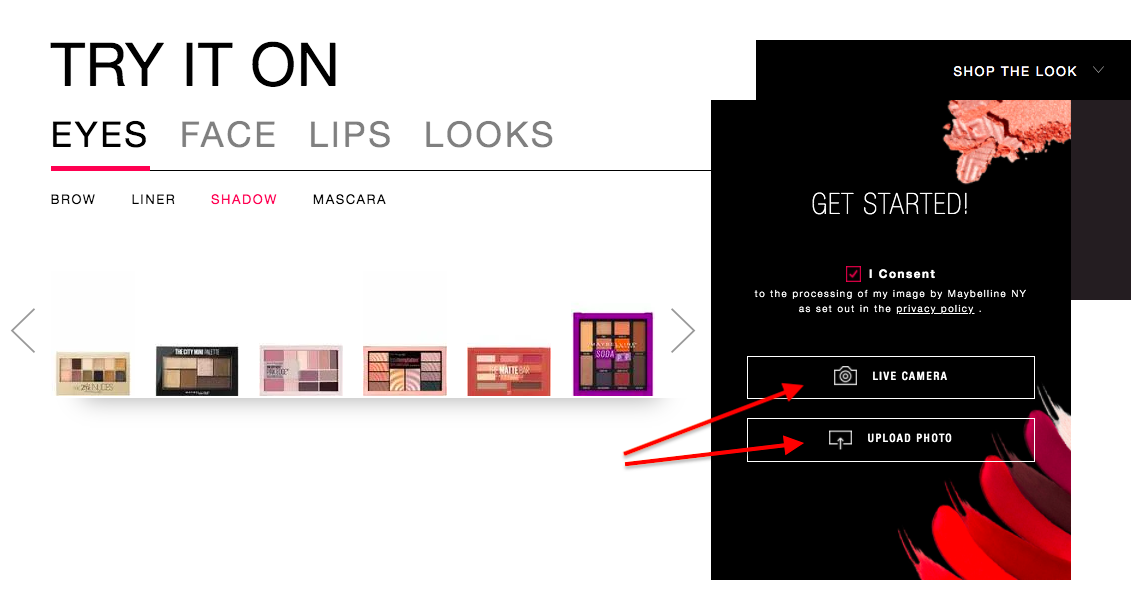
With the aid of these technologies, phygital retail becomes a reality. For example, users are able to upload a picture of themselves online and then “try on” different clothes or shades of makeup on sites like Maybelline to see which products would work for them:

Maybelline VR

Some stores even offer VR and AR tools in person. MAC, for example, offers AR try-on features in-store thanks to virtual “mirrors”:

Location-Based Push Notifications 📱

If your business has a mobile app, location-based push notifications are an outstanding phygital marketing tool. They allow you to send targeted messages to users within a certain geographic location when the app interacts with Bluetooth beacons installed in your store.

For example, if a customer has your app installed and they’re walking past a bakery, they could receive a notification offering them 10% off their order or a free coffee with the purchase of any item, like this example from my own phone:

Screen Shot 2020 09 18 at 2.01.33 PM

This can increase your overall traffic, capturing people as they walk near your physical storefront with a digital solution. They might purchase at that moment or head home and purchase later online if you have e-commerce functionality.

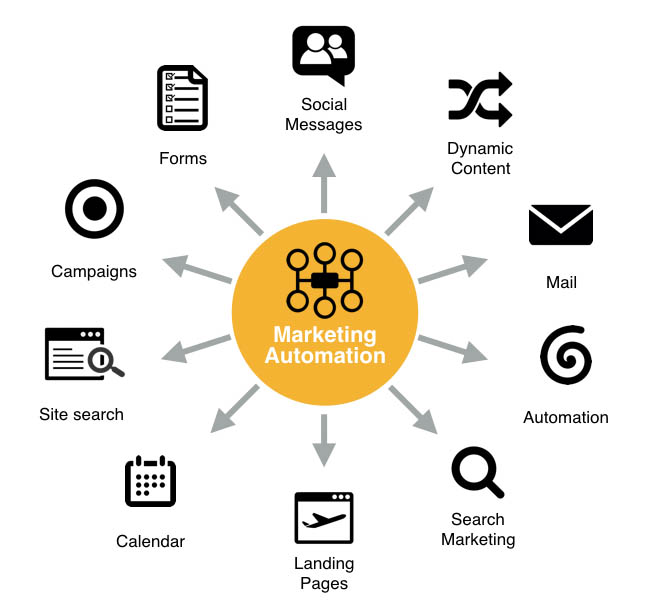
Automation ⚙️

Marketing automation drives a 14.5% increase in sales productivity – and companies using automation enjoyed an average 12.2% reduction in marketing overheads.

pasted image 0 33

Automation is a big part of what makes phygital marketing and experiences so beneficial for everyone involved. It’s fast, it’s easy, and it takes some tasks off your hands.

Here are a few examples of automation with phygital experiences:

  • When online users schedule an in-store pickup, they’ll instantly be sent information about their pick-up availability and instructions for how to do so like my Best Buy example above. There’s no need for further instruction from in-store sales staff, and they know exactly what to expect and what they need to bring.
  • When customers make a purchase in-store, they’ll be emailed a receipt if the have an account on file. It will also be logged in your CRM so you can create relevant retargeting campaigns later.
  • Some of these retargeting campaigns are automated, too, including dynamic product campaigns based on past purchases or items they’ve viewed/converted online.
  • If a user scans a product’s QR code in a brick-and-mortar store to research it, your app can automatically prompt them to save it or add it to their cart for later purchase.

Learn More: What Is Marketing Automation: Definition, Benefits & Uses

Video Shopping 🛍️

Although video calls, such as WhatsApp or FaceTime, are nothing new, using them with a store clerk is.

HERO, the “world’s leading conversational commerce app for stores,” allows customers to text, chat and video call with their favorite stores. Their tagline is “growing e-commerce sales and converting website visitors into store customers,” as Nike, Adidas, Levi’s, and other retailers have done.

Pre-coronavirus, one third of customers who start their shopping journey online via HERO will then make a purchase at a physical store. But post-quarantine, that's not always a reality. Instead, they can use this technology that's “like FaceTiming your favorite sales associate with one- or two-click buying built in.”

Book My Free Marketing Consultation


5 Examples of Phygital Marketing to Inspire You

We’re seeing an incredible crossover in phygital retail right now. Businesses that were previously exclusively e-commerce are now opening physical locations, and brick-and-mortar stores are working on creating a stronger and more integrated digital presence.

Let’s take a look at five outstanding examples of businesses who are embracing phygital retail and marketing to better connect with their customers.

1) Amazon Go + Cashier-Less Shopping

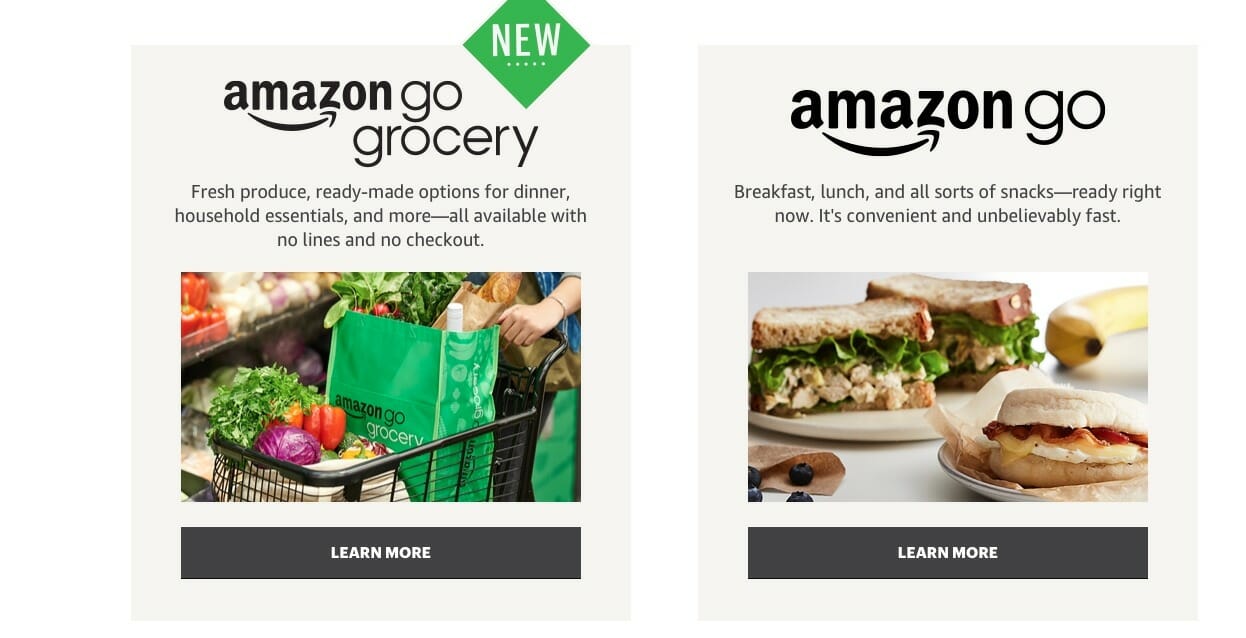
Amazon may not be the first option that pops into your head when you’re thinking about groceries or ordering lunch, but that's changing. Amazon Go is made up of convenience stores that have fresh groceries, breakfast, lunch and snacks… but no cashiers.

Screen Shot 2020 09 18 at 2.15.02 PM

This e-commerce marketplace titan is now expanding beyond pick-up and drop-off lockers, but they’re still putting a major emphasis on pretty much immediate service. Users can download the Amazon Go app and make purchases before they even arrive at the store for fast pick-up.

2) Sephora + VR Product Testing

Cosmetics chain Sephora has physical stores all over the country. While customers have always been able to try on products in-store, there’s a limit to full testing abilities. If you try on one foundation, for example, you can’t always easily remove it to try another. Some also avoid using trial products for hygienic purposes, making expensive purchases a gamble.

Sephora offers VR and AR features both online and in select stores so that users can try as many products as they need to in order to find the perfect fit. Customers with sensitive skin or who are worried about using products that others have can now “try on” products risk-free.

3) Nike + Pop-Up Stores

Nike is a major household name in retail shoe stores around the world, they’ve also branched out to pop-up locations:

Screen Shot 2020 09 18 at 2.29.45 PM

Last year, Nike started opening pop-up stores at strategically chosen places based on the data analysis they pulled from their SNKRS app. They found locations where their customers tended to go.

To encourage users to come out and purchase, they made some of their limited-edition shoes available at the pop-up, and sent SNRKS app users a notification about shoe availability. Nike already uses location-based text notifications through the app to grant access to other limited-edition sneakers while users are in-store.

4) Timberland + Virtual Inventory

One common reason that customers will stick to online shopping is that there is typically more inventory available.

As someone who needs to shop specifically in petite sizing thanks to my 5'0″ frame, I almost exclusively shop for clothes online because most stores don’t carry a lot of petite inventory, as there’s not as much demand.

Timberland, the outdoor clothing and footwear retailer, found a way to work around that with their incredible TouchWalls. These are digital displays that show customers online-only inventory and in-store inventory:

Timberland Blends Physical and Digital Customer Experience

Customers can will actually touch the product images to get more information, create personalized shopping lists, and be able to shop the full inventory even if it isn’t actually in-stock.

You can see how it works here:

Aside from increased order values and foot traffic, Timberland is also gaining a massive amount of customer data that they can use to improve their marketing moving forward.

5) Warby Parker + In-Store Experience

Online prescription glasses and sunglasses retailer Warby Parker is known for their exceptional marketing, so their foray into phygital marketing likely won’t surprise anyone.

Even with the brand’s popular “try at home” option that allowed customers to order multiple frames to see which they liked, the store realized that many customers still wanted an in-store shopping experience. They have physical storefront locations they’ve dubbed “The Warby Parker Readery,” which features glasses you can try on and postcards, books and other items that those glasses can help you appreciate:

Warby Parker

They have also had pop-up locations, including in the New York Public Library’s Rose Main Reading Room (which they called their “hush mob”).

Book My Free Marketing Consultation


Conclusion

There’s an enormous amount of attention being placed on exclusively digital experiences. While digital definitely isn’t going anywhere and should be a core component of both your marketing and sales experiences, this doesn’t mean that you should neglect physical experiences.

As you can see from the examples in this article, striking a strong balance between physical and digital marketing is the best way to stand out from the competition and create an enhanced, streamlined experience for your customers.

It comes down to personalization. Every customer will have their own preferences and pain points when it comes to not only your products but shopping itself, and offering multiple solutions for how they can interact and purchase from your business can revolutionize your business.

The post What Is Phygital Marketing? appeared first on Single Grain.


from Single Grain https://ift.tt/3nfzzWd

Tuesday, 3 November 2020

How to Create a Killer SaaS Content Marketing Strategy

For most SaaS companies, the reasons to start content marketing are beyond compelling. For instance:

In this article, we’ll show you step-by-step how to create your own killer SaaS content marketing strategy, including all the tactics, methods, and tools you’ll need.

Let’s go!

Click here to download your free guide right now!

How Does Content Marketing Differ for SaaS Companies?

Unlike traditional companies whose main aim is usually to get a sale, most SaaS companies use content marketing to differentiate themselves from their competitors and attract trial subscriptions or demo sign-ups.

As the SaaS space gets increasingly competitive, software is becoming less differentiated by features alone and consumers are placing higher importance on branding, positioning and content when deciding which software to choose.

What’s more, SaaS companies do not sell their software for a one-time purchase fee. Instead, they operate on a recurring revenue basis, which means that they must constantly keep their users engaged in order to prevent churn and decreased MRR.

As such, content marketing for SaaS companies is not solely about attracting new users, but can also be used to retain existing users and even upsell them to higher plans.

Dive Deeper:
* How to Create a High-Performance Content Marketing Strategy in 2020
* 22 Brands with the Best Content Marketing Campaigns
* SaaS Marketing Strategy: 12 Killer Ideas to Grow Your Company

A Step-by-Step Guide to Creating a Killer SaaS Content Marketing Strategy

Creating great content is only one part of a winning formula. To see long-term success, however, you must first take the time to create a content marketing strategy. Why is a strategy so important?

Common pitfalls that can occur without a SaaS content marketing strategy:

  • Lower content engagement and reach. Not only will you put yourself at risk of producing content that no-one cares about, but without creating a promotional strategy to decide how you’ll attract people to your content, you’ll reach a far smaller audience and your content marketing results will suffer.
  • Delays, inefficiencies and rising costs. With a strategy in place, your SaaS content marketing will run like a well-oiled machine, with defined costs, deadlines and expectations for each part of the process. Without it, content will be produced inconsistently and coordination between different people in the process will be inefficient, which naturally will lead to delays and rising costs.
  • Lack of management buy-in leading to budget cuts. One of the most important things to realize about SaaS content marketing is that it’s a long-term strategy that’s unlikely to yield instant results. Therefore, in order to be successful, every relevant stakeholder within the company must truly believe in it. Otherwise, if you aren’t able to demonstrate any tangible results within the first few months, but others can see that you’re investing a lot of money into it, you could experience internal pressure to stop. However, by creating a killer strategy first, you can share it and get buy-in from others within the company to (hopefully) prevent this from happening.
  • Inability to measure success. If you never define what your goals are or what represents a successful outcome, you won’t be able to objectively measure how well your content marketing efforts are performing. Specifically, when it comes to SaaS content marketing, tracking, attributing and measuring results is far trickier than most other companies who have the goal of gaining sales.

Step 1 – Evaluate Whether Content Marketing Is a Good Fit for Your SaaS Business

Everyone has limited time, money and resources, so before committing to content marketing, you should step back and evaluate if it’s the right focus for your SaaS company.

Below is a list of clues to help you evaluate whether content marketing is a good fit for your SaaS business. If you find yourself nodding in agreement to a few of these, then take that as a sign to start creating!

A) Your customers have a few pain points for which they typically Google the answer

Take the very competitive email marketing industry. There are numerous pain points involved in sending emails, including issues of deliverability, technical woes of verifying your domain, and GDPR compliance.

Unsurprisingly, a quick check on Google Keyword Planner shows that many people are searching for ways to solve these problems. For example, the phrase “email deliverability” receives between 1K-10K searches per month.

All of this could mean that there's a good opportunity for SaaS email marketing companies to create relevant content with high buyer intent.

Dive Deeper: 7 Creative Ways to Collect Emails Without Being Spammy

B) You operate in an industry where things change quickly

One example of a fast-paced industry is e-commerce. Most software in this space is designed to provide tools to eBay, Amazon or Shopify sellers to help them automate their business.

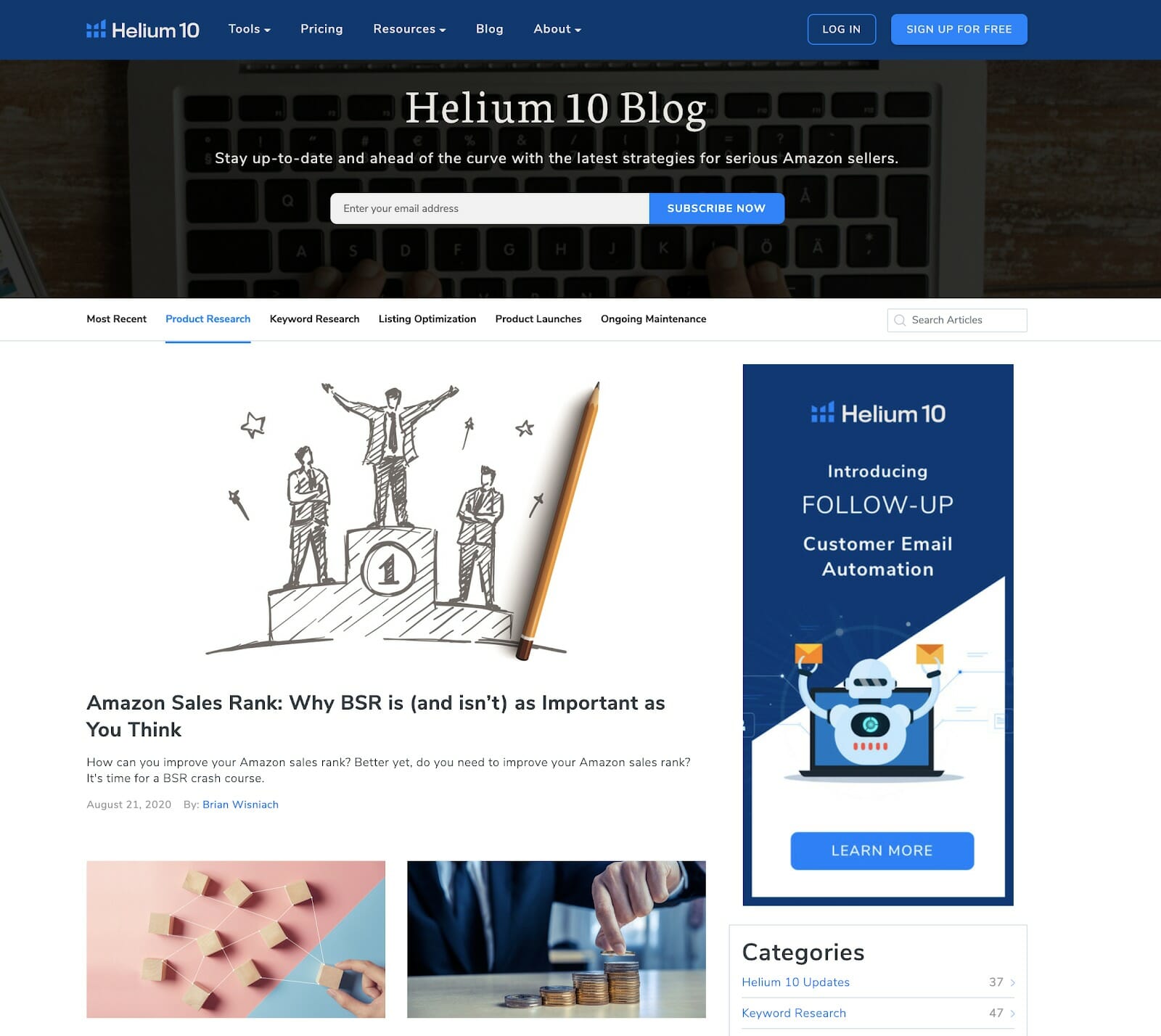
The problem is, these marketplaces often introduce changes with little notice, and the software companies are forced to adapt their software accordingly. To help deal with this, companies such as Helium 10 invest heavily in content marketing, producing near-daily blog articles to educate their users:

Screenshot 2020 09 05 at 18.42.47

Dive Deeper: How to Set Up Your E-commerce Product Page for Maximum Conversions

C) You have existing promotional assets that you can leverage

If you already have some promotional assets that you can leverage to share your content, then your content marketing efforts will be much easier.

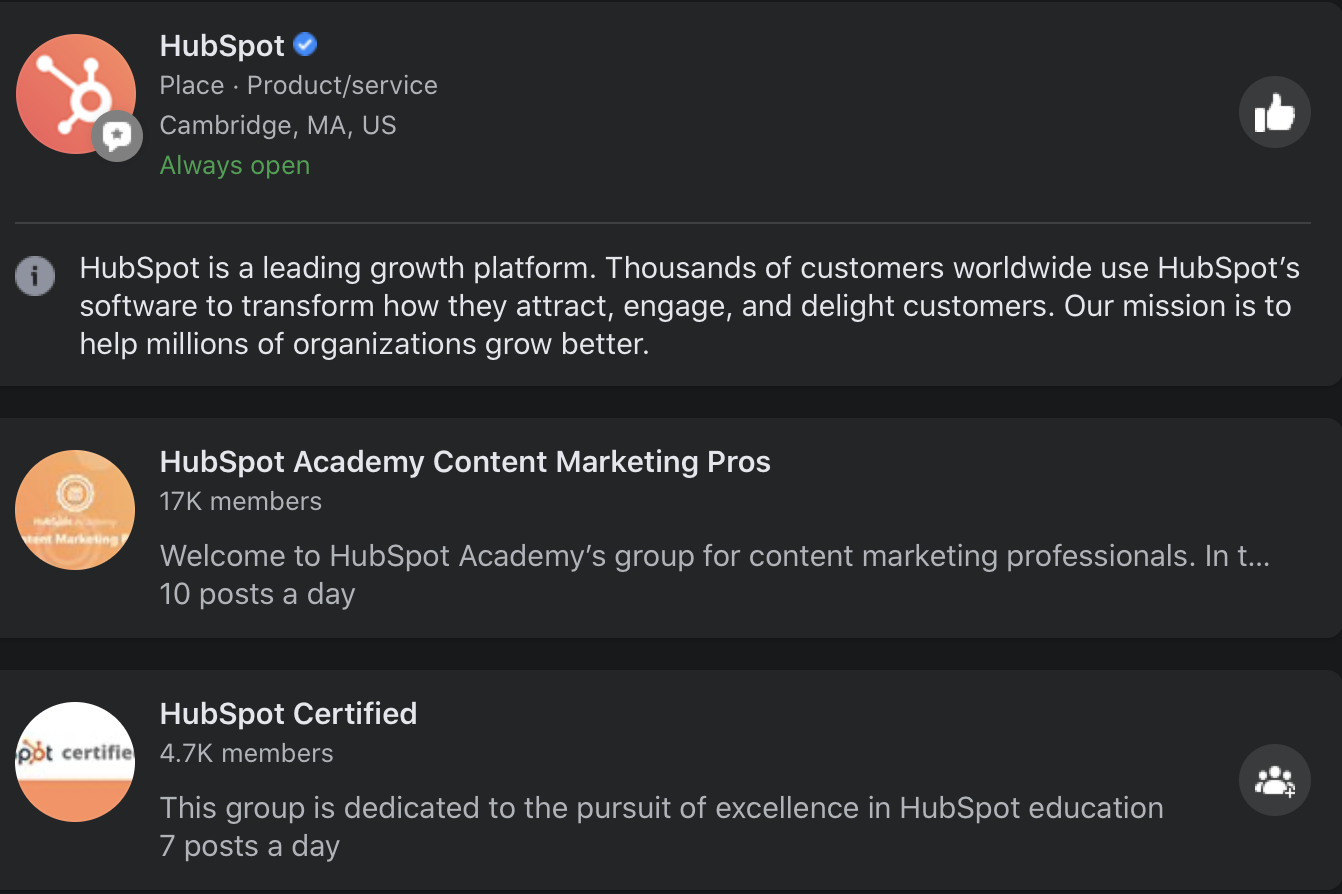
For example, HubSpot has a private Facebook group with over 17,000 members. This means that every time they release new content, they can easily create a post and promote it to all these members with very little effort:

Screenshot 2020 09 05 at 15.27.04

You don’t have to have a Facebook group. Instead, you may have a large email list, an engaged social media following, or a strong relationship with a key influencer – anything that could help you to promote your content to a relevant audience once it’s published.

Dive Deeper: 12 High-Performing Facebook Group Engagement Tactics

D) Your target customers are ‘knowledge-hungry’

A good example of this are CRM companies like Pipedrive that target salespeople.

Salespeople have highly pressurized jobs because they’re held accountable for how many deals they close and the revenue they bring to the company. As such, these are the types of people that are always looking to learn how to become better at their jobs and learn new sales methodologies.

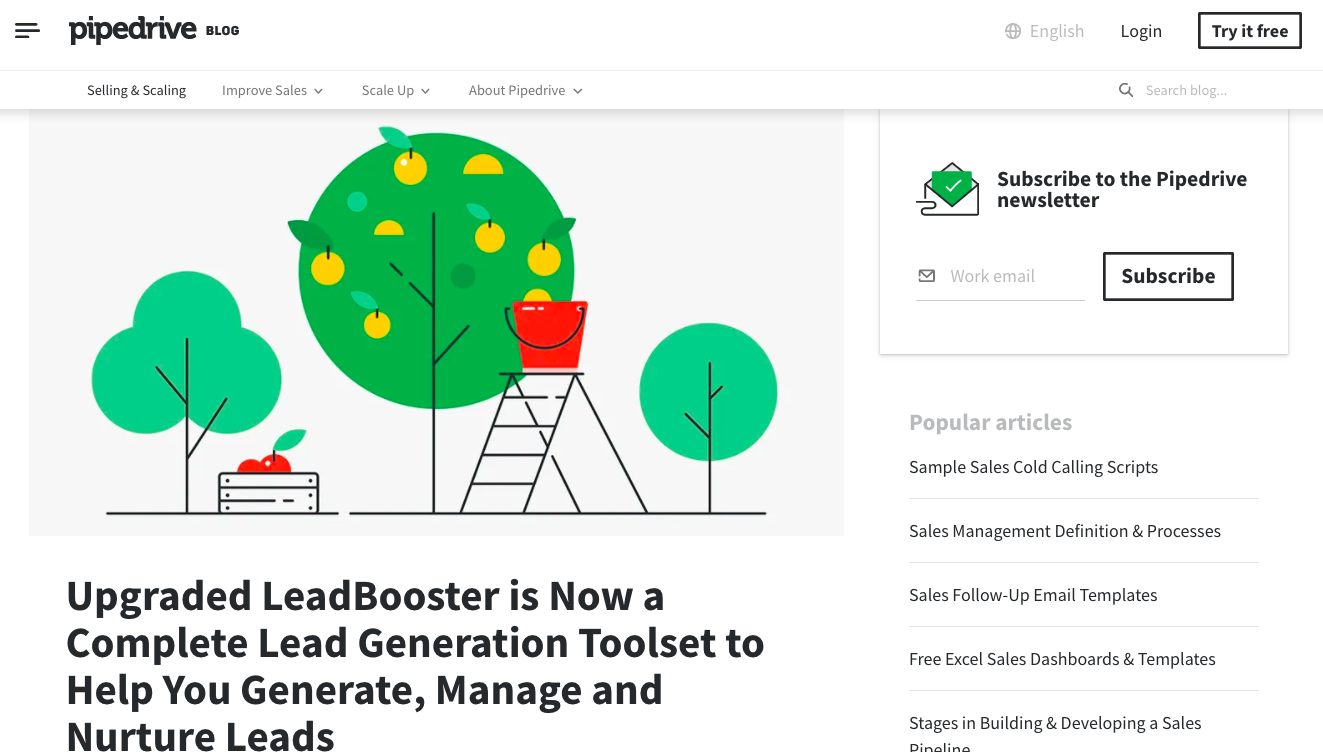
Pipedrive has capitalized on this by launching a blog with how-to guides, templates and scripts specifically for sales reps. And once the salespeople see great value from the content, the hope is that they’ll sign up for the software too!

Pipedrive blog

Dive Deeper: 30 Ways to Come Up with Great Ideas for Your Blog Posts

E) Your software is complex without tutorials and education

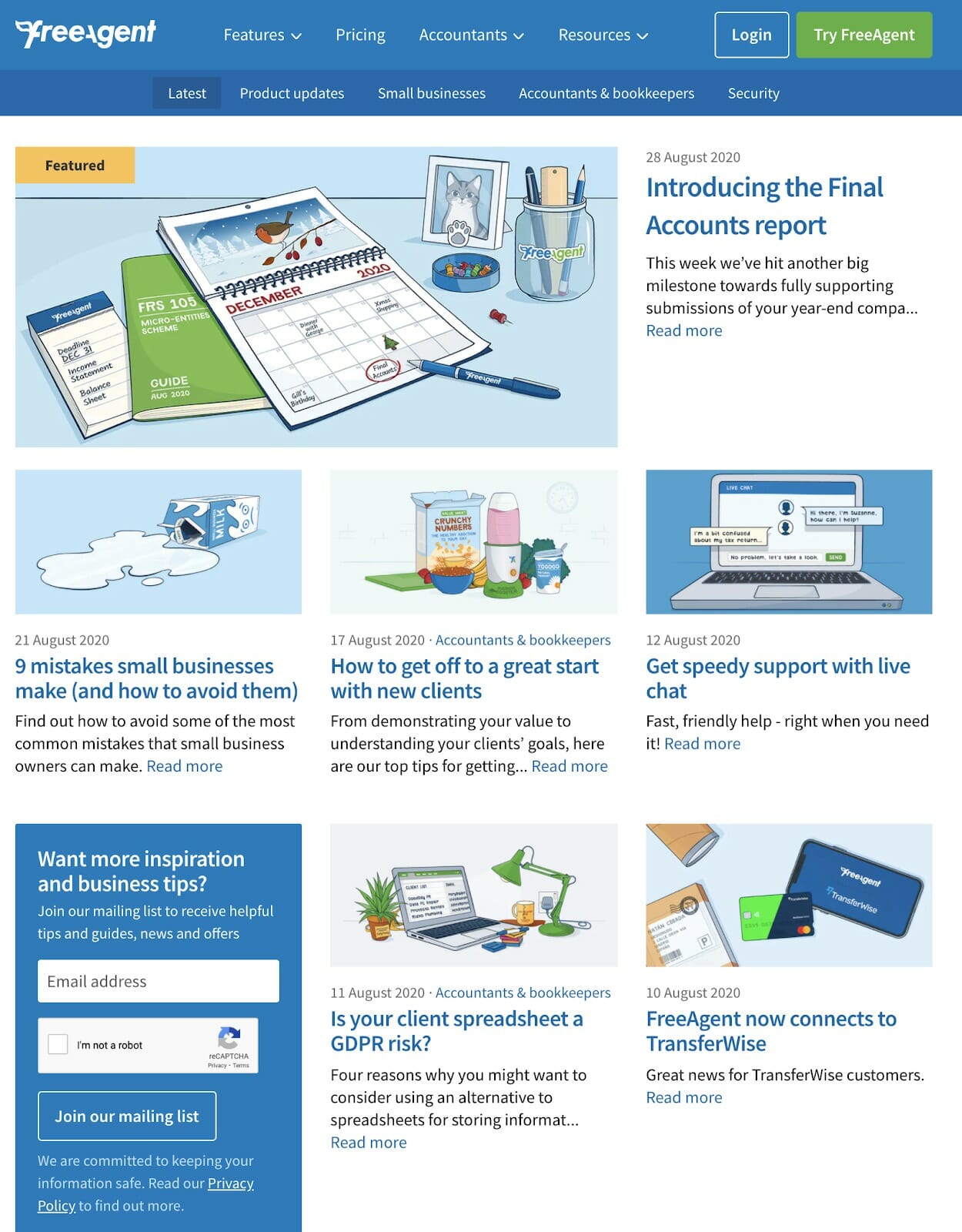
Accounting software companies like FreeAgent help small businesses and freelancers to file their tax returns. The problem is, most of their target demographic aren’t tax experts, hence, the company creates useful content to keep them up to date with tax changes and help them to understand new features.

Screenshot 2020 09 05 at 17.39.45

F) Customers have no pre-existing brand loyalty when making their buying decision

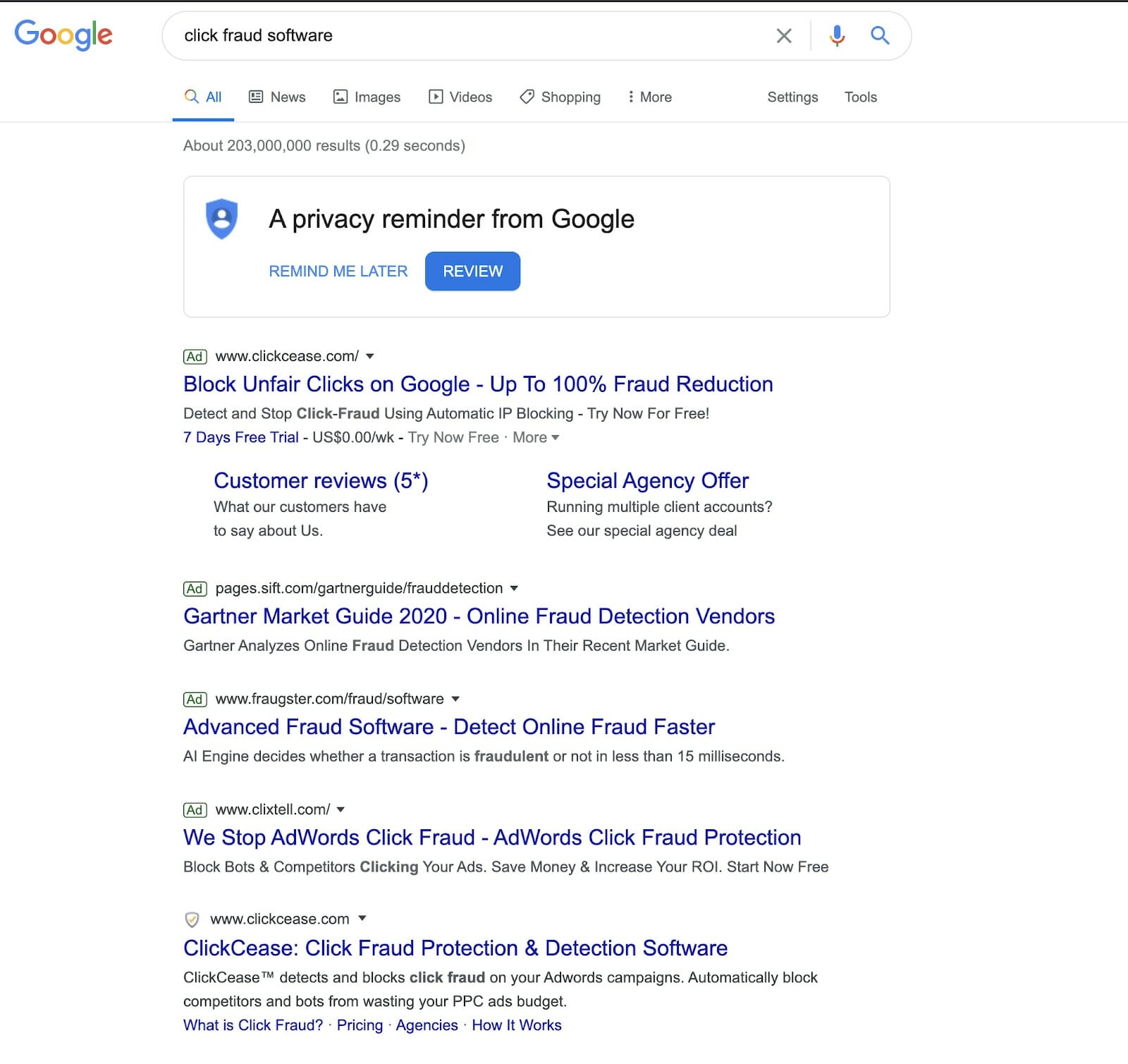
Imagine that your Google Ads budget is spiraling out of control due to click-fraud, and you’re looking for some software to solve the problem. There’s a very high probability that you go to Google, type in “click fraud software” and open the tabs of the first few results:

Screenshot 2020 09 05 at 18.05.10

In a situation like this, customers are unlikely to be brand loyal because they’re probably not even aware of the software companies serving this need. Therefore, content can be a great way to differentiate your SaaS product from competitors and reach potential new users first.

G) A reasonable % of your website traffic comes from search engines

You may have already seen from a previously published SaaS SEO guide that Google is generally the biggest source of traffic for SaaS companies, driving up to 77% of visitors.

If you operate a SaaS company that likewise sees a large percentage of high-quality traffic from search engines, then this is a great indication that creating content could lead to more new user sign-ups.

Dive Deeper: The Anatomy of an Effective SaaS Lead Generation Strategy

Click here to download your free guide right now!

H) You have a marketing budget that can sustain producing and promoting content for the long-term

A good SaaS content marketing strategy requires regularly creating new articles and having a reasonable content marketing budget.

If you’re unsure if you have the resources to sustain your content marketing efforts for at least one year, then it may not be right for you. (Later on in step 5, you’ll learn how to calculate the budget required to sustain your content marketing strategy.)

Dive Deeper: Content Strategy on a Budget: How to Grow Your Online Presence on a Shoestring

I) Your software is geared towards one main audience

If your SaaS company has one clear audience, it’s much easier to create highly targeted and relevant content. For example, Adobe Photoshop is a SaaS application aimed specifically at creatives, which gives them the advantage of their entire user base having very similar interests and needs.

Screenshot 2020 09 05 at 18.23.35

On the other hand, a SaaS company like Calendly targets multiple audiences with wildly different needs, including marketers, educators, freelancers and job interviewers, which can make it much harder (though by no means impossible) to produce compelling content.

Dive Deeper: How Adobe Does SaaS Marketing: A Case Study

Step 2 – Decide on Your Main Goals and KPIs

Ultimately, every SaaS company wants to increase its revenue. However, there are a number of ways this can be achieved in the context of content marketing. The goal you choose will have a huge impact on every aspect of your overall content marketing strategy, from the type of content you produce to how often you produce it.

Below is a list of the most common content marketing goals and KPIs for SaaS companies – we advise choosing one goal only.

Goal 1: Increasing Your SEO Rankings

Indicators that this may be the right goal for your SaaS:

  • Your conversion rate from organic traffic is highest amongst your acquisition channels
  • Your target customers often search for information about desires/pains that relate to your software
  • Your competitors rank higher than you for most common customer searches
  • Producing better content and ranking higher than your competitors is realistic based on your budget
  • You are too reliant on paid ads for user acquisition (particularly if your CAC is rising)

Most common KPIs to measure the success of an SEO-focused SaaS content marketing strategy:

  • The number of keywords you rank for
  • Your specific ranking for those keywords
  • Website traffic from search engines
  • Number of backlinks pointing to your content
  • Conversions from search engine traffic

Dive Deeper: 5 Reasons How SEO Benefits Your SaaS Business (+ SaaS SEO Strategy)

Goal 2: Increasing User Engagement

Indicators that this may be the right goal for your SaaS:

  • User churn is a big issue (typically for SaaS, a churn rate above 5% is considered worrisome, though this varies depending on the specific industry)
  • Your software operates in a space where users typically need educating (e.g. e-commerce SaaS – where software like JungleScout relies on helping new Amazon sellers but has a churn rate in excess of 80%)
  • Customer feedback indicates that users are churning due to a lack of information
  • Your LTV:CAC ratio is under 3:1 and therefore it may be more profitable to focus on retaining existing users as opposed to acquiring new ones

Most common KPIs to measure the success of an engagement-based strategy:

  • Churn rate (%)
  • Average user monthly session duration (% change)
  • Daily Active Users/Monthly Active Users (%)
  • The average number of logins per user per month (% change)
  • Social engagement indicators such as comments, shares and likes

Goal 3: Increasing Brand Recognition

Indicators that this may be the right goal for your SaaS:

  • You’re a newcomer to the field, competing against SaaS companies that have been operating for years
  • You’re marketing your software to appeal to a new audience
  • You have low market recognition amongst your target customers
  • You have the budget to share your content widely using tactics such as paid ads and influencers

Most common KPIs to measure the success of a content marketing strategy based on increasing brand recognition:

  • Site traffic/number of visitors
  • Social engagement indicators, such as comments, views, shares and likes (you can track social media activity using tools such as Mention)

Goal 4: Capturing Lead Information (Including Emails)

Indicators that this may be the right goal for your SaaS:

  • Your main website conversion goal is for users to sign up for a product demo instead of a trial
  • You sell high-value or enterprise software where multiple stakeholders are involved in buying decisions
  • Users normally require nurturing or educating before deciding to join

Most common KPIs to measure the success of a content marketing strategy based on capturing lead information:

  • New leads/demo sign-ups
  • Lead magnet downloads

Goal 5: Attracting New Users (Trial or Paid)

Indicators that this may be the right goal for your SaaS:

  • User acquisition is your greatest challenge (as opposed to retention or monetization)
  • You have a healthy churn rate for your industry (typically below 5%)
  • You have an above-average SaaS website conversion rate
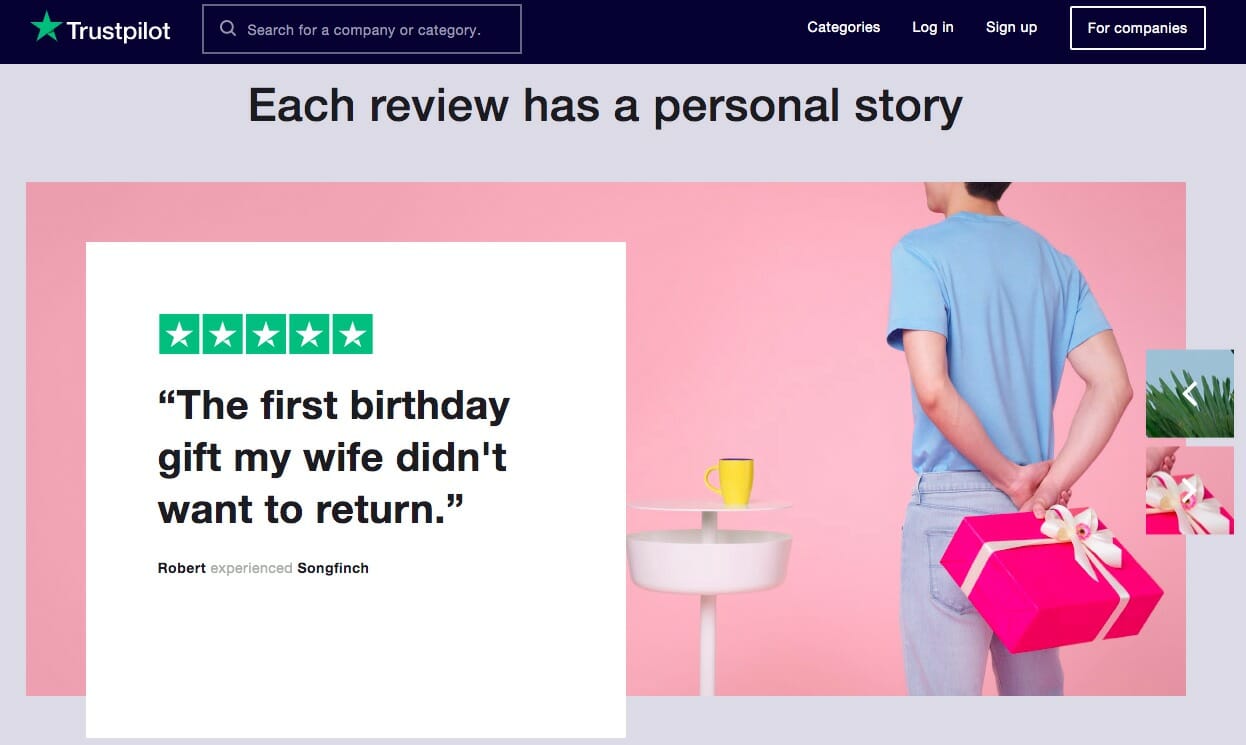
  • There are indications that content is a big factor in the purchasing decisions of potential users (you can check your own customer feedback or reviews on websites like Trustpilot to give you an idea)

Trustpilot

Most common KPIs to measure the success of a content marketing strategy based on attracting new users:

  • Trial user sign-ups
  • Paid user sign-ups

Step 3 – Decide on the Content that Best Fits Your Audience

There are so many types of content that you could choose to produce, including:

  • Articles:
    • Success stories
    • How-to guides
    • Ultimate guides
    • E-books
    • Case studies
    • News
    • Feature updates
  • Videos
  • Webinars
  • Podcasts
  • Online courses
  • Infographics

The question is, how should you decide which type of content is right for your SaaS content marketing strategy? Consider the following three points.

Dive Deeper: What’s the Right Content for Each Stage of the Marketing Funnel?

A) Your Goals

Remember, your goal from step 2 of this guide should be influencing every decision you make from now on.

For example, if you chose to focus on increasing your SEO rankings, then creating a podcast is unlikely to be your highest priority. Instead, you’re more likely to be drawn to creating shareable content (to attract links), long-form articles with a high-word count, and basing your topics on their search volume and ranking difficulty.

If your goal is to increase your brand recognition, you may look at creating viral content that will be able to get the biggest engagement on social media channels.

In short, look to match your goal with the content that will best help you to achieve it.

B) Your Customers

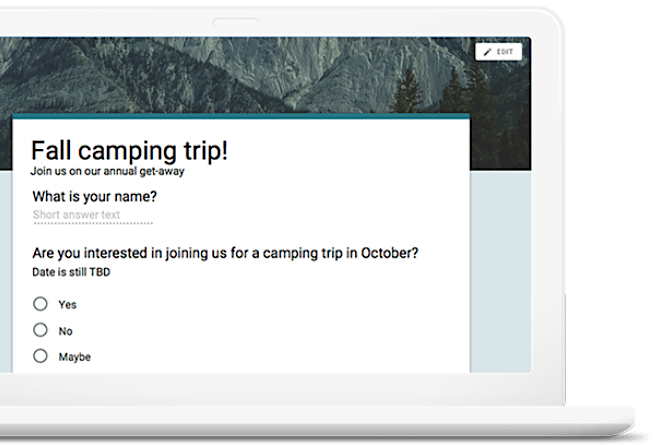
If you’re not sure, ask your customers about what they prefer! Within 10 minutes, you can set up a Google Form survey with a short list of questions you’d like to know the answers to:

Google Forms

You can include questions such as:

  • What other sites do you regularly visit for content?
  • What type of content do you prefer?
  • What are your main struggles with X?
  • Would you prefer that we focused on X or Y?
  • What most convinced you to join X?

Then, create a post or send an email along the lines of:

Hey [Name],

We’re looking to create useful content that helps you make the most out of [software product]. But we need your help to decide what we should focus on!

We’ve created a 3-minute survey with 4 quick questions – would you mind taking a second to fill it out here?

As a thank you, we’ll be giving away prizes, including [prize info] to a few of the best responses.

Thank you,

[Signature]

As you can see in the template above, you’re likely to get a better response rate by offering respondents a chance to win a prize for completing your survey. You don’t need to spend a fortune, but offering something small like a month’s free subscription to your software for a few lucky winners can help.

C) Your Competitors

You may think it's to your disadvantage if some of your competitors are already successfully engaged in content marketing. However, all it means is that you can learn what’s working for them, and what isn’t, and then avoid all the mistakes they’re making.

For example, let's say that the goal of your SaaS content marketing strategy is based on increasing user engagement. You could look at your competitors to see:

  • Which of their videos have the most views?
  • How many views are they getting on average?
  • Which of their articles have the most shares or comments?
  • What are readers saying in the comments?
  • Which of their social media channels are getting the most engagement when promoting their content?
  • Which types of content seem to be performing best for them?

The same concept applies regardless of your content marketing goal. If, for instance, your goal is to increase your SEO rankings, you can follow this guide to discover your competitor’s SEO strategy and get insights about their campaign before you start your own.

Dive Deeper: How to Perform Marketing Competitor Analysis (+ 6 Best Tools Comparison)

Step 4 – Create a Promotional Strategy

Relatively speaking, it’s easy to create content. The much harder part is promoting it.

As we’ve talked about in articles before, influencers like Derek Halpern have famously said that while 20% of your time should be spent on content creation, 80% of it should be on content promotion.

Here are some of the main ways that you can promote your content:

A) Email Sequences

Most SaaS companies already have email sequences set up to engage new trial users, educate existing users or persuade people against leaving. Therefore, a very effective way to get more people to engage with your content is simply to add another email to your existing sequences.

For example, if your SaaS has a 14-day trial, you could add an email promoting one of your pieces of content to be sent on day 20, and then another on day 25 – that way, in the future, no one who goes through your trial will miss out on all the great content you’ve been producing.

B) Email Blasts

If you have an existing email list, you can write an email to promote your content and blast it out to everyone (as long as you have permission to do so – GDPR alert!). Be aware that since the average email click-through rate for software companies is 2.45%, this is most effective when you have a large number of email addresses.

C) PPC Ads

If you don’t already have a large audience, but you do have a reasonable budget, then Pay-Per-Click ads could be the solution.

Google, Facebook, YouTube and LinkedIn are all very popular platforms for companies to promote their content. With Google Ads, you get the huge benefit of being at the top of the search results for any keywords you successfully bid for – without having to invest in SEO.

And with the other networks, you get extensive targeting options, including demographics and interests, that make sure your content is seen by the most relevant people.

D) Social Media

If you have an active and engaged following on a social media platform such as Facebook, Twitter, Instagram or LinkedIn, you may be able to promote your latest content releases. However, just be careful when making this decision that you avoid looking at vanity metrics like follower counts, and instead think about engagement.

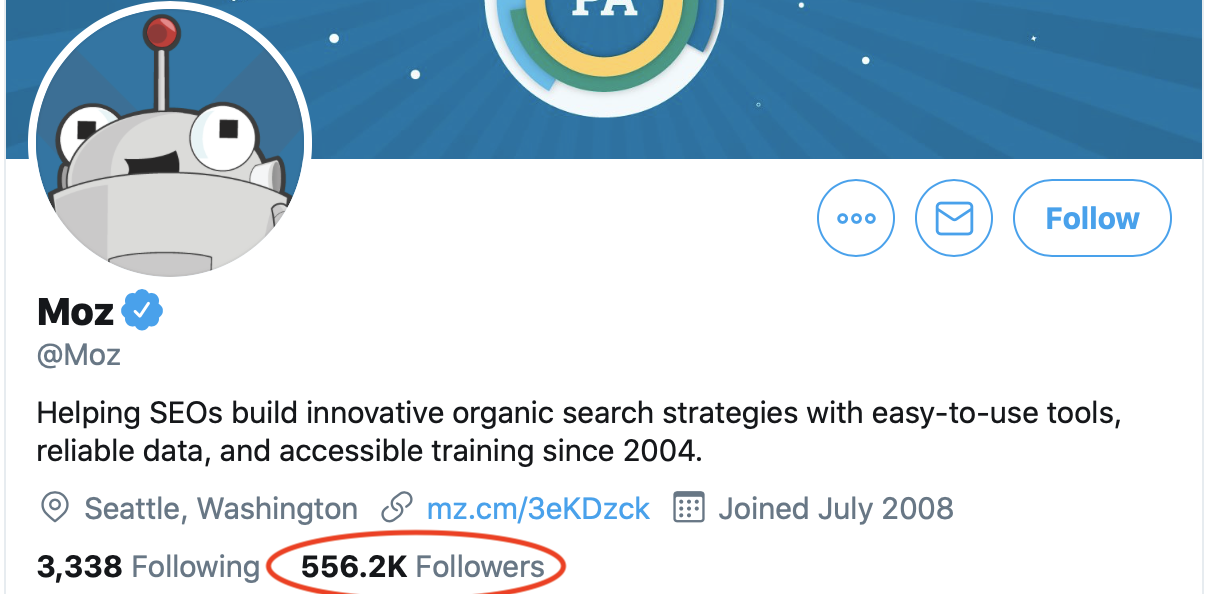
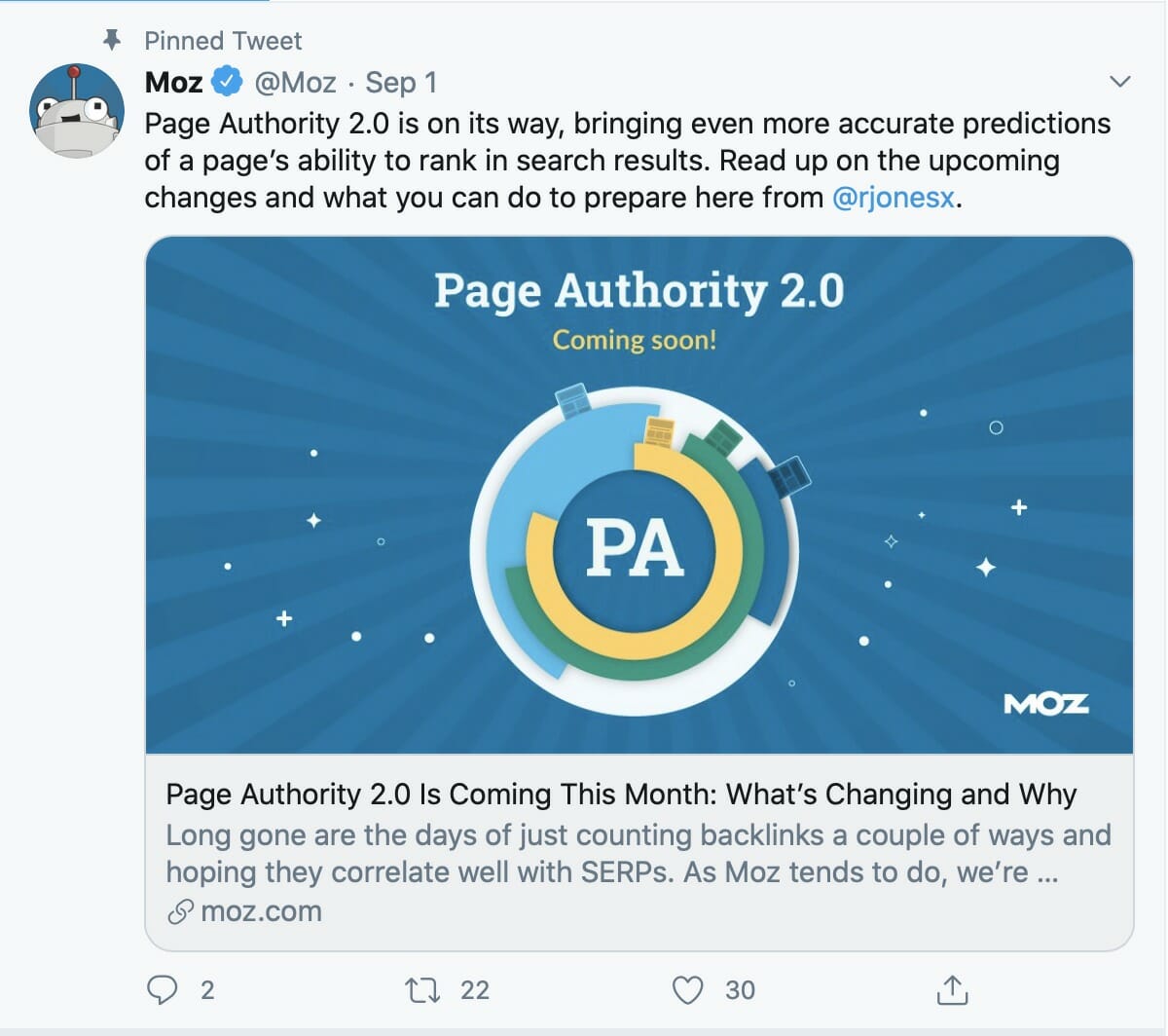
For example, Moz, a well-known SEO software company, has over 556,000 followers on Twitter:

Screenshot 2020 09 07 at 17.52.40

Yet, take a closer look and you may be surprised to see that most of their content only gets around 20-50 retweets. That means only around 0.0004% of followers are actively engaged with their content:

Screenshot 2020 09 07 at 17.55.09

The moral of the story? Look at your social media engagement, not just your follower count. 👀

E) Forums, Communities and Groups

Depending on your industry, your target users may typically hang out in certain forums, Facebook groups or online communities, which make them ideal places to promote your content. If you aren’t sure where these places are, remember, you can ask this in your survey during step 3 of the plan.

If the community doesn’t belong to you, just be careful that your plan doesn’t backfire. Make sure to reach out to moderators and community owners for permission before posting anything, and try to genuinely engage with the community too. If the information in your content is genuinely useful and not a sales pitch then most groups are willing to let you share it.

F) Influencers

Partnering with influencers can help you to reach a much larger audience and build social proof for your content. You may even be able to get them to put your content on their own platform (e.g. post videos to their own YouTube channel) to get maximum outreach. A good idea in order to evaluate your options is to draw up a shortlist of some of the most interesting influencers in your industry. Then, when you find an influencer you want to reach out to, you can use this checklist to find someone’s email address. If you send cold emails to influencers, it’s likely that only a small percentage will actually respond to your initial email, so be sure to send multiple follow-up emails.

If you’re feeling a bit overwhelmed by the number of methods available to promote your content, don’t be. Instead, start off by thinking about what the easiest and most effective strategy would be for your company.

For example, if you have a list of 100,000 email addresses, but only 200 Facebook followers, it makes sense to pour more effort into email marketing. If you have an existing relationship with a key influencer in your industry, use it to your advantage.

Don’t be afraid to experiment. You can always try a few methods and adjust your strategy later depending on your results.

Dive Deeper:
* Social Media Marketing for Business Owners: How to Get Started in 2020
* The Ultimate Guide to Growing Your Business with Influencer Marketing
* Why Content Marketing Should Always Be 20% Creation and 80% Promotion

Step 5 – Estimate and Allocate Your Budget

Being able to estimate and allocate the budget required to match the ambitions of your SaaS content marketing strategy will be crucial to its long-term success.

You probably already have a good idea of the type of content that you’re looking to produce based on what’s best for your stated goal and audience. Now you just need to map out every stage of the production and promotion process.

The following is an example as if you were producing a YouTube video (and the same mapping concept can be used for any form of content):

  • Define a topic idea
  • Complete research for the video
  • Create a script
  • Record the video
  • Edit the video
  • Create a thumbnail
  • Create a video description
  • Upload the video
  • Promotion methods:
    • Write and send a promotional email
    • Write and post social posts

After mapping out each stage, it’s time to:

  • Decide who will be responsible for actioning each step
  • Find out how long it will take them to complete each step
  • Figure out how much it will cost for them to complete each step

For example, if you’re looking at the “edit the video” stage, it may look something like this:

  • Allocated to Vinny, the video editor
  • Will take 2 working days to edit each video
  • Will cost a fixed rate of $1,000 per video

Lastly, add in the fixed costs of any additional software you may require.

Once you’ve done this for each stage, you should be able to estimate the total cost and time required to produce each piece of content. There are 2 main benefits to this:

  • First, if you already know the budget that’s available to you, you can easily work out how regularly you can afford to produce content.
  • Second, having a detailed financial plan will help you (if required) get buy-in and sign-off from others within your SaaS company.
Click here to download your free guide right now!

Tools to Help with Content Marketing for SaaS

With the right tools, you can transform your content marketing into a slick operation. Below are my recommendations for which tools you should use for every part of the process:

Systemizing the Production Process

If you try to do content marketing without a project management system in place, there will be complete chaos. But by systemizing the production process you will:

  • Ensure consistency in content production
  • Be able to easily identify any bottlenecks in the process (What are we waiting for?)
  • Cut down on unnecessary communication and calls from team member across different time zones
  • Increase the accountability of team members for their part of the process
  • Enforce content timescales and minimize delays

Even if you already have an internal project management tool for other projects, I’d suggest using a separate tool, specifically for your SaaS content marketing strategy.

Dive Deeper: How to Drive Effective Content Creation with Efficient Production Workflows

A) Trello

Trello is fantastic because it’s incredibly simple to use and you can try it for free. While there are many other tools specifically for content marketing, Trello is very easy for all team members to understand, and provides great features for tracking progress.

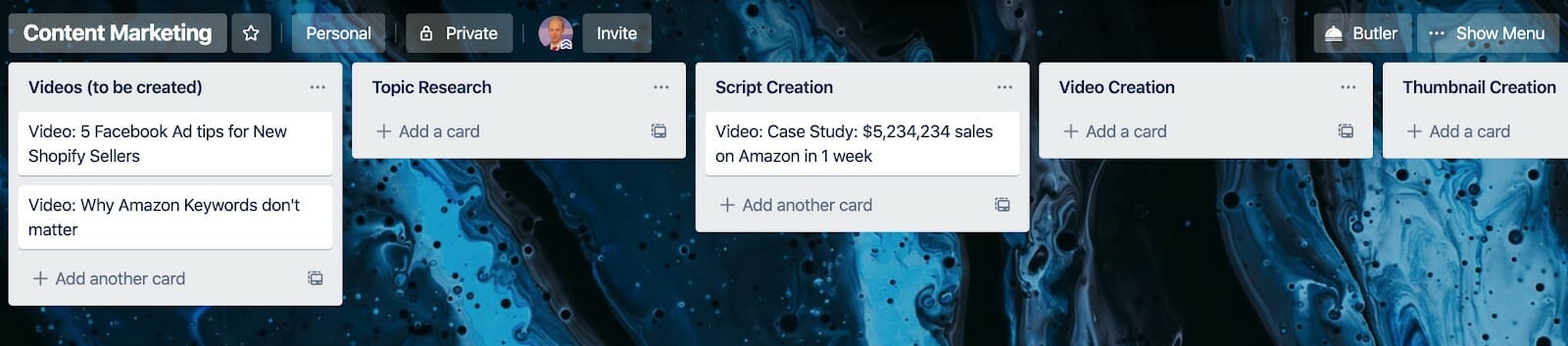
My recommendation is that you create a Trello board for each type of content (videos, articles, etc.), a list for each stage of the production process, and a card for each piece of content. As each piece of content passes through each stage of production, team members simply drag the card to the next list while adding any comments, deadlines and files.

Screenshot 2020 02 29 at 23.51.06

B) CoSchedule

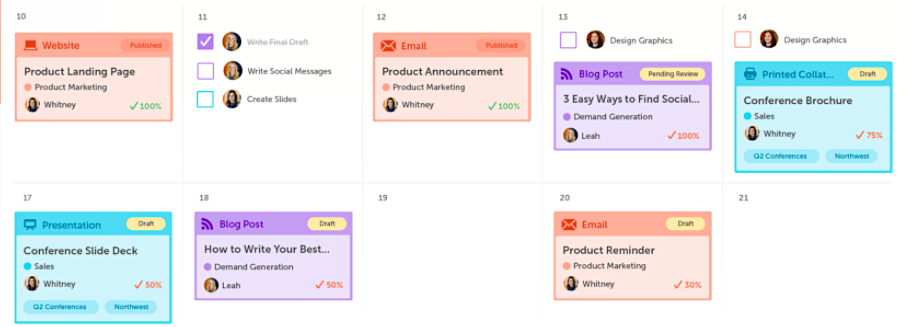
CoSchedule is a highly capable alternative that’s specifically designed for content marketing. It's potentially a better alternative for larger companies that are willing to pay between $19-$39 per month per user.

For smaller SaaS companies with large numbers of team members involved in the content production process, this may be prohibitively expensive compared to Trello.

CoSchedule calendar

Writing and SEO

A) Airstory

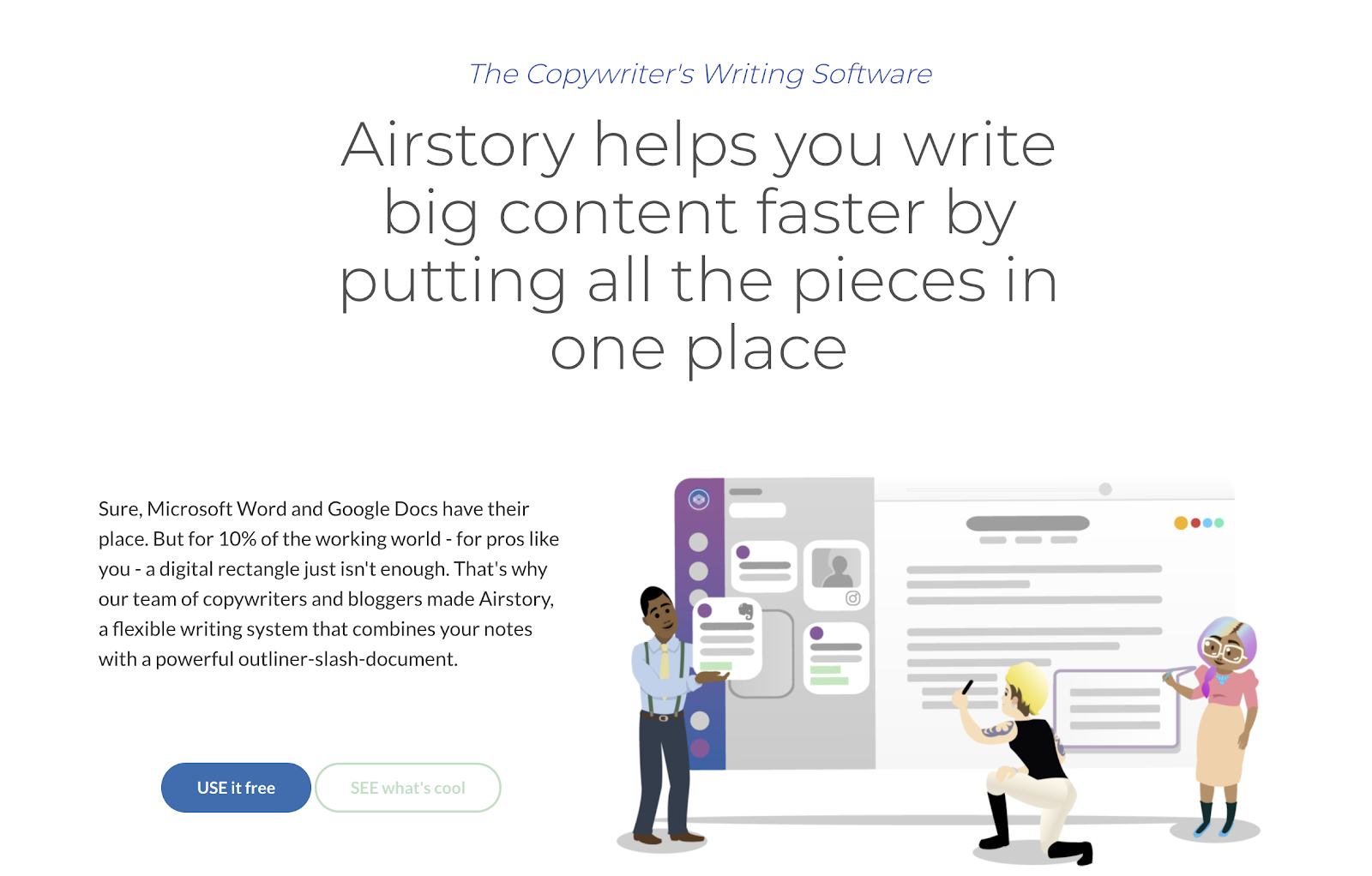
Unlike Microsoft Word or Google Docs, Airstory is built from the ground up for writing content, which means it has cool features like:

  • Publish directly to WordPress
  • Save research notes using the Chrome extension
  • Time Travel back through previous versions of your document
  • Borderless pages (because “you're not faxing your document to 1994”) and the ability to drag your notes onto the page
  • Highlight text you've written and turn it into a note with one click, in case you want to save it for later
  • Right click on a picture or highlight text anywhere on the web and send it back to your Airstory document

Best of all, it’s completely free for 97.4% of users.

Screenshot 2020 09 06 at 19.49.14

Other noteworthy alternatives to consider:

  • Google Docs – A classic that isn’t going away anytime soon. It’s free to use and easy to collaborate and share docs with others, but the main drawback is that it was built for general users rather than for copywriters, so it lacks a few of the useful features of Airstory.
  • Grammarly  A fantastic tool for correcting basic spelling and grammatical errors. With the premium version, you also get more advanced suggestions for sprucing up your copy.
  • Writer – An enterprise tool similar to Grammarly. The difference here is that Writer allows you to upload brand and writing style guidelines so that your content maintains a consistent voice regardless of who’s writing it.
  • Yoast – If your SaaS content marketing strategy is built around improving your SEO performance, then you need Yoast. Yoast’s WordPress SEO plugin provides automatic suggestions for optimizing your content to rank better in search engines. Upgrade to the premium version for $89/year and never look back.

Tracking Results

Tracking and attributing results from content marketing will depend on which goal you’ve chosen. As such, you may not need all these tools, but here’s a rundown of the ones you should consider.

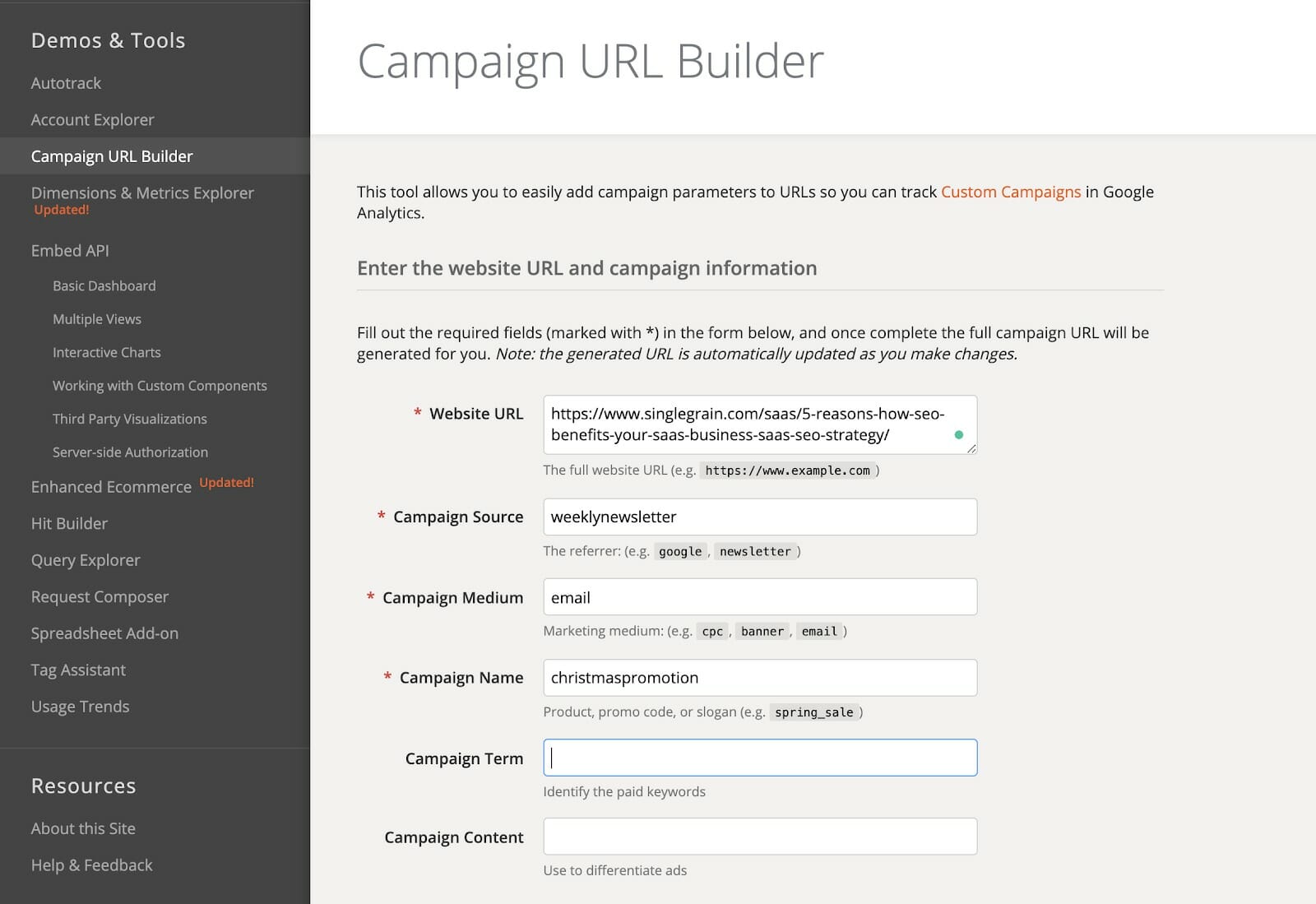
A) Google Campaign URL Builder

As you promote your content, you’ll need to be able to track where your traffic and sign ups come from in order to attribute them correctly.

Google's Campaign URL Builder is a free tool that helps you add UTM tags to your links so that you can track the sources and campaigns of your leads:

Screenshot 2020 09 06 at 20.11.08

B) Google Analytics

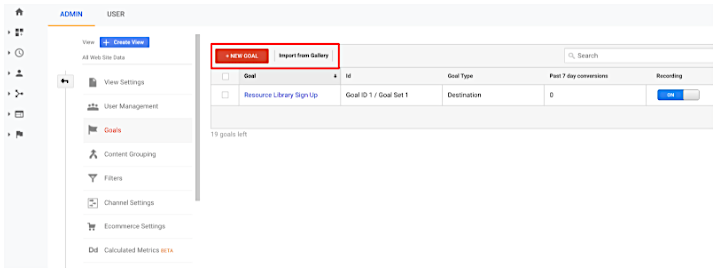
Google Analytics is still hands-down the best and easiest way to analyze what’s happening on your website. Once set up, you can use it to track everything from traffic to sign-ups. Learn how to set up your goals and funnels in Google Analytics:

GA goal

C) Pipedrive

You’ll need to use a CRM to capture the details of any leads that sign up as a direct result of your content.

Pipedrive is great at doing this for SaaS companies because not only does it store the UTM details of any sign-ups, it has an easy-to-use sales pipeline. What this means in practice is that you can track which of your sign-ups are free users or upgrades to a paid plan, as well as create filters to display all the leads that come from a specific article or promotional source – making performance reporting super easy.

Pipedrive(2)

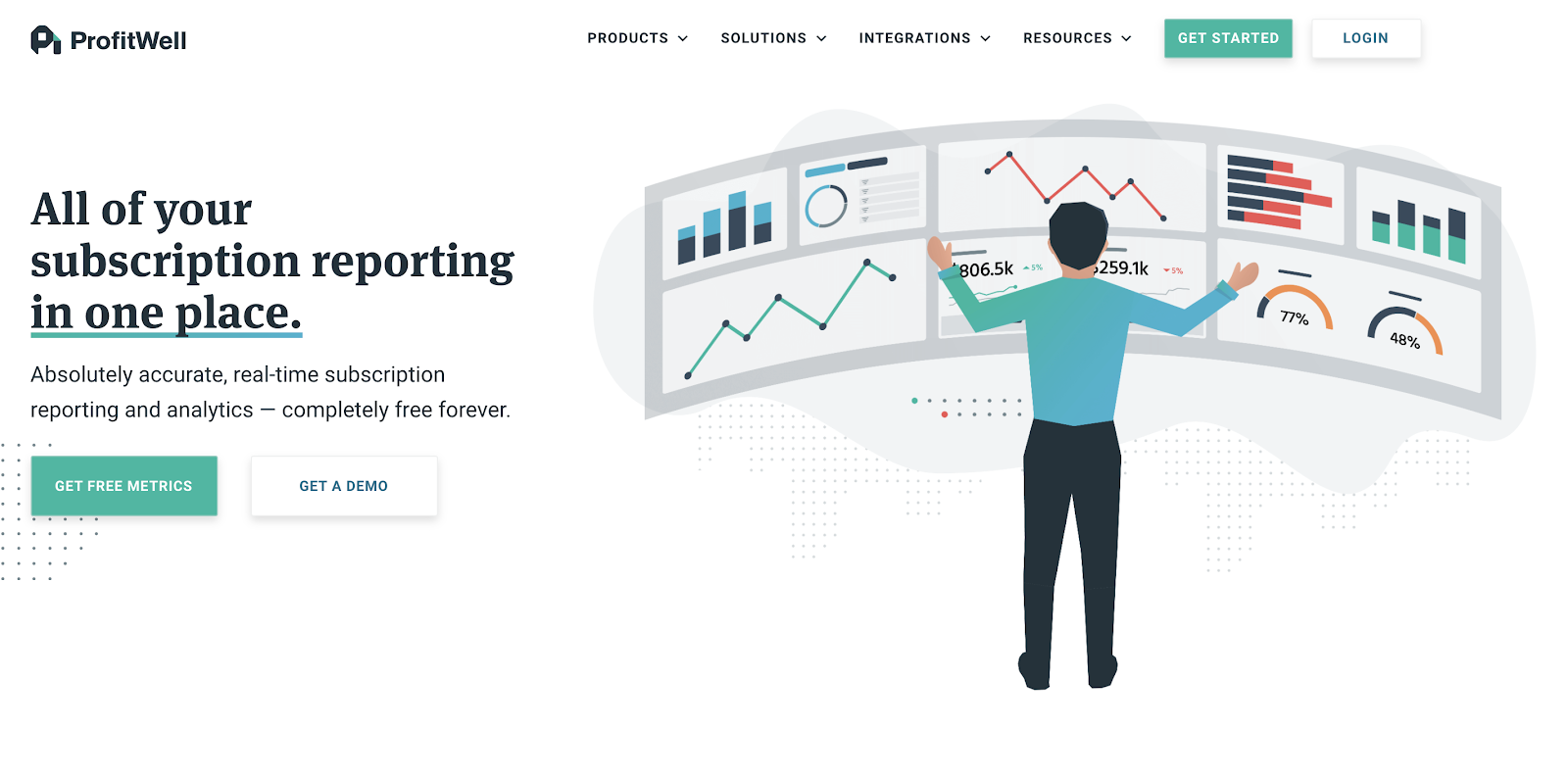
D) Profitwell

Profitwell is the best tool for tracking advanced SaaS business metrics such as revenue, churn, user engagement and acquisition. And it's absolutely free to use.

Screenshot 2020 09 06 at 20.23.13

E) Mention

If the main goal of your SaaS content marketing strategy is to increase brand awareness, then consider using Mention. This tool helps you to monitor the web and social media for mentions of your brand, allowing you to see what’s being said and how your brand is being perceived.

Lastly, make sure to read our article on SaaS SEO to see the best ways to track the results of an SEO-focused content marketing strategy.

Content Promotion

A) Autopilot

If your SaaS company is already using an email marketing tool that you’re happy with, then stick with it for simplicity. If not, consider switching to Autopilot.

What makes Autopilot a great choice specifically for SaaS companies is the ease of use, advanced features, and the huge number of integrations. Yes, any email marketing software can send an email, but with Autopilot you can go much further. For example, you can sync your CRM, add tags in Intercom or add leads to your Facebook audience. Try it free for 30 days.

B) Buffer

Take the stress away from publishing promotional social media posts. Buffer can post for you on Facebook, Twitter, Instagram, LinkedIn and Pinterest – and analyze your campaigns, too.

Buffer

Examples of SaaS Companies with Great Content Marketing

Looking for some inspiration? Here are two examples of SaaS companies that have been successful with their content marketing efforts:

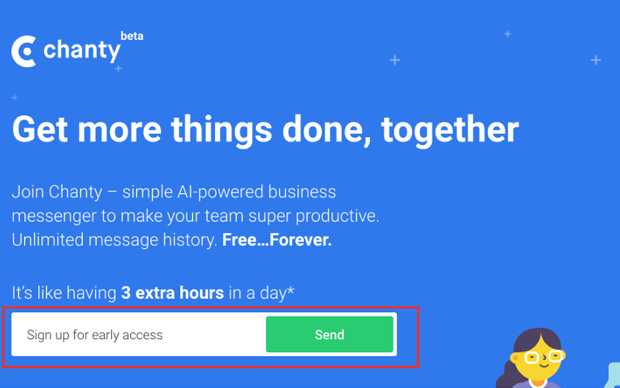
Chanty

Chanty is a SaaS application for team chat that competes against the big guns with big budgets like Slack and Microsoft Teams. However, instead of fearing their competitors, they used them to their advantage when it came to content marketing. Without the budget to compete at traditional marketing, Chanty set their main goal as getting sign-ups from content via organic search.

During their research, they realized that there were a number of high buyer intent keywords with a reasonable search volume that they could target around their competitors, such as “Slack alternatives,” “Microsoft Teams vs Slack” and “Slack competitors.” The Chanty content team then wrote a large number of detailed reviews and articles about their competitors, using their keywords!

The result? Thanks to content marketing, Chanty now has over 10,000 active users! They published the full inside story about their content marketing efforts here.

Chanty CTA and signup form

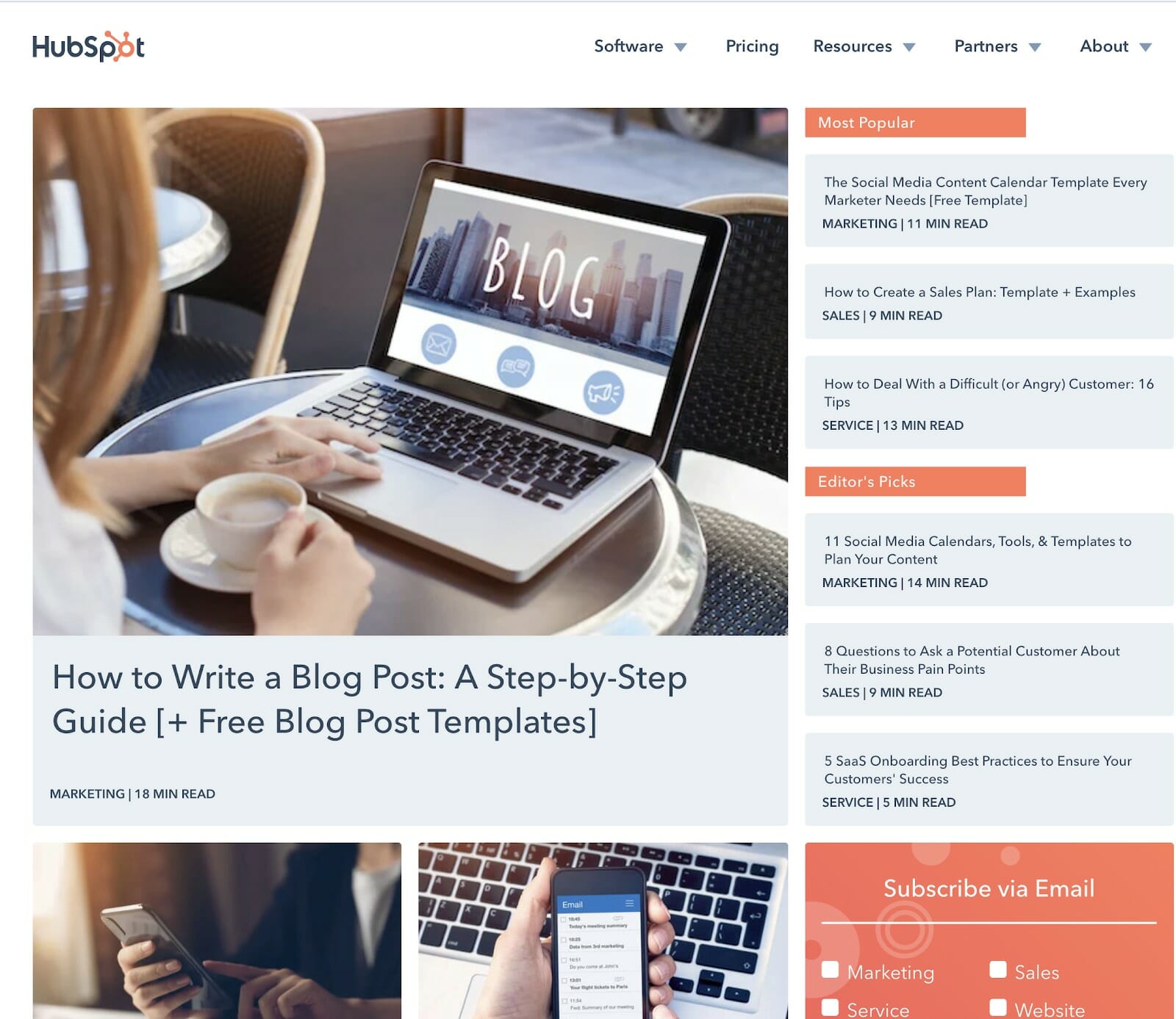
HubSpot

If you’re looking to create an SEO-based content marketing strategy, then HubSpot is a great example to follow.

This platform provides sales and marketing software, which is a very competitive niche, yet their strategy is incredibly simple – consistently create high quality content for all parts of the funnel, from TOFU articles such as “how to write a blog post”, to BOFU content like “how to use a CRM”.

Screenshot 2020 09 09 at 19.19.54

The idea behind this is one that can be replicated by most other SaaS companies: By focusing on content throughout the funnel, not only do they attract new users who are ready to buy now, but they also build long-term brand awareness from marketers who aren’t ready to buy yet, but may do so in the future.

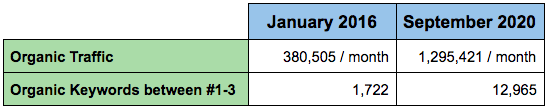
As a result of this focus, HubSpot has managed to 3X their organic traffic in just under five years, and rank between #1-3 for nearly 13,000 keywords in organic search:

HubSpot KWs

Click here to download your free guide right now!

Final Thoughts on SaaS Content Marketing

With SaaS companies becoming less differentiated by features alone, content is becoming a major factor in users’ purchasing decisions. If you act now to build a long-term SaaS content marketing strategy, and you have the discipline to follow it, then you have the power to become the #1 software company in your industry. Best of luck!

The post How to Create a Killer SaaS Content Marketing Strategy appeared first on Single Grain.


from Single Grain https://ift.tt/3oUHtWE