Showing posts with label Convince and Convert: Social Media Consulting and Content Marketing Consulting. Show all posts

Thursday, 27 February 2020

10 Content Marketing Statistics for 2020

Content Marketing Statistics

Content marketing continues to generate buzz and can be an amazing way to generate new leads and convert those leads into customers. No matter what form the content takes, it can help establish a brand as an authority in its field. The state of content marketing in the last few years has been one of great change.

The latest State of Content Marketing Report from SEMrush analyzed more than 450,000 tweets, 700,000 blog posts, hundreds of thousands of Google search queries and surveyed more than 1,200 marketing professionals around the world.

The report uncovered a number of content marketing trends that ruled the marketing world over the past year.

Here are ten content marketing statistics from the report that highlight the trends most likely to continue over the next several years.

Longer Articles Over 3,000 Words Received 3X More Traffic


Longer articles over 3,000 words receive 3X more traffic, according to a report by @SEMrush #contentmarketing
Click To Tweet


In a few years, articles went from short pieces to lengthy, detailed pieces chock full of information. Pieces of 3,000 words or more got about three times the traffic and four times the shares as articles between 900 to 1,200 words. They also got more backlinks than shorter pieces.

While there is still a place for shorter pieces, a mix of long-form articles helps drive traffic and keeps site visitors engaged. The longer articles may also rank better in search engine results throughout 2020 (until the algorithms change yet again, anyway.
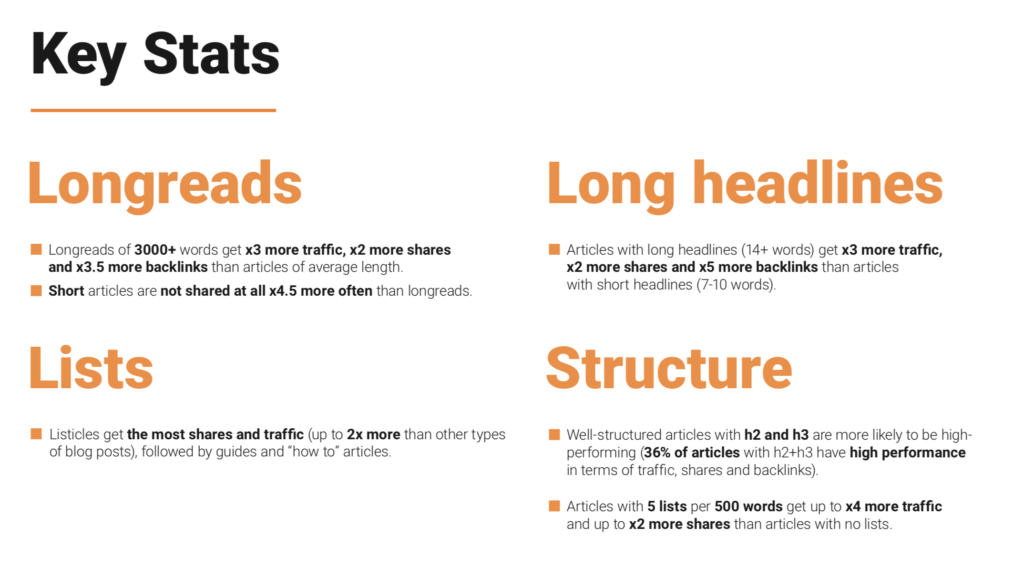
Anatomy of Top-Performing Content – Key Stats from the SEMrush State of Content Marketing Report

Around 37% of Americans Use Mobile Platforms to Go Online


Around 37% of Americans use mobile platforms to go online
Click To Tweet


For the last few years, there has been a huge push to go mobile-first and to really make online content smartphone-friendly.
While there is evidence that more and more people use their phones to access the internet, the results in the State of Content Marketing Report highlight that many still access websites via desktop.
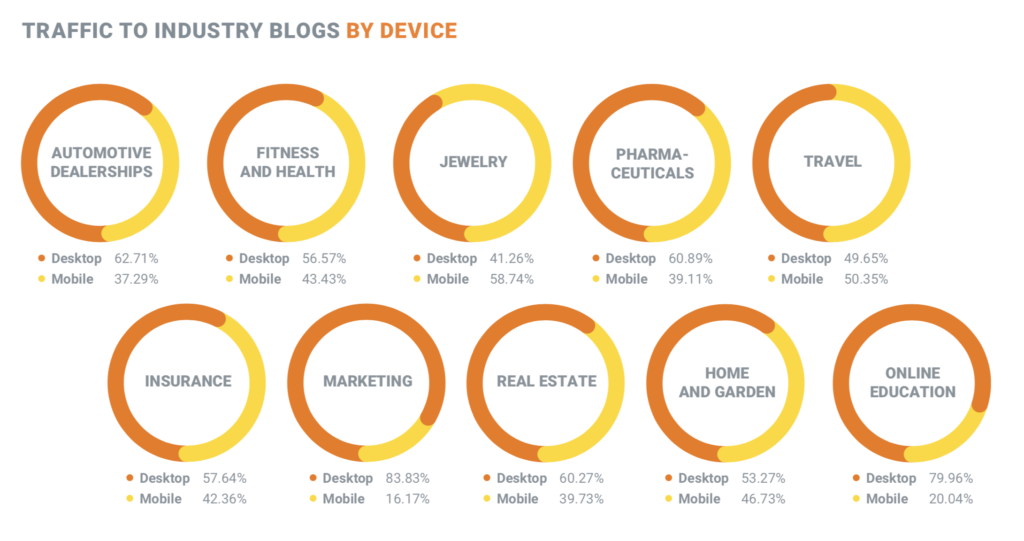
Traffic to Industry Blogs by Device

SEMrush looked at the devices people use to browse different industry blogs across the globe between April and September 2019 and split their traffic into desktop and mobile.

Pew Internet Research found that about 37% of Americans use their mobile devices to go online and the overall number of people owning a smartphone went from 35% in 2011 to 81% in 2019. Mobile usage continues to rise in 2020.

However, many still use their desktops to research information. In a look at over 1,000 blogs, researchers discovered that around 63% of the traffic to automotive dealerships is via desktop. The numbers reach as high as 80% and above for online education and marketing topics.

The key takeaway here is to write for the audience rather than a device and make sure your website adapts to whatever screen size the user has at a given moment.

content marketing - screen size

The Majority of Marketing Agencies Expanded Their Product Offerings

Another trend in the past year is a shift in the way marketing agencies package their products. Some agencies turned to proprietary software to increase the advantages of working with them over another agency. There is a lot of competition in the digital marketing space, so anything a company does to stand out increases potential profits.

Agencies should look at services already offered and find ways to expand into a full-service agency, so clients get all their exposure from one place. For example, add an event-planning service complete with logo-imprinted giveaway items. Any work that is farmed out or covered by another company is an opportunity for growth in 2020.

Successful Blogs Use a Mix of 13.8% Lists, 10.8% Q&As and 5.10% How-Tos

The report also looked at the different types of articles posted on blogs and found that most blogs benefited from a mix of different topics. For example, online education blogs had a mix of traffic that looked something like this: 3.6% guides, 5.10% how-to pieces, 10.8% Q&A articles and 13.8% lists.
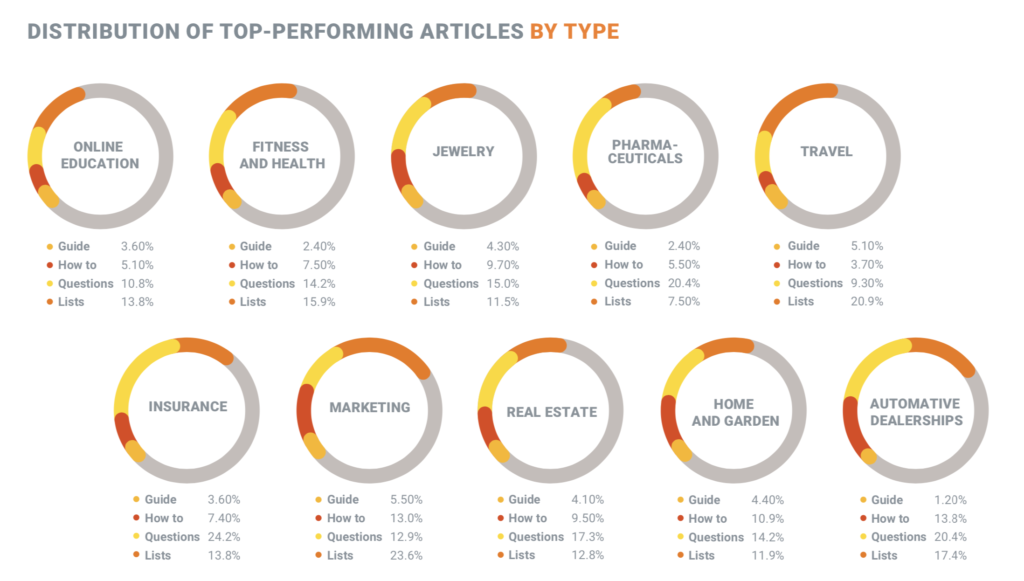
Industry Blogs Top-performing Articles by Type

Industry Blogs Top-performing Articles by Type

Finding the right mix for each website is a matter of digging into site analytics and analyzing not only the popular topics on that blog but also competitor blogs. Many blogs even offer a look at the most popular articles, making it easy to do a bit of research and uncover which topics are popular with a given target audience.

There Are 2.96 Billion People on Social Media

One thing the report uncovered is that most businesses aren’t using social media as much as they should be, based on the number of users. There are approximately 2.96 billion people on social media.

The only categories using social media frequently enough were the fitness and health, home and garden and pharmaceutical categories. Each business is unique, so some marketers did a better job at social media promotions than others. However, it is a real weakness in the industry that must be addressed.

Headlines of 14 Words or More Got 5X More Backlinks


Headlines of 14 words or more get 5X more backlinks #contentmarketing
Click To Tweet


The report also uncovered an increase in headline length. The reason writers should use longer headlines of 14 words or more is because they get twice as much traffic, two times as many shares and five times more backlinks.

The traditional advice was to keep headline length between seven and 10 words, but that seems to be changing. People want to know they are getting the specific information they’re seeking.

Listicles Get Double the Traffic of Other Types of Posts

Listicles seem to be everywhere. People are busy and they like information they can absorb in quick chunks. The ability to skim over subheadings in a listicle helps the user zero in on the exact advice they need.

The State of Content Marketing Report 2019 by SEMrush also uncovered that listicles get the most shares and traffic — as much as double what other types of posts receive.

36% of Articles With Both H2 and H3 Headings Got More Traffic and Shares

The study also uncovered that the use of both H2 and H3 headings resulted in higher performances.

About 36% of articles with both headings had more traffic, shares and backlinks than similar articles without. The reason likely comes back to the need for people to skim and find the exact material needed. Descriptive headings save the reader time and frustration.


36% of articles With both H2 and H3 headings get more traffic and shares #contentmarketing
Click To Tweet


2020 Is About Ranking Higher Than Position #1

Search engines such as Google now use position zero to highlight quick snippets of content. While rich snippets have been around for a while, the way Google pulls information from content changed a bit in the last two years.

A rich snippet can appear anywhere in the text, so utilizing bullets helps Google see what content readers need most. Bulleted lists also make content more skimmable for readers.

The Word ‘Strategy’ Appeared in 29% of Tweets About Content Marketing

For years, top marketers have turned to well-organized plans in order to gain the most traction possible. The keyword phrase “content marketing strategy” was the most popular keyword in the category of content marketing and appeared in 29% of tweets. Content marketing strategy also appeared in the top 20 questions asked on Google about the topic.
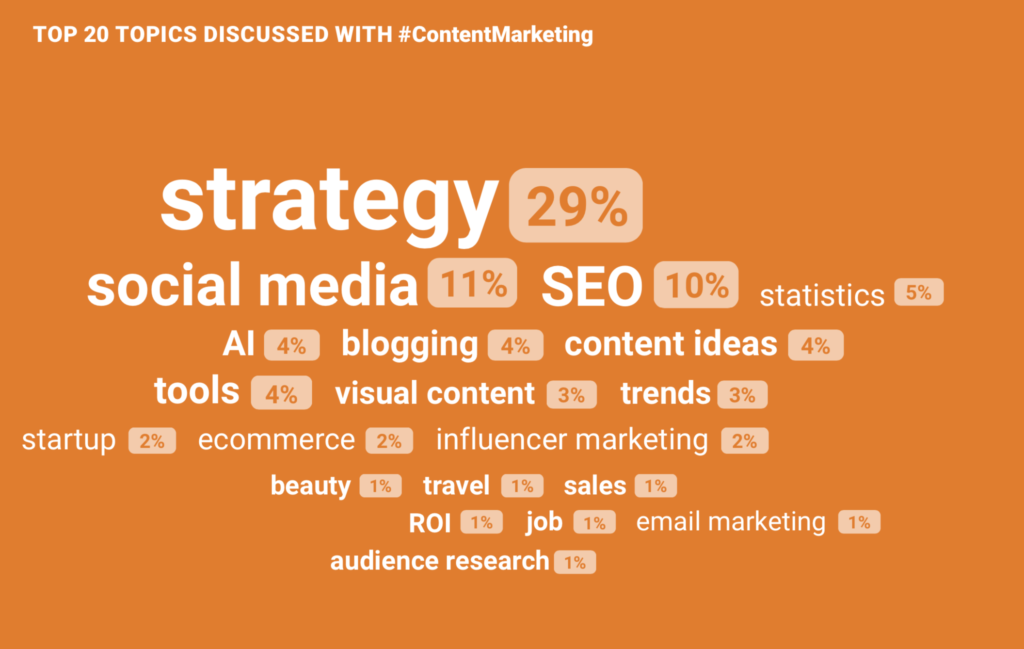
Topics Discussed with the #ContentMarketing hashtag

SEMrush used a mixture of machine learning and human expertise to analyze the topics (key themes) that were discussed in the most popular tweets (20+ retweets) that were published between January and September 2019 and contained the #ContentMarketing hashtag.

In the last year, most people noticed more and more campaigns geared toward a specific holiday or event. Promoters have learned that people want highly personalized material that speaks directly to them and their needs. At the same time, consistency is the key to brand name recognition. Planned-out programs offer variety while still tying everything together with an underlying theme.

Conclusion

If you haven’t already, I urge you to download the State of Content Marketing Report from SEMrush. It’s filled with even more useful data to help guide your content marketing strategy this year.

The post 10 Content Marketing Statistics for 2020 appeared first on Convince and Convert: Social Media Consulting and Content Marketing Consulting.


from Convince and Convert: Social Media Consulting and Content Marketing Consulting https://ift.tt/398DCg8

Tuesday, 25 February 2020

Martech Stack Optimization: 5 Insights for 2020

Martech Stack Optimization

Marketing continues to become more complex as marketing professionals have more and more marketing tactics available. Marketers need to think about content, website, mobile, SEO, SEM, programmatic advertising, video, podcasts, webinars, email, automation, personalization, data, social media, account-based marketing, affiliate marketing, eCommerce, engagement, live events, syndication, gamification, retargeting, AI and more.

As marketing continues to evolve, the technology needed to support marketing continues to evolve too.

What Is a Martech Stack?

The martech stack is the group of technologies that markers use to execute, analyze and improve their marketing across the customer lifecycle.

What Is Martech Stack Optimization?

Martech stack optimization is how you build your martech stack to optimize your marketing efforts. What technology do you need? What are your objectives? How do all of your technologies work together? Do they work together? What investment should you plan for? And more.

To understand the importance of martech stack optimization, you need to understand the growth of marketing technology in the past 10 years.

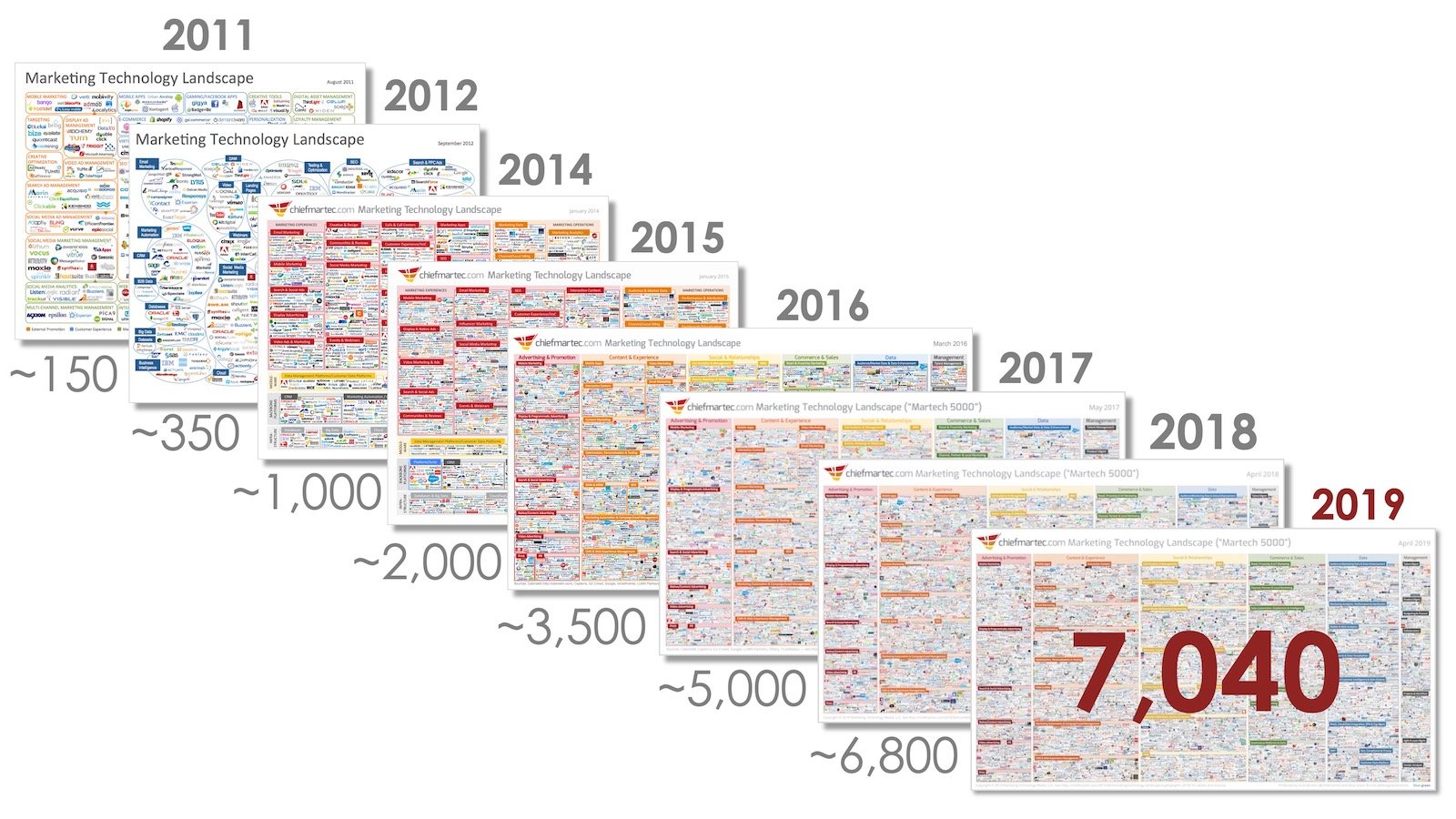
To understand the rapid growth of marketing technology, look at the Marketing Technology Infographic that is published by Scott Brinker, the Chief Marketing Technologist, each year. The infographic has had such rapid growth that it is now called a Supergraphic (a well-deserved title change).

Martech landscape supergraphic

The Supergraphic started in 2011 with 150 companies and has grown to 7,040 companies in 2019. Yes, that is not a typo – 7041!

To help marketing professionals with martech stack optimization, Ascend2, a research-based marketing firm, fielded the Martech Stack Optimization Survey. 265 marketing professionals participated in the survey.

With so many marketing technologies available, it is easy for companies to have a martech stack that is complex and highly inefficient. Too often, multiple Marketing Technologies (or the MarTech Stack) become a junkyard of underutilized and disparate tools. The purpose of optimizing this set of tools is to make difficult marketing processes easier and more efficient.

The Ascend2 survey helps answer the question: How will marketers optimize their martech tools in the year ahead? 

The Martech Stack Optimization Survey Summary Report is available free of charge and is filled with valuable research.

Here are a few noteworthy findings for the Asend2 research study on martech stack optimization:

Finding #1: Status of Martech Stack Optimization within Marketing Departments Today

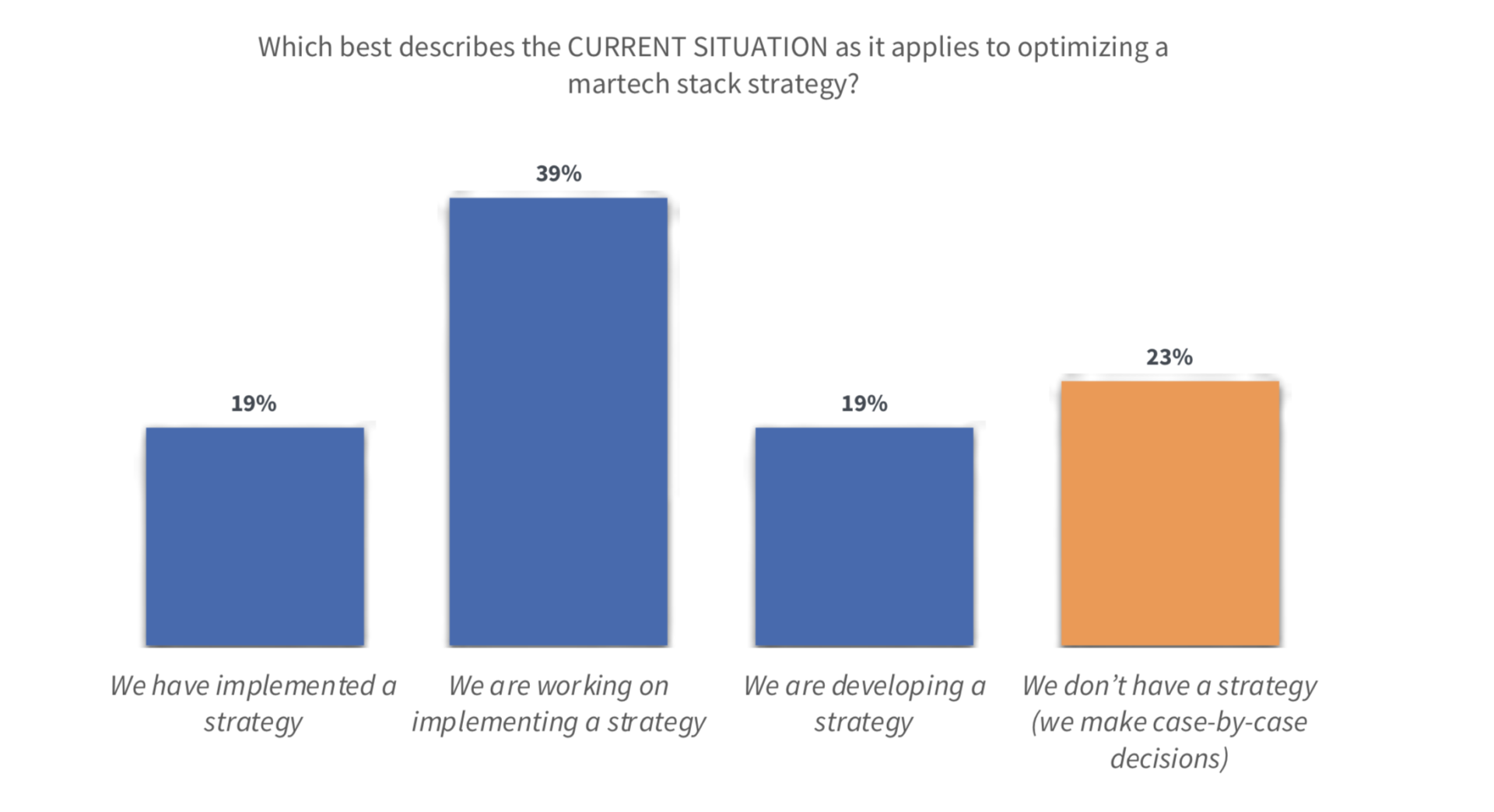
It seems that marketers have recognized and are slowly taking action when it comes to addressing how marketing technologies are utilized and managed. Only about one-in-five marketing professionals (19%) have an operational strategy in place for optimizing a martech stack. However, another 58% report being in the development or implementation phase of optimization.


About one-in-five marketing professionals (19%) have an operational strategy in place for optimizing a #martech stack.
Click To Tweet


Current Status of Optimizing a Martech Stack Strategy

Finding #2: Key Priorities of Martech Stack Optimization

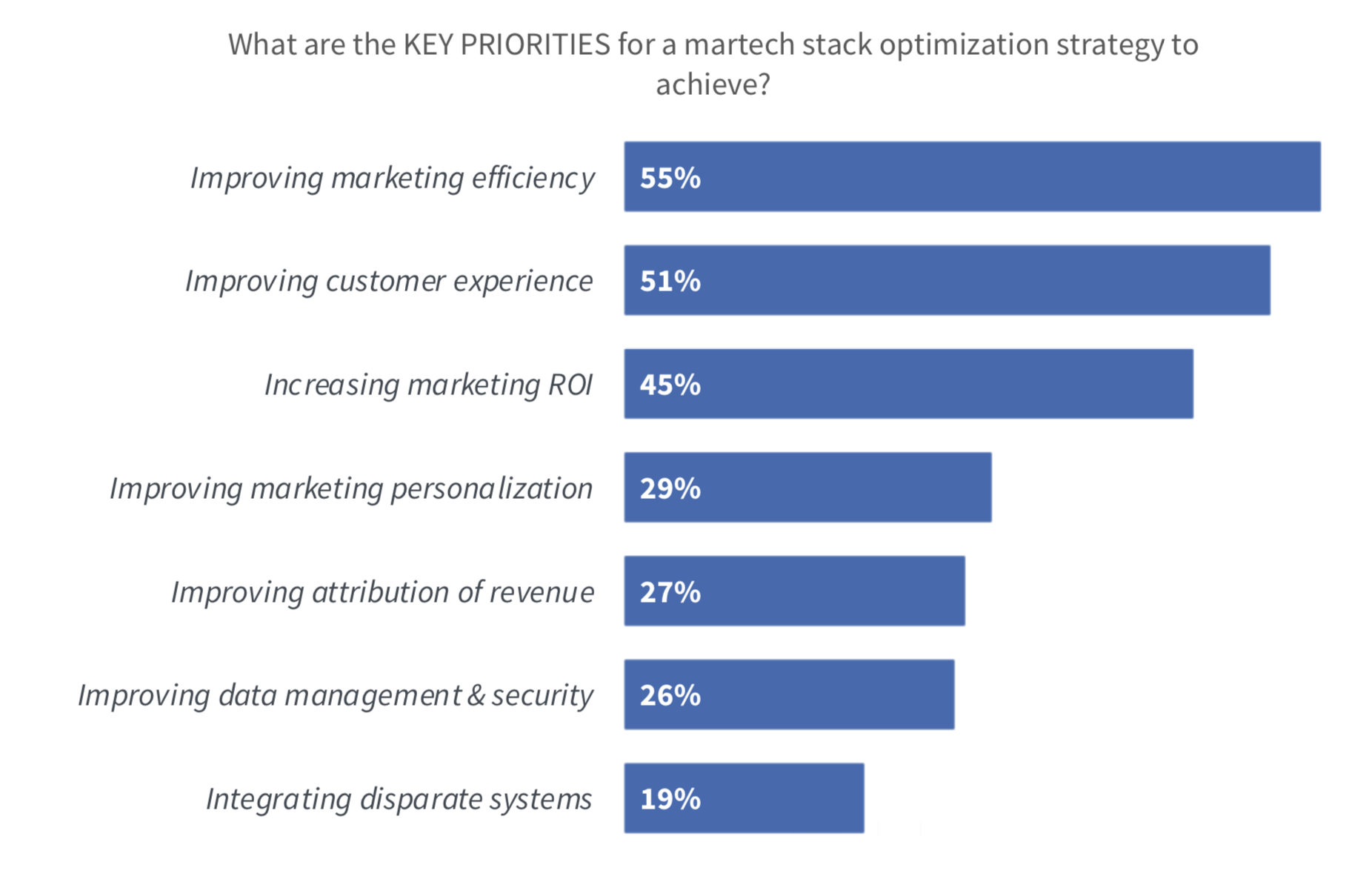
Marketers are tasked with strategically implementing the appropriate marketing technologies in a way that produces significant results. Making an overall marketing strategy more efficient is a top priority for 55% of marketing professionals implementing a martech stack optimization strategy. Improving customer experience is also a key objective for 51% of marketers surveyed.


Making an overall marketing strategy more efficient is a top priority for 55% of marketing professionals implementing a #martech stack optimization strategy.
Click To Tweet


Key Priorities of a Martech Stack Optimization Strategy

Finding #3: Martech Must Improve Improve Ease of Use

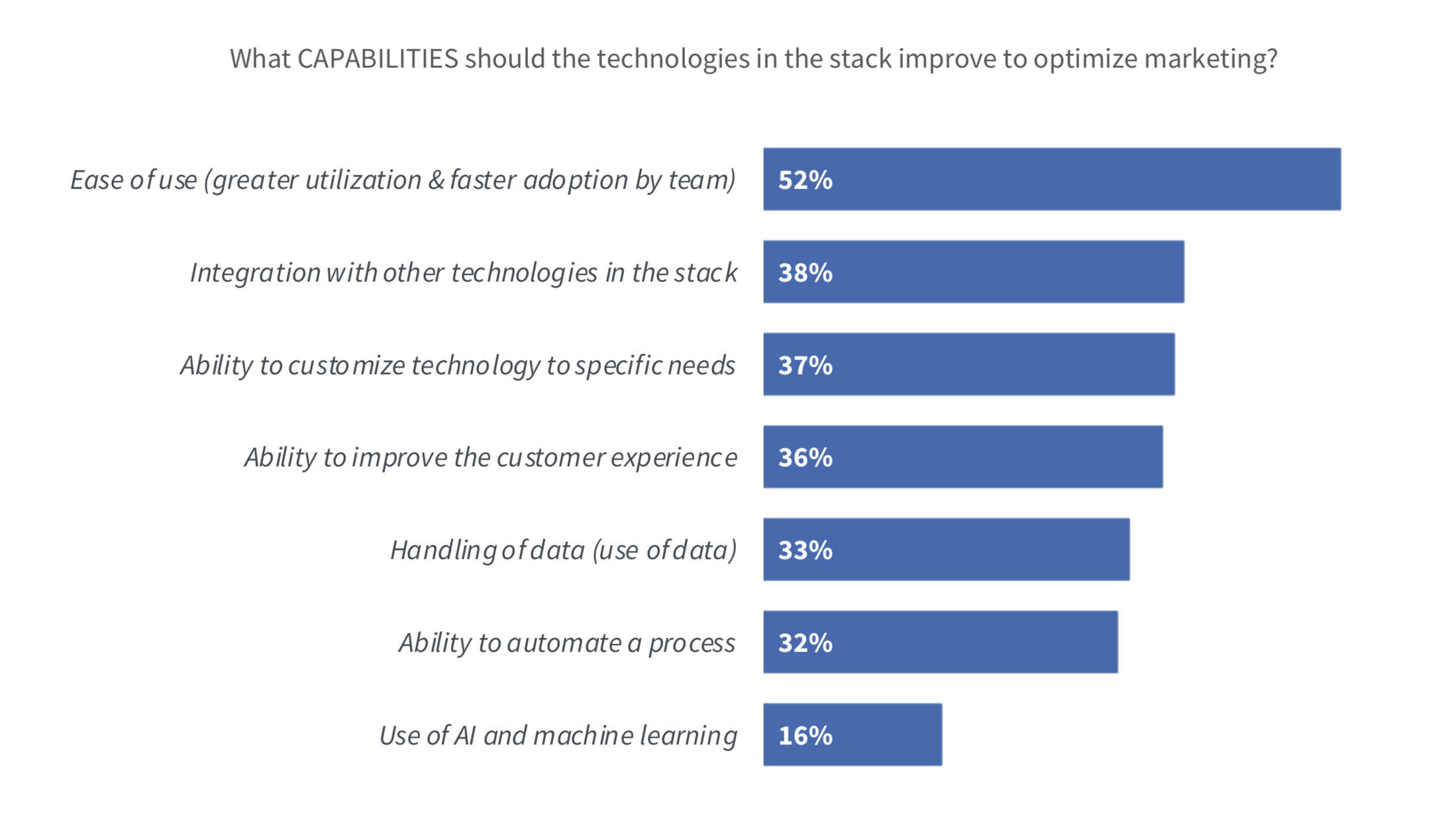
Many marketing technologies are only as good as what the user puts into them. In order to best optimize marketing, over half of the marketing professionals (52%) report that implemented martech need to improve ease of use. Increasing utilization and adoption of technology can lead to improved performance.

Capabilities that the Martech Stack Should Improve

Finding #4: Data Insights and Analysis Is the Most Important Feature of a Martech Stack

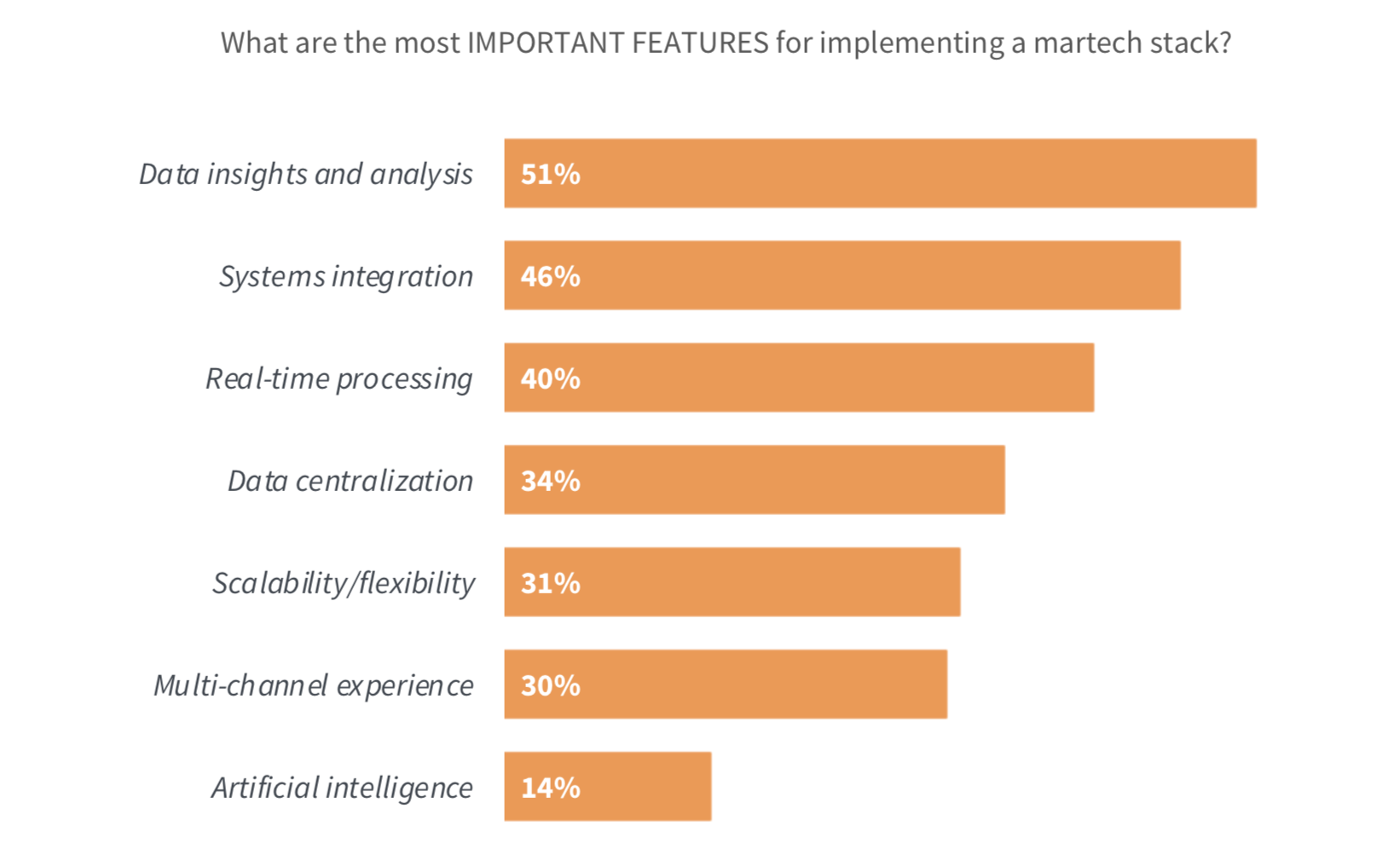
When implementing a martech stack, some features are more important to marketers than others. Access to data insights and analysis is the most important feature for 51% of marketing professionals surveyed who see the value in using data to optimize. Ensuring the seamless integration of systems is also of significant importance to 46% of marketers.

Why Implement a Martech Stack

Finding #5: Martech Stack Optimization Is an Important Investment

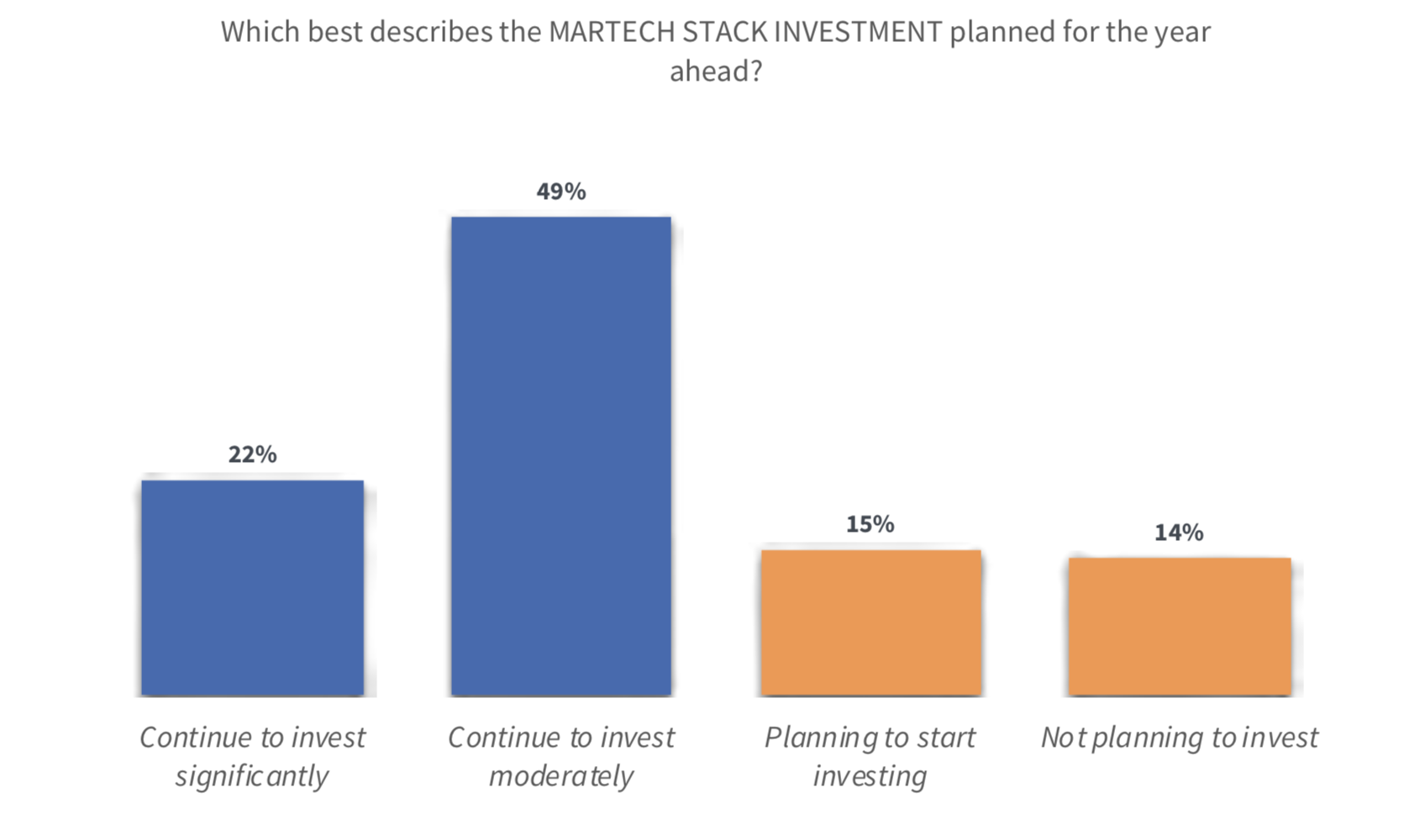
Marketers clearly see a benefit to dedicating resources to martech stack optimization, as 86% report that they will continue to invest or are planning to invest in the year ahead. About half of those surveyed (49%) describe this investment as moderate, while 22% say they will continue to invest significantly in optimizing a martech stack.

Martech Stack Investment

Conclusion

Before your martech stack looks more like a bowl of spaghetti than an optimized tool for marketing, take the time to build your strategy and determine what you need to be successful for the year ahead. To find out more about martech stack optimization, download the entire Ascend report.

The post Martech Stack Optimization: 5 Insights for 2020 appeared first on Convince and Convert: Social Media Consulting and Content Marketing Consulting.


from Convince and Convert: Social Media Consulting and Content Marketing Consulting https://ift.tt/2SWZsOc

Monday, 17 February 2020

How to Run Online Contests and Giveaways Like a Pro

How to Run Online Contests

Wondering how to run brand contests and giveaways like a pro?

Contests and giveaways can be an amazingly easy and quick way to generate positive engagement, get more traffic to your website and most importantly, generate more leads for your business.

That said, holding an online contest is not as easy as buying an iPad, posting a contest on Facebook and then waiting for the results to come in.

You might get lots of people interested and participating – and more likes than you ever expected on a post – but at the end of the day, if you’re not getting the right people signing up for your contest or giveaway (i.e. your target audience), you’re not going to get a return on your investment.

In this post, I’m going to show you how to run contests and giveaways like a pro – so that you’re not just doing a contest for the sake of it, but actually reaching your goals for your marketing strategies.

Why run online contests and giveaways?

As I mentioned in the introduction, contests and giveaways are a great way to get marketing results, quickly:

  • Boost engagement with your followers and generate new social media followers
  • Get more traffic to your website 
  • Grow your email list 
  • Generate more leads and sales for your business 

Contests and giveaways are interactive by nature and people often love them – after all, they’re an opportunity to win something that they want or need. That’s why it’s such a great tactic for boosting both your social media followers and your engagement. 

What’s more, contests and giveaways require participants to leave their details with you – and with the right type of contest and prize, that means you can generate more leads for your business.

Plus, contests are a great way to generate more interest in your business and the products and services you offer – so by promoting your products/services this way, you can even boost your sales, considerably.

That being said, not just any contest will get you these results – you need to be very clear about your objectives, build a contest that supports these objectives, offer the right prize and promote your contest/giveaway extensively.

Step 1: Determine Your Contest Objectives

Before starting any new marketing plan or campaign, it’s important to take the time to establish what your campaign’s objectives are. 

When you know what your objectives are, you can build a campaign that helps support these goals and helps you reach them. 

First consider, your overall marketing and business goals – what do you want to achieve in the coming quarter?

Once you’re clear on those objectives, you can plan your contest goals to help you reach the results you want. 

Here are some of the goals you can set up for your contest/giveaway campaign:

  • Generate more leads/email subscribers
  • Boost your sales
  • Increase brand awareness of your brand or a specific product/service
  • Get more social media followers
  • Boost your audience engagement 
  • Drive more traffic to your business website 
  • And to gather user-generated content 

Once you know what your goal is, you can build a campaign that will help you reach that goal. 

Step 2: Choose the Prize

The prize you offer in your contest or giveaway is one of the most important elements that can determine the success of your campaign. 

If your prize is too generic – like, let’s say an iPad, which seems to be one of the most used prizes for online contests – you might get a lot of attention, but is it the right attention?

The thing is, everyone could use an iPad: from a 14-year old teenager who’s in a videogame phase to a 35-year old marketing executive. 

In other words, you’re going to get a mishmash of people signing up for your contest, none of them potential customers for your business. 

Whatever your contest goal is, whether it’s to get more leads or more engagement, the key is to get these results from the right people. 

And to do so, you need a prize that will only appeal to your particular target audience. 

Ideally, your prize should be brand related, as well as something that your target audience wants. 

For example, one of the easiest ways to offer a good prize is to use your own businesses’ products or services, like this example from Qwertee who gave away 30 free t-shirts as part of their giveaway (and yes, they sell t-shirts):

The thing is, when you give away something related to your products or services, you’re going to get the right attention: not just freebie-seekers but people who would genuinely want or need your products/services. 

Some of the targeted, brand-related prizes you can offer:

  • Coupon codes and discounts to be used on your website/in-store
  • Your products 
  • Access to your services 

Make sure to also showcase the value of the prize – it’s another great opportunity to promote your business and your products/services and show people why they’re so valuable, like you can see on this contest landing page from Lucille Roberts:

Here’s another example, from Riedel UK, offering up a beautiful set of their wine glasses as a contest gift:

The reality is that you might get fewer participants than you’d want this way (or at least, compared to if you were giving away a tablet or something similar that appeals to a wider audience) but the idea is to get targeted participants. You want to get real leads, real engagement from people that are likely to be converted into your customers down the line. 

Step 3: Design Your Contest 

Once you know what you want to achieve with your contest and have decided on a prize, you can start putting together your contest or giveaway; there are numerous types of contests/giveaways, such as:

  • Photo and video contests
  • “pick your favourite” contest
  • Mention and/or hashtag contest
  • Writing or essay contest
  • Instant Win contests
  • The “refer-a-friend” contest
  • And of course, giveaways, which are similar across platforms

In order to run a successful contest or giveaway, you can use a number of tools to help create your contest, publish it on the channels you want, as well as manage your participants and assign winners fairly. 

Here are some useful contest tools to consider for your campaign:

Easypromos 

Easypromos is one of the most popular options for creating this type of interactive content; you can use it to create giveaways, contests, games, quizzes, as well as coupons and codes for special offers; in total, there are about 30 different applications to choose from:

And as you might notice above, it works on a variety of online platforms, including Instagram, Facebook, Twitter and YouTube, as well as your own website and even via email newsletters. 

There’s an easy-to-use drag-and-drop builder and plus, you can monitor your campaigns’ results and ROI, as well as set up automated emails to nurture your leads. 

Shortstack

Another popular solution is Shortstack; this robust tool allows you to create contests, giveaways and quizzes, as well as landing pages for your interactive content. 

It also has various features to ensure you can run your contest from start to finish: email marketing features, drip emails and lead collection tools among others. 

Their campaigns work on a variety of platforms, including all popular social networks, as well as on your website and on landing pages. 

Here are some of the most important elements that need to be on your contest post/page:

  • A title that gets people’s attention
  • Your prize
  • A very clear and visible call to action (usually, in the main title)
  • Entry details
  • Contest rules (make sure you’re following each platforms’ rules too)
  • Other contest details, such as the time frame for your contest and how the winners will find out

Step 4: Promote Your Contest Everywhere

In order to get the most out of your contest, make sure to promote it high and wide; the more people join in, the better. 

Here’s what you need to do in order to promote your contest:

  • First, create a landing page for your contest 
  • Send an email blast to your list and let them know about your contest and where they need to go to sign up (that email will probably have the biggest open rates you’ve seen so far!)
  • Promote your contest across all social channels
  • Promote your contest on your website and/or blog; for example, you can create a banner to promote it, use a Hello Bar or even write a blog post about it
  • Create an ad campaign: if you’ve planned a really big contest and want to get the most out of it, it might be a good idea to invest in social media ads to reach a much wider audience 

Conclusion

Contests and giveaways can be extremely powerful tools for your business; they offer this highly-effective, super-fast way to get results: more leads, more engagement, more traffic and so on. 

Follow the steps outlined in this step-by-step guide and you’ll be running high-performing contests and giveaways in minutes. 

Just remember this: stop giving away iPads.  

Unless you’re Apple, of course. 

The post How to Run Online Contests and Giveaways Like a Pro appeared first on Convince and Convert: Social Media Consulting and Content Marketing Consulting.


from Convince and Convert: Social Media Consulting and Content Marketing Consulting https://ift.tt/320deCu

Thursday, 13 February 2020

12 Video Marketing Statistics You Need to Know in 2020

12 Video Marketing Statistics You Need to Know in 2020

2020 is just getting started, and now is an ideal time to look at some video marketing statistics to shape your marketing plans.

In this post, we’ll dive into Vidyard’s Video in Business Benchmark Report and explore 12 key video marketing statistics from the research.

1. The Platform of Choice for Business Video Viewing Is Desktop 87% of the Time

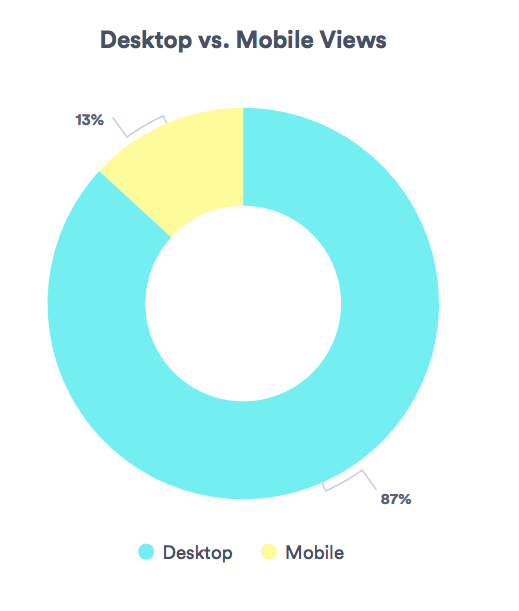
If you’re creating videos primarily for a business-to-business (B2B) audience, keep in mind that 87% of the views for such content still happen on desktop devices. Mobile views for B2B content are rising, but desktop views reign supreme. This statistic makes sense since most B2B audiences watch such videos at work.


The platform of choice for business video viewing is desktop 87% of the time. #B2B #videomarketing @vidyard
Click To Tweet


Desktop vs. Mobile Views for Business Video

Desktop vs. Mobile Views for Business Video Viewing

Why It Matters: The Vidyard report points out that designing videos for a desktop platform gives companies access to more features that make for a compelling viewing experience. You should not overlook responsive design, however, because keeping multiple screen sizes in mind ensures the content looks fantastic no matter how a person views it.

2. 22% of Business Video Views Happen on Thursdays 

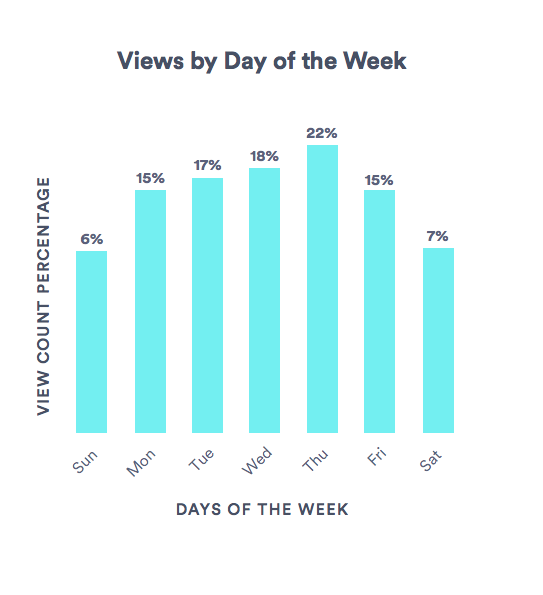
People have fierce debates about what day to publish their content, videos or otherwise. Vidyard’s data shows that most business video views — 22% — occur on Thursdays. The next most popular day was Wednesday at 18%.


22% of business video views happen on Thursdays #videmarketing
Click To Tweet


Business Video Views by Day of the Week

Business Video Views by Day of the Week

Why It Matters: Businesspeople likely feel the middle-to-end of their workweek provides the best opportunity to get engrossed in video content. They’ve probably already dealt with all the urgent issues that arrived over the weekend, for example. Some may also want to look at content late in the workweek so that they can casually ponder the issues raised during their more-relaxed weekends.

3. The Preferred Video Content Type for Businesses Is a Webinar in 56% of Cases

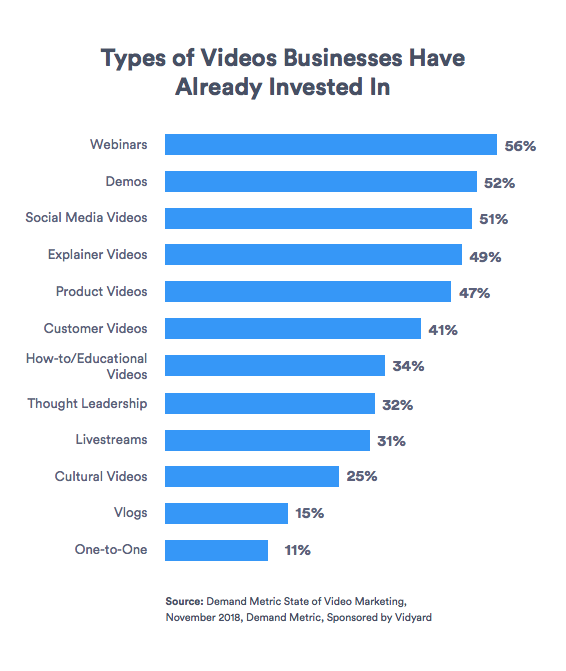
It’s understandably challenging for companies to decide which videos to create for business audiences. However, 56% of the time, they choose to make webinars. Demos and social media videos follow webinars, accounting for 52% and 51% of the videos that received company investment.


The preferred video content type for businesses is a webinar in 56% of cases #videomarketing
Click To Tweet


Types of Video for Businesses

Types of Video for Businesses

Why It Matters: The Vidyard report also cites a statistic from InsideSales, whereby 73% of marketing and sales leaders mentioned webinars as one of the best ways to achieve quality lead generation.

Another high point that makes webinars especially attractive is there are several types used to drive profits. One is a webinar series, and it could attract more people to a business over time. Opportunities also exist for participants to weigh in about future topics. Nanomechanics, Inc. took that approach with a webinar series about nanoindentation, which is a technique for measuring the mechanical properties of thin films.

4. Companies Distribute Videos Through Their Websites 85% of the Time

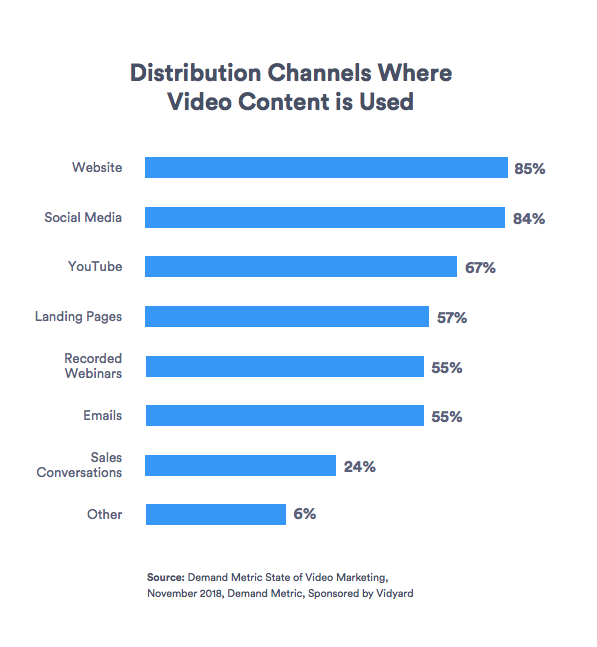
Companies distribute videos through a wide range of channels, including YouTube, social media and email. However, the method they choose 85% of the time is through their website, according to Vidyard.


Companies distribute video content through their websites 85% of the time #videomarketing
Click To Tweet


Popular distribution channels for business video

Popular distribution channels for business video


Why It Matters: Vidyard’s finding is not surprising. If brands host videos on their website, the likelihood goes up that a viewer could come across other online content.

KPMG, the multinational auditing, tax and advisory company, even uses video to directly speak to business people who might be looking for a change in career or work environment. The company’s website features several videos profiling what it’s like to work at the business. High-quality corporate videos work well for showcasing achievements that make somewhere an appealing place to work. They also convey things that words can’t.

5. 73% of Videos Are Two Minutes or Less in Length

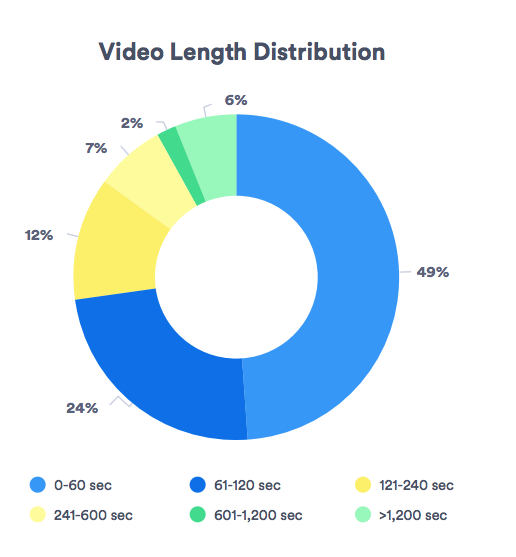
Evidence suggests that video marketing in 2020 will be all about keeping the content short and sweet. The Vidyard report confirms that 73% of videos clock in at two minutes or less. Only 2% are 10 to 20 minutes long.


73% of business videos are two minutes or less in length #videomarketing
Click To Tweet


Average Video Length

Average Video Length

Why It Matters: We all tend to have perpetually busy schedules. This Vidyard statistic seems to indicate that the goal is to get viewers to stay engaged until the content’s end. The authors of the research suggest that businesses may have data showing that retention rates are highest with short videos compared to longer ones.

Vidyard mentions that the trend toward shorter videos did not start recently — it cited video statistics going back to 2016. In some cases, this characteristic of videos geared toward business people began earlier.

Take the example of the now-defunct service called BriefMe. It offered a news-ranking service that helped people with packed schedules figure out which news articles to read first. The company had a 2015 YouTube video that was one minute and 39 seconds long. They had an early understanding that time-strapped people want information but don’t necessarily have lots of time to digest it.

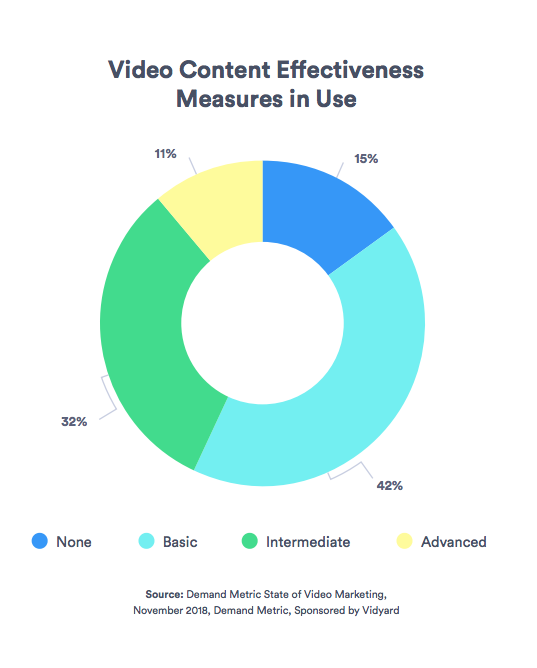
6. Only 15% of Businesses Do Not Use Metrics to Measure Video Effectiveness

Vidyard’s study indicated that an increased dependence on ultra-detailed metrics might be in the cards for video marketing in 2020. Only 15% of respondents said they did not use any data to gauge the success of a video marketing campaign. Even so, only 11% depend on advanced metrics, such as heat maps and viewer drop-off rates.


Only 15% of businesses do not use metrics to measure video effectiveness #video
Click To Tweet


Video Content Measurement

Video Content Effectiveness Measures in Use

Why It Matters: Although more companies are warming up to the idea of video marketing, some still show reluctance. The ability to access metrics at any point in a campaign can teach businesses what’s working and what may require tweaking. As marketers get more comfortable with using basic metrics, such as consumption measures, they should gradually feel more comfortable about deploying in-depth insights with more value.

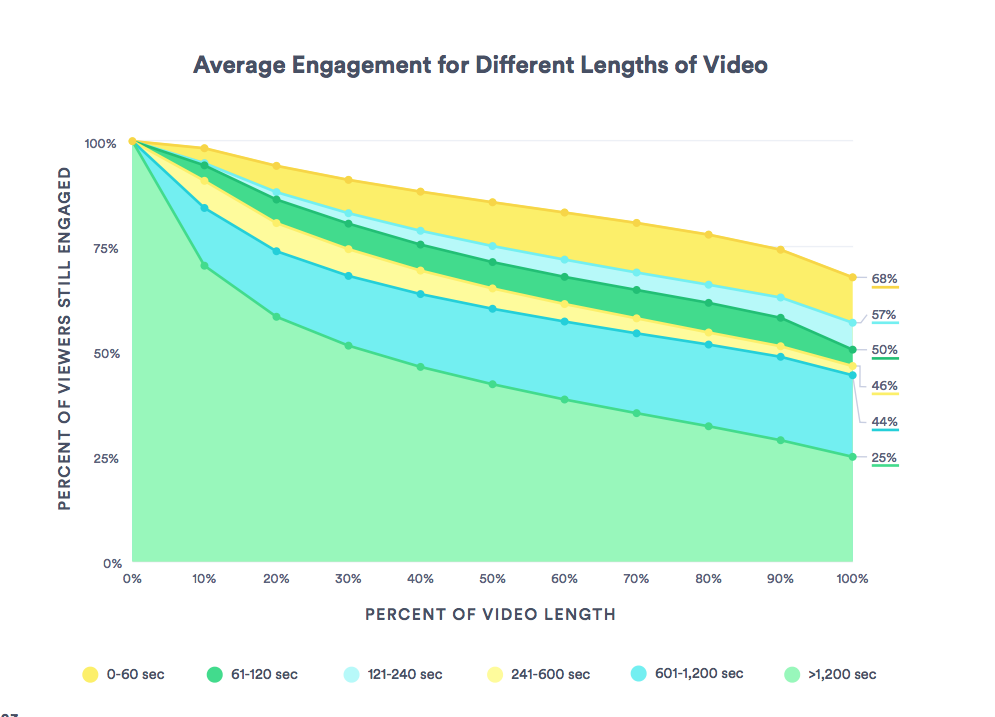
7. 68% of People Will Watch a Full Video if It’s a Minute Long or Less

Another statistic in the Vidyard report relates that 68% of people would watch a video in full as long as they don’t need to take more than a minute to do so. However, the figure drops by 18% if a video is 61 to 120 seconds in length.


68% of people will watch a full #video if it's a minute long or less
Click To Tweet


Engagement by Video Length

Engagement by Video Length

Why It Matters: Viewers may not feel compelled to sit through content in its entirety if it requires too much time. As a video marketer, you must take care to get your points across early and in a straightforward manner. That’s especially crucial to do if you have not yet established a trustworthy relationship with viewers.

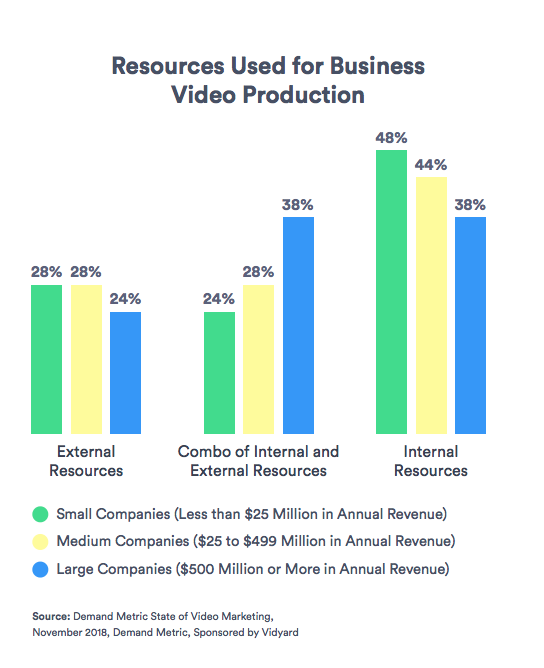
8. 52% of Small and Medium Businesses Use Both Internal and External Resources to Create Videos

As you can see from Vidyard’s graph below, small and medium companies collectively use external and internal resources to meet their video production goals, with medium-sized businesses doing so slightly more often. Together, these businesses use a combination of resources 52% of the time.


52% of small and medium businesses use both internal and external resources to create videos
Click To Tweet


Resources Used for Business Video Production

Resources Used for Business Video Production

Why It Matters: Companies increasingly realize it’s smart to see what they can accomplish in-house, then select outside assistance to fill in gaps. However, companies of all sizes frequently depend solely on internal teams. Vidyard’s report suggests that companies are upping their investments in video production by either upskilling current employees or hiring video experts.

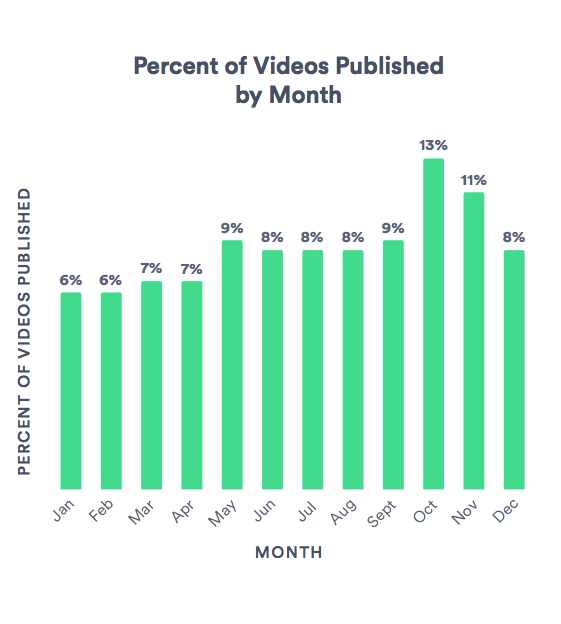
9. 13% of the Business Videos Published for the Year Appeared in October

You may expect to see a surge in videos at the start of the year and total percentages per month gradually decreasing. However, in 2018, the rates for videos published per month went up throughout the year, peaking in October at 13%.


13% of the business videos published for the year appeared in October #videomarketing
Click To Tweet


Business Videos Published by Month

Business Videos Published by Month

Why It Matters: Vidyard noted that several of the highest-volume months for video publication corresponded with the biggest seasons for conferences. Companies must unveil a carefully coordinated marketing effort associated with such events, whether they are organizing them, serving as sponsors or appearing within the event’s lineup as vendors or speakers. Videos can easily become a part of such campaigns, mainly to entice first-time attendees and create buzz.

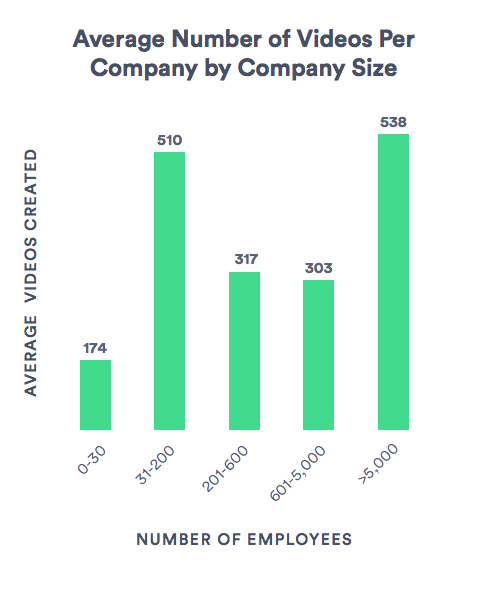
10. Companies With 31-200 Employees Create Nearly As Many Videos As Those With More Than 5,000 Workers

You may think that a company’s size determines its video production capabilities, but that’s not necessarily true. As you can see from the bar chart below, companies with at least 5,000 employees created only 28 videos more than those with a team member count in the 31-200 range.


Companies with 31-200 employees create nearly as many videos as those with more than 5,000 workers
Click To Tweet


Why It Matters: Vidyard believes that the impressive number of videos created by smaller organizations reflects that companies believe increased production helps them compete with bigger businesses. Also, Vidyard clarified that many firms in the 31-200 group are likely startups or companies in a hyper-growth phase. Videos could help them capitalize on existing momentum.

11. High-Tech Companies Produce an Average of 425 Videos Annually

Vidyard calculated the average number of videos created each year for companies in particular industries. The high-tech sector came out on top with 425 videos created on average.


High-tech companies produce an average of 425 videos annually
Click To Tweet


Average Number of Videos Created by Industry

Average Number of Videos Created Per Company by Industry

Why It Matters: As mentioned earlier, videos can show things that are hard to describe in videos alone. Also, if a technical process is complex, people may prefer seeing a video to solidify their understanding. As such, it’s not difficult to understand why high-tech companies see videos as a must-have resource for reaching business customers.

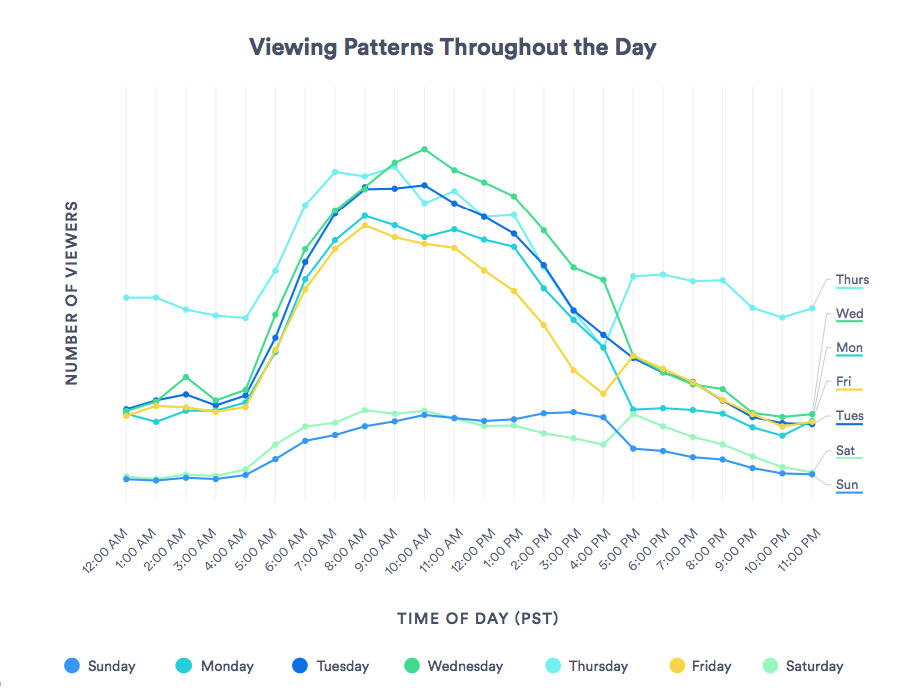
12. People Watch the Most Videos in the Mornings if It’s a Weekday

Despite some fluctuations, people are most likely to watch business videos in the mornings if consuming the content during a weekday.


People watch the most videos in the AM if it's a weekday #videomarketing
Click To Tweet


Video Viewing Patterns Throughout the Day

Video Viewing Patterns Throughout the Day

Why It Matters: You don’t want your videos to get lost in a crowded marketplace filled with fellow content producers. Therefore, timing is everything, and will likely remain crucial for video marketing in 2020 and beyond. Perhaps people are most eager to take in business videos in the mornings because doing so does not interfere with afternoon meetings. They could also decide that the morning works better because they can enjoy the content before getting deep into projects.

Valuable Video Marketing Statistics to Apply This Year

Hopefully, these statistics and takeaways have ignited your desire to maximize your video marketing potential this year. Regardless of your company size or industry, meeting milestones with videos is an outcome within your reach.

The post 12 Video Marketing Statistics You Need to Know in 2020 appeared first on Convince and Convert: Social Media Consulting and Content Marketing Consulting.


from Convince and Convert: Social Media Consulting and Content Marketing Consulting https://ift.tt/2UQXyzU

Friday, 7 February 2020

How to Create an Effective Press Page to Attract Coverage and Links

How to Create an Effective Press Page to Attract Coverage and Links

Would you like to receive more story requests from bloggers and journalists? Don’t you want to see more and more news stories mentioning your brand? Your first step to building more online coverage is to create an effective press page.

Why Create a Press Page?

I lost count of how many times I wanted to reach out to a brand (usually that’s a marketing tool I was curious to explore further) and struggled to find any clear instructions on how. I’ve also lost track of how many times I gave up when trying to mention a brand on Twitter and couldn’t find their Twitter handle anywhere.

Those brands missed a nice opportunity of being mentioned (which could even be a missed opportunity of onboarding a new brand advocate).

A well-built press page would have made that opportunity a reality.

Fundamentally, the major goals behind building a press page are:

  • Attracting “linking leads” (i.e. bloggers and journalists) by making your brand look interesting to them.
  • Delivering clear instructions on how they can get in touch (without leaving them wondering).
  • Providing you with a little bit more control over the online sentiment surrounding your brand (by surfacing favorable mentions).

Should You Create a Press Page or a Press Site?

There are certain pros and cons to setting up a dedicated site to curate news and encourage press contacts.

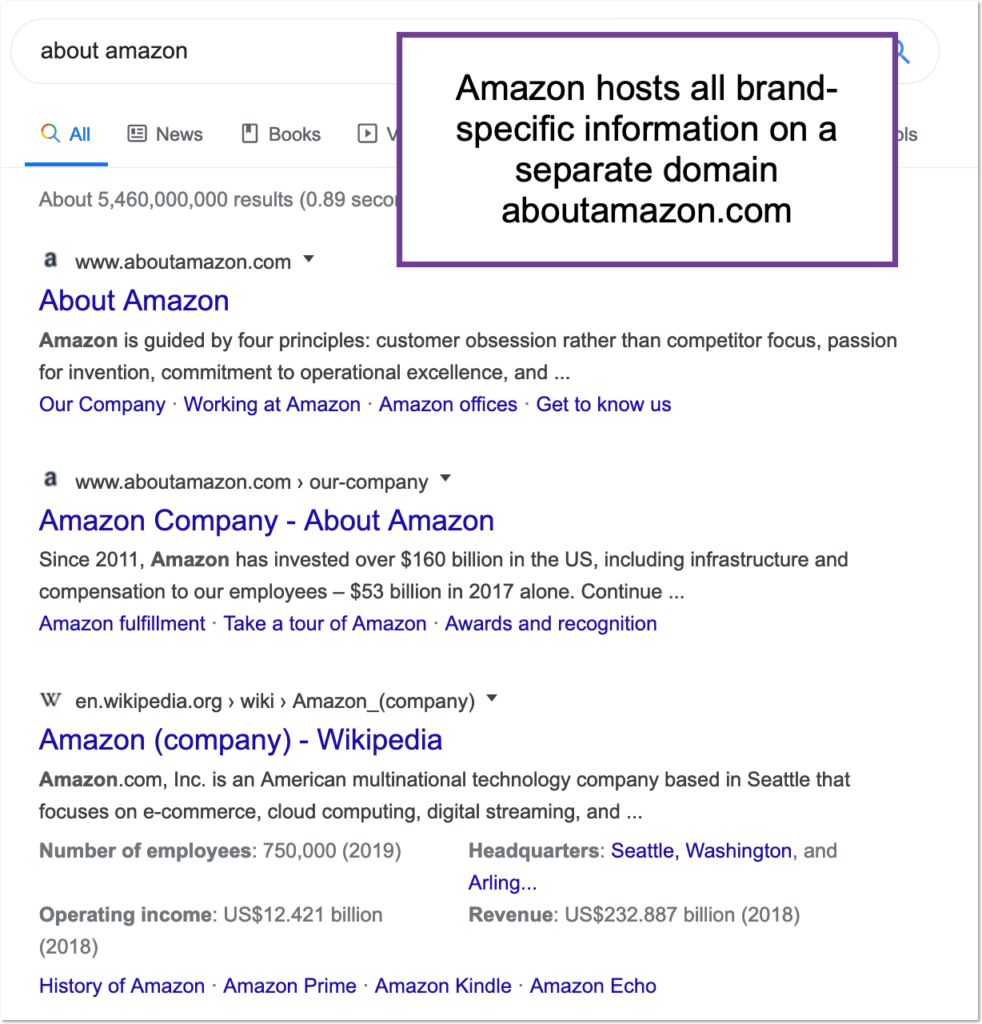
The biggest benefit of having a separate site is an ability to take more than one position in Google for your branded queries. Google is trying to show diverse results per SERPs, aiming to show no more than two results from the same domain for a particular query in the top results. So having additional sites will help you control more of your branded search SERPs.

Bigger companies usually have several domains building additional online context around the brand (and controlling more branded SERPs):

Amazon Press Site Example

Amazon hosts all brand-specific information on a separate domain aboutamazon.com

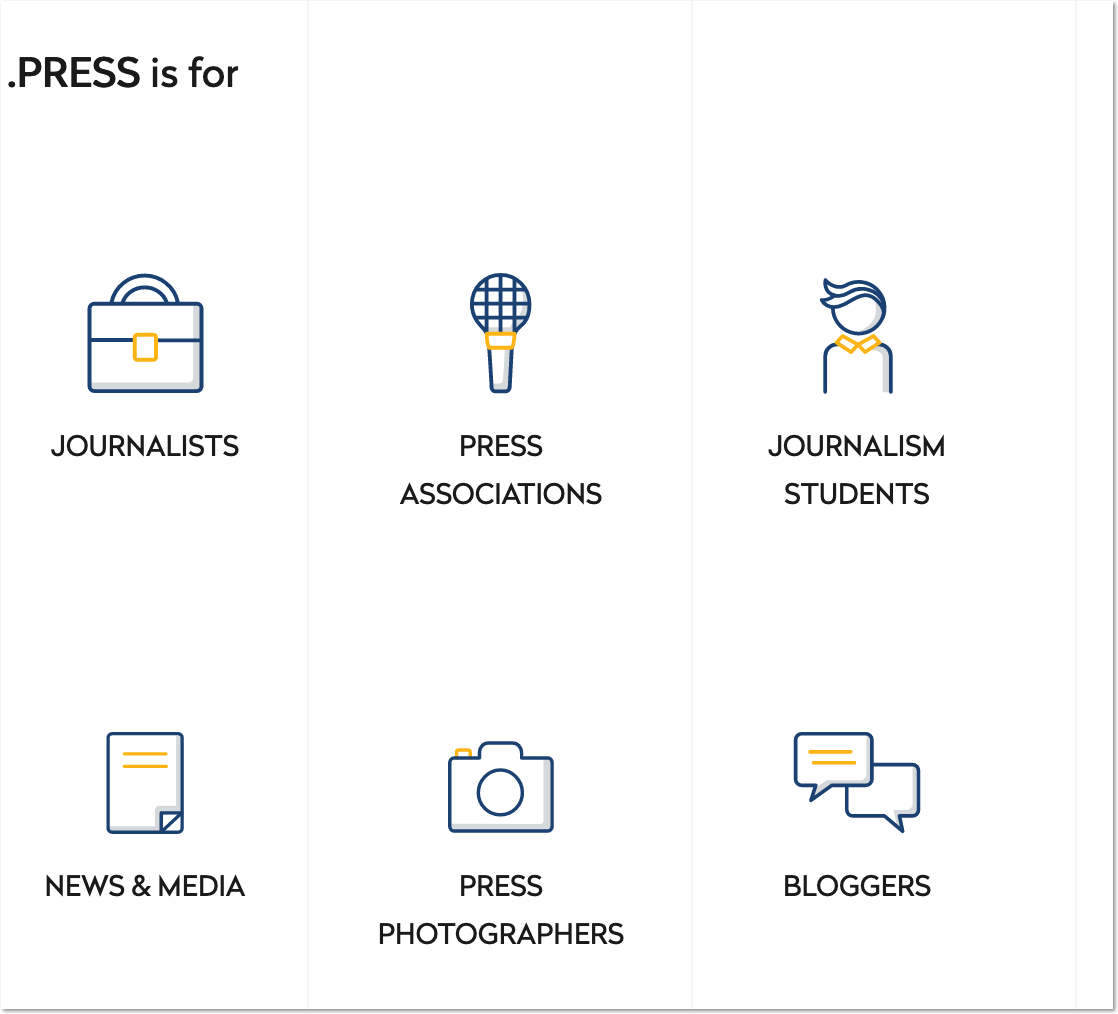
Radix offers a perfect domain name for your brand’s press room: .press:

Radix press domain ideas

Radix press domain ideas

On the other hand, building a separate site comes at a price: You need additional resources to build, design and maintain a separate entity.

I leave it up to you to decide, but I am personally leaning towards a separate entity option.

1. Past Mentions

There are a few important reasons why you want to curate your current press coverage:

  • Linking to pages that mention you will boost rankings of those pages. This helps you surface your positive mentions and, hence, better control your company’s online sentiment.
  • Featuring various stories around your brand gives journalists more ideas of possible angles for their own articles.
  • Publicizing your mentions encourages more bloggers to feature you (in hopes you will link to them from that section as well).
  • “As featured in” section offers you the power of social proof. Both your customers and journalists will trust your brand more once they see you are being covered in the news.

This section may contain all kinds of links that mention your brand in one way or another, including:

  • Your mentions in the news outlets.
  • Your management’s interviews.
  • Articles quoting you or your management.
  • Your CEO’s keynote coverage, etc.

It is also a good idea to curate your own press releases in this section.

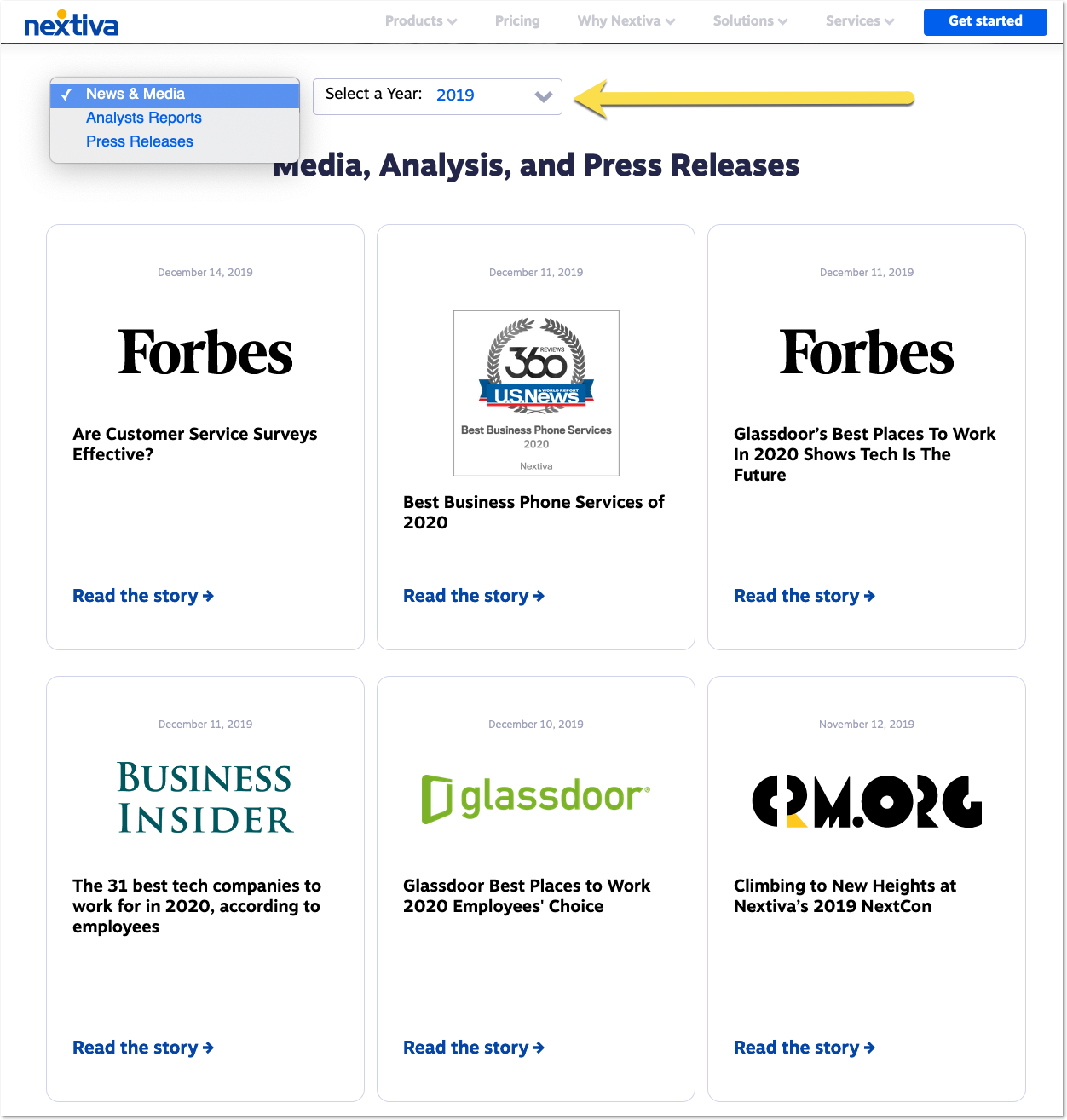
Nextiva does a great job curating news coverage of their brand:

Press Page Example

Great press page example from Nextiva. You can sort the list by year to find older / newer stories featuring the brand.

You can sort the list by year to find older / newer stories featuring the brand.

2. Contact Information

The best idea is to put a real person here, instead of a generic contact form. EPAM is a great example of doing that well:

Press page example with press contact

Great example of highlighting your press contact on your press page.

Knowing who to contact and being able to choose from a variety of options is likely to encourage many of your company’s linking leads to start the conversation.

3. “Behind-the-Scenes” Company Information

Again, one of the major goals behind a good press page is to make your company more interesting to bloggers and journalists, encouraging them to think of it as part of a story.

What’s a better way to make your company more interesting to people than by humanizing it. Show your team, your pictures, your conference trips, your charity events. You have a lot of uniqueness in your brand. Just show it.

4. Style Guide/Assets

Offering bloggers and journalists additional assets to include in their articles may incentivize them to create a more eye-catching context.

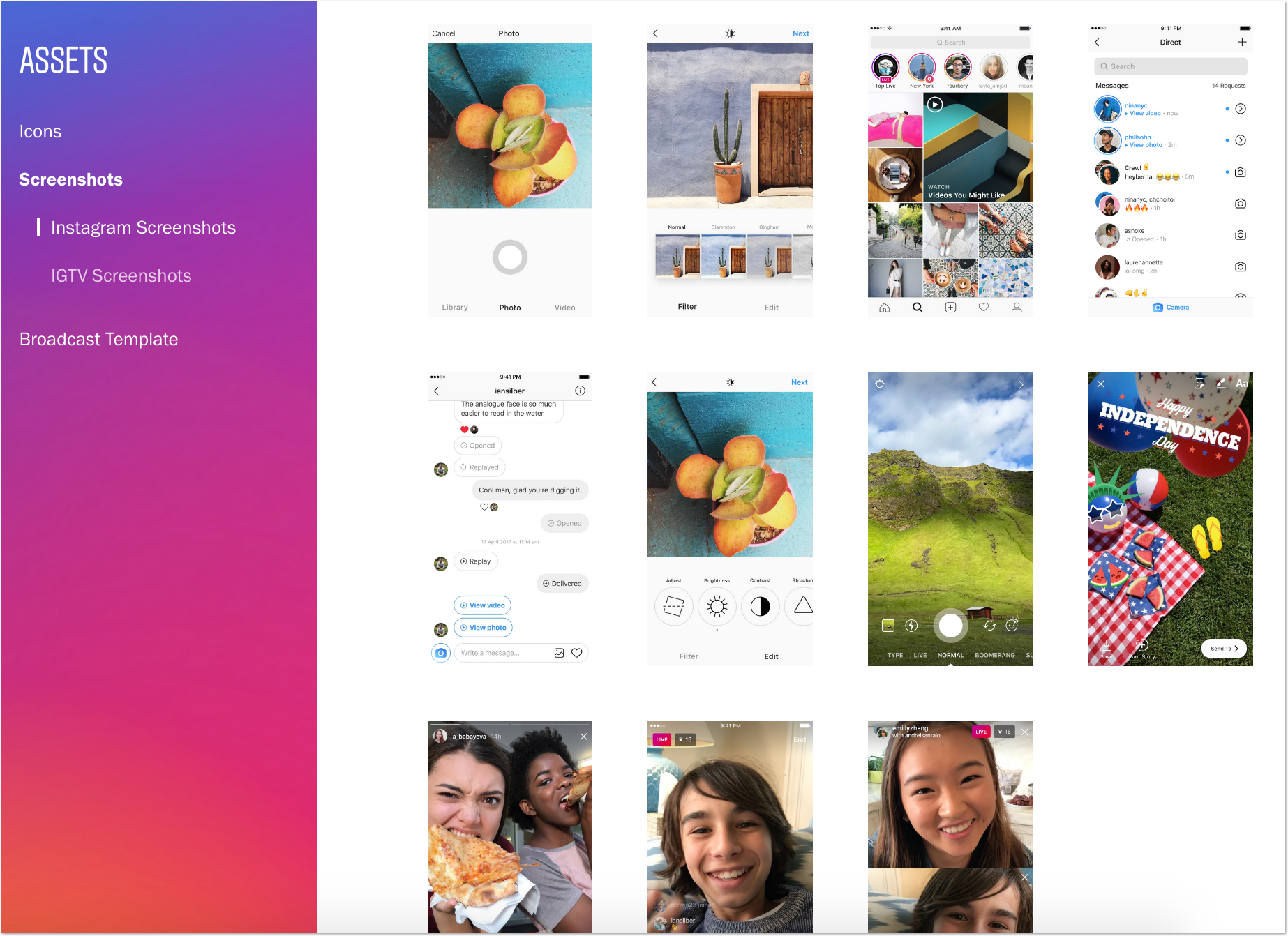
Instagram is a good example of providing exhaustive instructions as to how bloggers may be using their logos and where to download a high-resolution file. They also offer high-resolution screenshots for download and use within articles:

Style Guide/Assets example for a press page from instagram

Instagram’s asset collection is a great example of a style guide and assets for press to use

5. Your Social Media Channels

Finally, offering additional ways to get in touch is always a good idea. Plus, linking to your social media channels will allow bloggers and journalists to tag you in social media updates when your feature goes live.

Besides, encouraging your linking leads to follow you around would tie them closer to your brand and potentially keep them engaged.

Optimize Your Page for Organic Visibility

Finally, getting your press page (or site) rank for a variety of branded (and possibly even generic / non-branded) queries is key to generating more press coverage.

Text Optimizer will help you create an effective copy for your Press Coverage, which will help it rank higher in Google. Text Optimizer will check your current brand-name ranking and use semantic analysis to extract related concepts for you to include them in your copy:

It is also a good idea to come up with a user-engaging strategy making sure people who have found themselves on our press page will continue browsing the site.

Alter offers a few great user engaging options, including exit-intent popup that shows up exactly when your site users are ready to leave. You can control the pages that will show up and the content they will include:

Conclusion

So many companies are getting proactive with link acquisition and press coverage tactics, yet they forget the inbound aspect of them. Before investing in your journalistic email outreach, make sure you have a convincing landing page set up. That way, linking leads will know why and how to mention you when providing the coverage.

Setting up a press page (or a press site) is a one-time task, but it must be done in order to see your brand generating more and more organic mentions around the web.

The post How to Create an Effective Press Page to Attract Coverage and Links appeared first on Convince and Convert: Social Media Consulting and Content Marketing Consulting.


from Convince and Convert: Social Media Consulting and Content Marketing Consulting https://ift.tt/2OAFWnT

Monday, 6 January 2020

How to Make Content SEO Friendly

How to Make Content SEO Friendly

Building consistent organic search traffic is every digital publisher’s dream. But what does it really take to make your content SEO friendly?

The good news is it is not a rocket science.

On top of that, despite what many people think, it has nothing to do with “tricking” Google into thinking your content is high-quality or SEO friendly.

SEO stands for “Search Engine Optimization”, which basically means making sure a search algorithm can easily access and understand your content. There’s no dark art involved.

Here are the steps you should take to make your content SEO friendly:

1. Match Your Content Idea to a Searchable Phrase (Search Query)

So you have an idea in mind which you feel like writing about. This is where any content creation starts: “I have something to say on this topic, and I feel like it will be interesting and/or useful”.

Is anyone searching for this topic?

Chances are, if you have come up with the topic, there should be other people who may feel intrigued enough to research it in Google.

But how exactly are people searching for it?

This is the key question you should ask if you want to generate organic search engine traffic to your future content.

You need to know what people type in a search box when trying to find answers to questions you are covering in your content.

So your first step is to find those actual search queries.

This exercise is also useful because it helps research. Knowing what people are typing in Google’s search box will likely help you discover interesting angles, narrow your initial idea down to make it more specific and even structure your future article to make it more useful.

So even if you don’t really care about organic search positions, keyword research is useful to do.

But how?

The keyword research process — at its core — hasn’t changed much over the years. We do have much more data to work with, but the actual process is the same.

These days, we have a variety of tools that help you identify a keyword to focus on. Here are a few tools and approaches you can try:

1.1. Type Your Terms into Ahrefs

Ahrefs’ Keyword Explorer is a great tool for that because it offers “All keyword ideas” tab that broadens your initial idea to related and synonymous terms.

So if you were to type [grow tomatoes] and click through to that section, you’d find both phrases containing the term (e.g. “how to grow tomatoes”) and related concepts (e.g. “when to plant tomatoes“):

Ahrefs

This broadens your outlook and helps you come up with more words to include in your copy.

1.2. Discover What Your Future Competitor is Ranking For

If you’ve done at least some research on your content idea, you may have found some resources that are on the same or similar topic. So use those URLs to discover what they are ranking for.

Serpstats’ URL Analysis section is great for that:

SERPstat

Notice that Serpstat is also showing all “extra” search elements that show up for each query in Google, so you get a good idea of what your future target SERPs (search engine result pages) may look like.

Note that both of these platforms offer “keyword difficulty” metric signaling of the level of your future organic competition. Obviously, the lower the keyword difficulty is, the better.

On the other hand, the higher the search volume, the more clicks each SERP may drive. So you want to try and pick a keyword that has high search volume and low keyword difficulty.

Here’s a more detailed guide on keyword research for you to become better at it. And here are even more keyword research questions answered.

2. Put Those Keywords in Prominent Places

While the process of researching keywords hasn’t changed much, the way we use keywords within content has.

These days, we don’t sacrifice the quality or flow of our copy for the sake of keyword density. In fact, we don’t pay attention to how many times we have used those keywords on-page.

We do use those keywords in prominent places on the page to make both Google and our human visitors more comfortable and confident there.

To put it simply, upon landing on your page, your users should clearly see terms they initially typed in the search box. That will put them more at ease and prompt them to linger a bit longer.

Keyword prominence means making your keywords visible on the page. It helps both search engine optimization and user-retention. Both of these help rankings.

Basically, you want those keywords to appear in:

  1. Page title
  2. Page URL slug (which in WordPress will be transferred from your title anyway)
  3. First paragraph
  4. Page subheading(s)
  5. Image alt text (Do make those alt text descriptive as it helps accessibility)

Keyword prominence

Many SEO plugins (like Yoast and SEO Editor) can handle a lot of these SEO elements, so it is a good idea to pick one.

3. Use Semantic Analysis to Match Google’s Expectations and Make Your Content More Indepth

As I have already stated before, Google has moved away from matching the exact query to the pages in its index. Ever since its Hummingbird update, Google has slowly but surely become better and better at understanding each query context and searcher’s intent behind it.

To match that context better and optimize for the intent, use semantic analysis, which is basically about clustering each query into underlying and related concepts and covering you in your content.

Text Optimizer is a tool that takes Google’s search snippets for any query and applies semantic analysis to identify areas of improvement. Text Optimizer can be used for writing new content from scratch:

Text Optimizer new content

You can also use the tool to analyze your existing content to identify areas of improvements:

Text Optimizer existing content

As you can see, Text Optimizer also helps analyze whether your content meets the query intent.

To increase your score at Text Optimizer:

  • Choose the most suitable words for your content and include them naturally into your article. Avoid keyword stuffing. Only choose terms that you find fitting your current context.
  • You may modify sentences or write new ones until you reach at least 80%

4. Diversify Your Content Formats

Google loves textual content, but the Internet in general and Google in particular has moved beyond text-only. Web users expect to see more formats, including videos and images. And Google recognizes that demand for content diversity, so it will feature all of those content formats.

In my previous article for Convince and Convert I described how videos improve SEO on many levels, including more exposure in search engine result pages and better on-page engagement.

With that in mind, any time you work on your article, think which other content assets can be created to enhance its value and improve SEO.

Luckily, creating videos doesn’t require any budget or skills. With tools like InVideo you can turn your articles into videos in a matter of seconds:

  • Select “I want to convert article into video” option
  • Paste in a maximum of 50 sentences (I usually use the tool to turn my article takeaways or subheadings into a video)
  • Pick the template and let the tool do the job
  • You can upload your own images (screenshots), tweak the subtitles and select the music

Invideo options

You are done! Now, upload the video to Youtube, add a keyword-rich title and description and embed it to your article.

For images, you can use Venngage or Visme to create nice visual takeaways or flowcharts (in case you have instructions to follow).

5. Set up an On-Page SEO Monitoring Routine

Finally, there’s always room for improvement, so monitoring your organic traffic is an important step here.

The must-have tool for that is Google’s own Search Console, which will show you which queries are sending you traffic. Just check your “Performance” tab regularly:

Google's own Search Console

Another useful tool to have is Finteza, which shows your organic traffic performance allowing you to dig deeper to see whether your organic traffic clicks engage with your ads.

Finteza

… or whether each search query sends traffic that brings conversions.

Finteza conversions

6. Don’t Forget External (Off-Site) Signals

Obviously, it is more to Google position than on-page optimization. You still need those backlinks that would help Google assign some authority to your content. But that’s a topic outside of the scope of this article. Besides, there’s a lot of content already written on that. And here’s another collection of tips on how to build links.

Finally, the above steps apply to any kind of optimization, whether it’s a blog, product pages or lead-generating landing pages.

I hope this guide will help you optimize your content to make it easier for Google to understand and hence help the search giant’s algorithm assign search positions it truly deserves.

The post How to Make Content SEO Friendly appeared first on Convince and Convert: Social Media Consulting and Content Marketing Consulting.


from Convince and Convert: Social Media Consulting and Content Marketing Consulting https://ift.tt/2sQASnR