Saturday, 31 January 2026

How Ant Group’s AI Health Assistant Captured 30 Million Users and Transformed China’s Medical Access

In a remarkable demonstration of artificial intelligence’s growing role in healthcare delivery, Ant Group’s AI-powered health chatbot Ant Afu has amassed 30 million monthly active users, positioning itself as one of China’s most downloaded health applications. The platform, seamlessly integrated within Alipay’s expansive digital ecosystem, represents a significant shift in how Chinese consumers access medical services, combining appointment scheduling, diagnostic test analysis, and insurance payment processing into a single interface.

The rapid adoption of Ant Afu reflects a broader transformation in China’s healthcare sector, where technology companies are stepping in to address systemic challenges that have long plagued the country’s medical system. According to Rest of World, users are increasingly turning to the AI chatbot to obtain personalized medical guidance that remains largely unavailable through traditional channels, particularly as public hospitals struggle under the weight of patient volume that far exceeds their capacity to deliver individualized care.

The success of Ant Afu signals more than just technological achievement; it highlights fundamental gaps in China’s healthcare infrastructure and the willingness of consumers to embrace AI-driven alternatives. With the platform processing millions of health queries monthly, Ant Group has effectively created a digital front door to healthcare services that bypasses many of the friction points that have historically deterred patients from seeking timely medical attention.

The Architecture of Digital Health Integration

Ant Afu’s technical architecture leverages Alipay’s existing user base of over one billion registered accounts, creating an immediate distribution advantage that few standalone health applications could match. The integration strategy eliminates the need for separate app downloads or account creation, reducing barriers to entry that typically hinder health technology adoption. Users can access Ant Afu directly through Alipay’s interface, where the chatbot functions as an intelligent triage system, helping patients understand symptoms, identify appropriate specialists, and navigate the often-confusing process of securing hospital appointments.

The platform’s diagnostic test analysis feature represents a particularly innovative application of AI in healthcare delivery. Rather than waiting days for physician interpretation, patients can upload laboratory results and medical imaging reports to receive preliminary analysis and explanations in plain language. While Ant Group emphasizes that these AI-generated interpretations are not substitutes for professional medical advice, they provide patients with immediate context and help them formulate more informed questions for their healthcare providers.

The insurance payment integration addresses one of the most significant pain points in China’s healthcare system: the complexity of navigating multiple insurance schemes and out-of-pocket payment requirements. By consolidating these financial transactions within the same platform that handles medical consultations and appointments, Ant Afu reduces administrative burden and creates a more streamlined patient experience. This vertical integration across the healthcare value chain distinguishes Ant Group’s approach from competitors who focus on individual components rather than end-to-end service delivery.

Market Forces Driving Adoption

The explosive growth of Ant Afu occurs against a backdrop of severe strain on China’s public hospital system. Major urban hospitals routinely face patient volumes that exceed their designed capacity by factors of two or three, resulting in wait times that can stretch to hours for routine consultations and weeks or months for specialist appointments. This capacity crisis has created fertile ground for digital health solutions that can provide immediate, if limited, medical guidance and help patients make more informed decisions about when and where to seek in-person care.

Demographic trends further amplify demand for accessible health information and services. China’s rapidly aging population, combined with rising rates of chronic diseases associated with urbanization and lifestyle changes, has created unprecedented pressure on healthcare resources. Younger, digitally-native consumers demonstrate particular enthusiasm for AI-powered health tools, viewing them as more convenient and less intimidating than traditional medical encounters. This generational shift in healthcare consumption patterns favors platforms like Ant Afu that prioritize user experience and accessibility.

The economic dimensions of healthcare access also play a crucial role in driving adoption. Despite significant government investment in expanding health insurance coverage, out-of-pocket medical expenses remain substantial for many Chinese families, particularly for specialized treatments or medications not covered by basic insurance plans. AI-powered preliminary consultations offer a cost-effective alternative to immediate hospital visits for non-urgent concerns, potentially saving patients both money and time while reserving scarce medical resources for cases requiring in-person intervention.

Regulatory Environment and Data Governance

The success of Ant Afu unfolds within China’s evolving regulatory framework for digital health services and artificial intelligence applications. Chinese authorities have demonstrated increasing sophistication in their approach to health technology regulation, seeking to encourage innovation while establishing guardrails around data privacy, clinical accuracy, and consumer protection. Ant Group must navigate requirements that govern both its financial services operations and its expanding healthcare activities, a dual regulatory burden that few competitors face.

Data governance represents a particularly sensitive issue given the volume and sensitivity of health information flowing through the platform. The integration of medical data with financial transaction records and personal identification information creates a comprehensive digital profile that carries significant privacy implications. While Chinese regulations require explicit user consent for data collection and impose restrictions on data sharing, enforcement mechanisms remain under development, and questions persist about how effectively current frameworks protect consumer interests in practice.

The regulatory environment also shapes competitive dynamics in China’s digital health market. Licensing requirements for telemedicine services, restrictions on AI diagnostic claims, and rules governing insurance product distribution all influence how platforms like Ant Afu structure their offerings and communicate capabilities to users. Ant Group’s established relationships with regulators through its core financial services business may provide advantages in navigating these complex requirements, though the company’s previous regulatory challenges, including the suspended IPO in 2020, demonstrate the risks inherent in operating at the intersection of technology and heavily regulated sectors.

Competitive Positioning and Market Share

Ant Afu competes in an increasingly crowded digital health market that includes offerings from technology giants, healthcare providers, and specialized health technology startups. Tencent, through its WeChat ecosystem, has developed similar integrated health services, while Alibaba Health operates parallel initiatives within the broader Alibaba Group structure. Traditional healthcare providers have also launched digital platforms, though these typically lack the seamless integration and user experience advantages that technology companies can leverage.

The competitive advantage Ant Group derives from Alipay’s massive installed base cannot be overstated. While competitors must invest heavily in user acquisition and retention, Ant Afu benefits from immediate access to hundreds of millions of active Alipay users who already trust the platform with sensitive financial information. This embedded distribution channel, combined with Alipay’s sophisticated data analytics capabilities and established payment infrastructure, creates network effects that reinforce Ant Afu’s market position.

However, market leadership in user numbers does not automatically translate to sustainable competitive advantage in healthcare delivery. Clinical accuracy, the breadth and depth of medical knowledge encoded in AI systems, and the quality of partnerships with healthcare providers all influence long-term success. Ant Group faces ongoing challenges in demonstrating that its AI capabilities can match or exceed those of competitors while maintaining user trust and regulatory compliance across multiple dimensions of healthcare service delivery.

Clinical Implications and Medical Community Response

The medical community’s response to platforms like Ant Afu reflects both recognition of potential benefits and concern about risks. Proponents argue that AI-powered health assistants can improve healthcare efficiency by handling routine inquiries, providing basic health education, and helping patients better prepare for clinical encounters. By serving as an intelligent triage system, these platforms may reduce unnecessary emergency room visits and help direct patients to appropriate levels of care, potentially easing burden on overextended hospital staff.

Critics raise concerns about diagnostic accuracy, the potential for AI systems to miss serious conditions or provide misleading guidance, and the risk that patients may delay necessary medical care while relying on chatbot consultations. The medical establishment also worries about liability issues when AI-generated advice contributes to adverse outcomes, particularly given the current lack of clear legal frameworks governing responsibility for AI-assisted medical decisions. These concerns intensify in China’s context, where medical malpractice litigation, while less common than in Western markets, increasingly shapes provider behavior and risk management strategies.

The relationship between AI health platforms and traditional healthcare providers remains evolving and sometimes contentious. While Ant Group positions Ant Afu as complementary to rather than competitive with physician services, the reality involves more complex dynamics. Some hospitals and physicians view these platforms as threats to patient relationships and revenue streams, while others recognize opportunities for collaboration that could enhance rather than replace human clinical judgment. The eventual equilibrium between AI-assisted and traditional healthcare delivery will likely emerge through ongoing negotiation between technology companies, medical providers, regulators, and patients themselves.

Technology Architecture and AI Capabilities

The artificial intelligence powering Ant Afu draws on natural language processing, machine learning models trained on extensive medical literature and clinical datasets, and integration with real-time health information systems. While Ant Group has not disclosed detailed technical specifications, industry observers believe the platform utilizes large language models adapted specifically for medical applications, similar to approaches employed by other leading health AI developers. The challenge lies in achieving sufficient accuracy and reliability to provide useful guidance while avoiding the generation of plausible-sounding but clinically incorrect information, a known limitation of current AI systems.

The test analysis functionality likely employs computer vision and pattern recognition algorithms to interpret laboratory reports and medical imaging, comparing results against normal ranges and flagging potential abnormalities. However, the complexity of medical interpretation, which often requires consideration of patient history, medication interactions, and subtle clinical context, presents significant technical challenges. Ant Group’s approach appears to focus on providing educational context and highlighting areas that warrant professional medical attention rather than attempting definitive diagnosis, a strategy that balances utility with risk management.

Continuous improvement of AI capabilities requires ongoing access to diverse, high-quality training data, presenting both opportunities and challenges for Ant Group. The platform’s large user base generates valuable real-world data on health queries, symptom presentations, and patient concerns, which can inform model refinement. However, ensuring data quality, managing selection bias in the user population, and maintaining privacy protections while leveraging data for AI development requires sophisticated governance frameworks and technical safeguards.

Business Model and Revenue Strategy

While Ant Group has not publicly detailed Ant Afu’s specific revenue model, the platform likely generates value through multiple channels aligned with Alipay’s broader business strategy. Transaction fees from insurance payments processed through the platform represent one obvious revenue stream, as do potential referral fees from healthcare providers who receive patient appointments facilitated by the chatbot. The platform may also serve as a distribution channel for health insurance products, wellness services, and pharmaceutical sales, creating additional monetization opportunities.

The strategic value of Ant Afu extends beyond direct revenue generation to encompass user engagement and ecosystem lock-in. By expanding Alipay’s utility beyond financial transactions into healthcare services, Ant Group increases the frequency and depth of user interactions with its platform, generating data insights that inform product development across its entire service portfolio. This ecosystem strategy mirrors approaches employed by other technology platforms seeking to become indispensable components of users’ daily lives across multiple domains.

The long-term financial sustainability of AI-powered health services remains an open question, particularly as competition intensifies and regulatory requirements potentially increase operational costs. While the marginal cost of serving additional users through AI chatbots is relatively low compared to traditional healthcare delivery, the investments required to maintain clinical accuracy, ensure regulatory compliance, and continuously improve AI capabilities are substantial. Ant Group’s ability to build a profitable business around Ant Afu while maintaining service quality will influence whether the current wave of digital health innovation proves sustainable or represents another cycle of technology hype followed by market correction.

Global Context and International Implications

The success of Ant Afu in China offers lessons for digital health development in other markets, though significant differences in healthcare systems, regulatory environments, and consumer preferences limit direct transferability. The United States and European markets have seen various attempts to deploy AI-powered health assistants, but none have achieved the scale and integration that Ant Group has accomplished in China. Factors including fragmented payment systems, stricter medical liability frameworks, and more cautious regulatory approaches to AI in healthcare have slowed adoption in Western markets.

The Chinese experience demonstrates that AI health tools gain traction most readily when they address clear pain points in existing healthcare delivery systems and integrate seamlessly with platforms that users already trust and use regularly. Markets with similar challenges around healthcare access, long wait times, and limited personalized attention may find the Chinese model more applicable than markets where these issues are less acute. However, cultural factors around trust in AI, comfort with data sharing, and preferences for human versus automated interactions also significantly influence adoption patterns.

As AI capabilities continue advancing globally, the competitive dynamics of digital health may increasingly transcend national boundaries. Chinese companies like Ant Group have accumulated valuable experience and technical capabilities that could potentially be exported to other markets, while Western technology companies and healthcare providers study Chinese innovations for applicable insights. The resulting cross-pollination of ideas and approaches may accelerate global progress in AI-assisted healthcare delivery, though regulatory fragmentation and data localization requirements will likely maintain significant market segmentation for the foreseeable future.

Future Trajectory and Market Evolution

The 30 million monthly active users currently using Ant Afu represent a substantial achievement, but the platform’s ultimate potential remains far larger given Alipay’s total user base and the breadth of healthcare needs across China’s population. Ant Group faces questions about whether it can sustain current growth rates as it moves beyond early adopters to serve more diverse user populations with varying levels of digital literacy and different healthcare needs. Expansion into underserved rural areas, where healthcare access challenges are most acute, presents both significant opportunities and substantial obstacles related to connectivity, user education, and integration with local healthcare systems.

The evolution of AI capabilities will fundamentally shape Ant Afu’s future development. As large language models and other AI technologies advance, the platform may be able to handle increasingly sophisticated medical queries, provide more personalized recommendations based on individual health histories, and potentially identify health risks before they manifest as acute problems. However, these enhanced capabilities will also raise the stakes around accuracy, liability, and the appropriate boundaries between AI-assisted and physician-delivered care.

The broader trajectory of China’s healthcare system will ultimately determine whether platforms like Ant Afu represent transitional solutions to current capacity constraints or permanent fixtures of a transformed healthcare delivery model. Government initiatives to expand hospital capacity, increase the physician workforce, and strengthen primary care could potentially reduce the gap that digital health platforms currently fill. Alternatively, if AI-powered tools prove sufficiently capable and cost-effective, they may become preferred first points of contact for many health concerns, fundamentally restructuring how healthcare services are accessed and delivered. The outcome will depend on technological progress, regulatory decisions, market dynamics, and the evolving preferences of Chinese healthcare consumers navigating an increasingly complex array of options for managing their health.


from WebProNews https://ift.tt/0JstPXp

Inside OpenAI’s Kepler: How a GPT-5.2-Powered Data Agent Manages 600 Petabytes of Internal Intelligence

In a rare glimpse behind its operational curtain, OpenAI has revealed details about Kepler, an internal-only data agent powered by its unreleased GPT-5.2 model that enables employees to perform natural language queries across more than 600 petabytes of data. The system represents a significant evolution in how artificial intelligence companies manage their own exponentially growing data infrastructures, offering insights into the future of enterprise data management at a scale few organizations have encountered.

According to OpenAI’s official announcement, Kepler was developed to address a fundamental challenge: as the company’s data volumes exploded from training runs, user interactions, safety monitoring, and research experiments, traditional database query methods became increasingly inadequate. The platform allows employees across departments—from engineers to safety researchers—to ask questions in plain English and receive actionable insights without needing to write complex SQL queries or understand the intricate architecture of OpenAI’s distributed data systems.

The deployment of Kepler marks a watershed moment in the practical application of large language models to solve real-world enterprise challenges. Rather than serving external customers, this tool demonstrates how AI companies are eating their own dog food, using their most advanced unreleased models to optimize internal operations. The system processes queries that range from simple metrics requests to complex multi-dimensional analyses that would traditionally require data science teams days or weeks to complete.

A Six-Layer Context System for Unprecedented Scale

At the heart of Kepler’s architecture lies a sophisticated six-layer context system designed to help the AI agent navigate OpenAI’s massive data repositories. As reported by The Decoder, this hierarchical approach ensures that the system can efficiently locate relevant information within the 600+ petabyte corpus without becoming overwhelmed or providing inaccurate results due to context confusion.

The six layers function as progressively granular filters and organizational frameworks. The first layer establishes broad categorical understanding—distinguishing between training data, production logs, research datasets, and safety monitoring information. Subsequent layers drill down into temporal ranges, specific model versions, data modalities, and finally individual data structures and schemas. This architecture prevents the common problem of AI systems becoming disoriented when working with datasets that exceed their effective context windows, even for advanced models like GPT-5.2.

This layered approach also incorporates dynamic context switching, allowing Kepler to maintain awareness of multiple data domains simultaneously while preventing cross-contamination of queries. When an employee asks about training efficiency metrics for a specific model version, the system automatically activates the relevant contextual layers while suppressing irrelevant data sources, dramatically improving both response speed and accuracy.

GPT-5.2: The Unreleased Engine Behind Internal Innovation

While OpenAI has not yet publicly released GPT-5 or any of its variants, the company’s decision to power Kepler with GPT-5.2 reveals significant information about the model’s capabilities. The choice suggests that GPT-5.2 possesses substantially enhanced reasoning abilities, particularly in structured data interpretation and multi-step analytical tasks that go beyond the capabilities of GPT-4 or even the recently released GPT-4.5.

According to WinBuzzer, Kepler integrates the Model Context Protocol (MCP), a framework that allows the AI agent to interact with various data sources and tools in a standardized way. This integration enables Kepler to not only retrieve data but also perform computations, generate visualizations, and even execute certain data transformations—all through natural language instructions.

The use of GPT-5.2 internally while GPT-4.5 remains the public-facing model highlights a common pattern in AI development: companies typically maintain a significant gap between their cutting-edge internal tools and commercially available products. This gap allows for extensive testing, safety validation, and capability assessment before public deployment, while simultaneously giving the organization a competitive advantage in its own operations.

Natural Language Queries Transform Data Accessibility

The practical implications of Kepler extend far beyond simple convenience. By democratizing access to complex data analysis, OpenAI has effectively eliminated a significant bottleneck in its operations. Previously, product managers, safety researchers, or executives seeking specific insights would need to submit requests to data engineering teams, wait in queue, and then iterate on query specifications—a process that could take days or weeks for complex analyses.

With Kepler, these same stakeholders can ask questions like “What percentage of GPT-4 conversations in the last quarter involved coding assistance, and how did average session length compare to general Q&A sessions?” and receive comprehensive answers within minutes. The system can automatically determine which of the 600+ petabytes of data are relevant, construct appropriate queries across distributed databases, aggregate results, and present findings in human-readable formats with relevant visualizations.

This transformation in data accessibility has reportedly accelerated decision-making cycles across OpenAI’s organization. Product development teams can quickly validate hypotheses about user behavior, safety teams can identify emerging patterns in model outputs, and research teams can analyze training run performance without waiting for specialized data science support. The velocity of insight generation has become a competitive advantage in itself, allowing OpenAI to iterate faster than competitors who rely on traditional data analysis workflows.

Managing 600 Petabytes: Infrastructure at Extreme Scale

The 600+ petabyte scale of OpenAI’s data infrastructure places the company among a rarefied group of organizations operating at such magnitude. For context, this volume exceeds the entire data holdings of most Fortune 500 companies and rivals the scale of major cloud providers’ individual data centers. The accumulation reflects not just user interaction data but the enormous datasets required for training frontier AI models, each training run generating terabytes of logs, checkpoints, and performance metrics.

Managing data at this scale presents challenges that extend beyond storage capacity. Data retrieval speeds, network bandwidth, distributed query optimization, and cost management all become critical factors. Traditional data warehousing solutions struggle at this magnitude, requiring custom-built infrastructure and novel approaches to indexing, caching, and query planning. Kepler’s ability to navigate this complexity through natural language represents a significant technical achievement, suggesting sophisticated query optimization algorithms working beneath the conversational interface.

The infrastructure supporting Kepler likely includes distributed computing frameworks, specialized vector databases for semantic search, and intelligent caching systems that predict commonly needed data based on usage patterns. The six-layer context system serves not just as a conceptual framework but as a practical routing mechanism, directing queries to appropriate data partitions and reducing the search space from 600 petabytes to manageable subsets before detailed analysis begins.

Security and Access Control in Internal AI Systems

Given the sensitive nature of the data Kepler accesses—including proprietary training methodologies, user interaction patterns, and unreleased model capabilities—security and access control represent critical considerations. OpenAI’s implementation reportedly includes sophisticated permission systems that ensure employees can only query data relevant to their roles and security clearances, even when using natural language that might inadvertently request restricted information.

The system must balance accessibility with protection, allowing legitimate queries while preventing data exfiltration, unauthorized access to sensitive research, or inadvertent exposure of user privacy information. This likely involves real-time analysis of query intent, automatic redaction of personally identifiable information, and audit logging of all data access. The challenge intensifies given that natural language queries can be far more ambiguous than structured database queries, potentially requesting information in ways that circumvent traditional access controls.

Kepler’s security architecture may also include anomaly detection systems that identify unusual query patterns—such as an employee suddenly requesting data outside their normal scope or attempting to extract large volumes of information. These safeguards become particularly important as the system’s capabilities expand, ensuring that the tool that makes data more accessible doesn’t simultaneously make it more vulnerable.

Implications for Enterprise AI Adoption

OpenAI’s development of Kepler sends a clear signal to enterprise customers and competitors about the future of business intelligence and data analytics. If an AI agent can successfully navigate 600 petabytes of highly complex technical data, similar systems should be able to handle the data needs of virtually any enterprise, most of which operate at far smaller scales. The technology demonstrates a path forward for organizations struggling with data silos, complex query requirements, and the shortage of specialized data analysts.

The commercial implications are substantial. While Kepler remains internal to OpenAI, the underlying technologies—GPT-5.2’s reasoning capabilities, the six-layer context system, and the MCP integration—will likely influence future OpenAI products aimed at enterprise customers. Companies could potentially deploy similar agents customized for their own data environments, democratizing data analysis across their organizations and reducing dependence on specialized data teams for routine insights.

However, the success of such systems depends on data quality, proper indexing, and thoughtful architectural design. OpenAI’s advantage lies not just in having advanced AI models but in having meticulously organized and documented data infrastructure. Enterprises hoping to replicate this capability will need to invest not just in AI technology but in the underlying data governance and organization that makes such systems effective.

The Competitive Intelligence Dimension

Beyond operational efficiency, Kepler provides OpenAI with a significant competitive advantage in understanding its own systems and user base. The ability to rapidly query across all training runs, deployment metrics, and user interactions enables the company to identify trends, optimize performance, and detect issues far faster than competitors using traditional analytics approaches. This velocity of insight translates directly into faster iteration cycles and more informed strategic decisions.

The system also enables more sophisticated A/B testing and experimentation analysis. Rather than waiting for data teams to analyze experiment results, product managers can immediately query performance across dozens of variables, segment users by behavior patterns, and identify statistically significant differences in real-time. This capability accelerates the feedback loop between hypothesis, experiment, and validated learning—a crucial advantage in the fast-moving AI industry.

Furthermore, Kepler’s ability to analyze safety and alignment data at scale supports OpenAI’s stated mission of developing safe artificial general intelligence. Safety researchers can quickly identify edge cases, analyze model behavior across millions of interactions, and detect subtle patterns that might indicate emerging risks. This analytical capability becomes increasingly critical as models grow more capable and their potential impacts more significant.

Technical Challenges and Future Evolution

Despite its capabilities, Kepler likely faces ongoing technical challenges inherent to operating at such scale. Query latency for complex analyses across hundreds of petabytes can still be substantial, even with intelligent routing and caching. The system must balance comprehensiveness with speed, sometimes choosing to sample data rather than analyze entire datasets when full coverage would take prohibitively long.

Accuracy and hallucination prevention represent another challenge. While GPT-5.2 presumably has enhanced factual accuracy compared to earlier models, the risk of generating plausible but incorrect analyses remains—particularly when dealing with ambiguous queries or edge cases in the data. OpenAI likely implements multiple validation layers, cross-referencing AI-generated insights against ground truth where available and flagging results with uncertainty indicators when confidence is low.

The system’s evolution will likely include enhanced multimodal capabilities, allowing analysis of image, audio, and video data alongside text and structured databases. As OpenAI’s models become more multimodal, the data they generate and the insights needed from that data will similarly expand beyond text-based queries. Future versions might also incorporate predictive analytics, not just answering questions about past and present data but forecasting trends and recommending actions based on historical patterns.

Broader Industry Implications and the Future of Work

Kepler represents a microcosm of how AI will transform knowledge work more broadly. The system doesn’t replace data analysts but rather augments their capabilities and democratizes basic data analysis across the organization. Analysts can focus on complex interpretive work, novel methodologies, and strategic recommendations while routine queries are handled through natural language interfaces accessible to all employees.

This shift mirrors the broader transformation AI is bringing to professional work: not wholesale replacement but a redistribution of tasks, with AI handling routine cognitive work while humans focus on judgment, creativity, and complex problem-solving. Organizations that successfully implement similar systems will likely see flatter hierarchies, as information access becomes less dependent on specialized intermediaries, and faster decision-making, as insights become available on-demand rather than through request queues.

The development also highlights the recursive nature of AI advancement: AI systems are increasingly being used to build better AI systems. Kepler helps OpenAI’s researchers analyze training runs more effectively, potentially accelerating the development of GPT-6 and beyond. This positive feedback loop—where AI tools improve the productivity of AI researchers—may be one of the key factors determining which companies lead in the ongoing AI race, as those with better internal tools can iterate faster and more effectively than competitors still relying on traditional methods.


from WebProNews https://ift.tt/0cNqHPR

Friday, 30 January 2026

How a Grassroots Gaming Collective Is Rewriting Linux’s Future on Desktop

The Linux gaming revolution isn’t coming from Valve’s Seattle headquarters or Red Hat’s corporate offices. Instead, a loosely organized band of developers, designers, and enthusiasts calling themselves the Open Gaming Collective is quietly engineering what could become the most significant shift in desktop Linux adoption since Ubuntu’s debut two decades ago. At the heart of this movement sits Bazzite, an operating system that’s transforming how gamers interact with open-source software—and potentially changing the economics of PC gaming forever.

According to The Verge, the Open Gaming Collective emerged from frustration with the fragmented state of Linux gaming distributions. While Valve’s Steam Deck proved Linux could power a compelling gaming experience, the desktop Linux ecosystem remained fractured, with dozens of distributions offering varying levels of gaming support and wildly inconsistent user experiences. The collective’s answer was Bazzite, a Fedora-based operating system that treats gaming as a first-class citizen rather than an afterthought.

The technical architecture behind Bazzite represents a fundamental departure from traditional Linux distribution philosophy. Built on Universal Blue’s image-based deployment system, Bazzite delivers atomic updates that either succeed completely or fail without corrupting the system—a critical feature for users who can’t afford downtime during gaming sessions. This approach eliminates the dependency hell that has plagued Linux users for decades, where installing one package could break another in unpredictable ways.

The Economics of Free Gaming Infrastructure

The financial implications of the Open Gaming Collective’s work extend far beyond individual users saving on Windows licenses. Industry analysts estimate that the global PC gaming market generates approximately $40 billion annually, with Microsoft collecting licensing fees on the vast majority of those systems. By providing a zero-cost alternative that matches or exceeds Windows gaming performance, Bazzite and similar distributions could redirect billions of dollars away from proprietary software vendors.

The collective operates on a purely volunteer basis, with contributors scattered across time zones and continents. Unlike commercial Linux vendors such as Canonical or SUSE, the Open Gaming Collective maintains no formal corporate structure, accepts no venture capital, and answers to no shareholders. This organizational model allows for rapid iteration and experimentation impossible in traditional software development environments. Contributors work on features they personally need, creating a natural alignment between developer interests and user demands.

Hardware compatibility has historically represented Linux gaming’s Achilles heel, but Bazzite’s approach to driver integration demonstrates how community-driven development can outpace commercial alternatives. The distribution ships with proprietary NVIDIA drivers pre-installed, AMD GPU support optimized for gaming workloads, and automatic detection of gaming peripherals from obscure manufacturers that Windows sometimes struggles to recognize. This pragmatic approach—embracing proprietary components when necessary while maintaining an open-source foundation—marks a maturation in Linux community philosophy.

Steam Deck’s Unexpected Legacy

Valve’s decision to base Steam Deck on Arch Linux created unexpected ripple effects throughout the open-source gaming community. The company’s investment in Proton—a compatibility layer enabling Windows games to run on Linux—solved the chicken-and-egg problem that had stymied Linux gaming for years. Game developers no longer needed to create native Linux ports; Proton handled translation automatically, often delivering performance matching or exceeding native Windows execution.

The Open Gaming Collective leveraged this foundation, incorporating Proton directly into Bazzite’s core functionality. Users can install and play Windows games through Steam without understanding the underlying technical complexity. This abstraction of technical details represents a philosophical shift in Linux distribution design, prioritizing user experience over technical purity. The collective’s developers recognized that most gamers don’t care whether their games run natively or through compatibility layers—they simply want games to work reliably.

Performance metrics tell a compelling story. Independent benchmarks show Bazzite delivering frame rates within 5% of Windows on identical hardware for most titles, with some games actually running faster on Linux due to reduced operating system overhead. These results demolish the long-standing assumption that Linux gaming necessarily meant compromised performance. For competitive gamers where milliseconds matter, Bazzite’s lower input latency compared to Windows provides a measurable advantage.

Community Governance and Decision-Making

The Open Gaming Collective’s governance structure—or deliberate lack thereof—offers insights into how large-scale open-source projects can function without traditional hierarchies. Major decisions emerge through rough consensus on Discord servers and GitHub discussions, with implementation often beginning before formal approval. This apparent chaos actually enables faster adaptation to changing user needs than corporate development processes allow.

Contributors specialize organically, with individuals naturally gravitating toward areas matching their expertise and interests. One developer focuses exclusively on audio latency reduction for rhythm games; another optimizes shader compilation for competitive first-person shooters. This specialization creates deep expertise in narrow domains while maintaining collective ownership of the overall project. No single person controls Bazzite’s direction, yet the distribution maintains surprising coherence and focus.

The collective’s communication happens almost entirely in public forums, creating unprecedented transparency in software development. Users can observe—and participate in—technical debates about feature implementation, watch bugs get diagnosed and fixed in real-time, and understand exactly why certain design decisions were made. This transparency builds trust and encourages user contributions, creating a virtuous cycle of improvement.

Enterprise Implications and Future Trajectories

While Bazzite targets gaming enthusiasts, its technical innovations carry implications for enterprise Linux deployments. The image-based update system preventing partial upgrades addresses a persistent pain point in corporate IT environments. Several Fortune 500 companies have reportedly begun evaluating Universal Blue’s underlying technology for desktop deployments, attracted by reduced support costs and improved reliability.

The collective’s success challenges conventional wisdom about open-source sustainability. Without corporate backing, paid developers, or formal support contracts, Bazzite has achieved user satisfaction ratings exceeding many commercial distributions. This model suggests that volunteer-driven development, when properly organized and motivated, can compete directly with well-funded corporate alternatives. The implications for software economics remain unclear but potentially transformative.

Gaming represents just the opening salvo in what could become a broader desktop Linux renaissance. The technical infrastructure the Open Gaming Collective has built—atomic updates, seamless hardware support, transparent governance—applies equally to productivity workloads. Several collective members have begun discussing variants targeting creative professionals, software developers, and other specialized user groups. Each variant would share core infrastructure while customizing the user experience for specific workflows.

Technical Challenges and Remaining Obstacles

Despite impressive progress, significant challenges remain. Anti-cheat software used by popular multiplayer games often refuses to run on Linux, viewing the open-source operating system as a potential cheating vector. Game publishers including Riot Games and Epic Games have explicitly blocked Linux users from their titles, citing security concerns. The Open Gaming Collective lacks leverage to force policy changes from major publishers, creating a potential ceiling on Linux gaming adoption.

Hardware vendors’ Linux support, while improving, remains inconsistent. RGB lighting controls, fan curve adjustments, and other enthusiast features often require Windows-only software. The collective has developed open-source alternatives for many devices, but the cat-and-mouse game of reverse-engineering proprietary protocols consumes substantial developer time. Some hardware manufacturers actively obstruct Linux support through deliberate obfuscation, viewing open-source drivers as threats to their software ecosystems.

The distribution’s reliance on Fedora’s upstream development creates potential stability concerns. Fedora’s aggressive update cycle prioritizes cutting-edge features over long-term stability, occasionally introducing regressions that impact gaming functionality. While Bazzite’s image-based system allows quick rollbacks, the fundamental tension between Fedora’s philosophy and gamers’ stability requirements may eventually force difficult architectural decisions.

Market Dynamics and Competitive Response

Microsoft has remained publicly silent about Linux gaming’s growth, but internal company documents suggest awareness of the potential threat. Windows 11’s increasingly aggressive monetization—including advertisements in the Start menu and mandatory Microsoft account requirements—has driven some users toward alternatives. Gaming represents Windows’ strongest remaining consumer use case; losing that advantage could accelerate desktop market share erosion.

Commercial Linux vendors have taken notice of the Open Gaming Collective’s success. Canonical recently announced improved gaming support in Ubuntu, while System76 has enhanced Pop!_OS gaming capabilities. These efforts validate the collective’s approach while potentially fragmenting the Linux gaming ecosystem. Whether competition strengthens or weakens the overall Linux gaming proposition remains an open question, with arguments supporting both outcomes.

The collective’s members express little concern about commercial competition, viewing it as validation rather than threat. Their volunteer-driven model allows experimentation impossible in corporate environments, while commercial vendors must justify development costs to shareholders. This fundamental difference in constraints and objectives suggests the two approaches may coexist indefinitely, serving different user segments with overlapping but distinct needs.

The Path Forward

The Open Gaming Collective’s trajectory over the next several years will likely determine whether Linux gaming remains a niche enthusiasm or achieves mainstream adoption. Current growth rates suggest Bazzite could reach one million users within two years, representing a tipping point where game publishers might begin considering Linux support in their development processes. Network effects could then accelerate adoption, as more Linux users justify better Linux support, attracting more users in a self-reinforcing cycle.

The collective’s influence extends beyond its direct user base. By demonstrating that volunteer developers can create polished, user-friendly Linux distributions, Bazzite challenges assumptions about what open-source software can achieve. This proof of concept may inspire similar efforts in other domains, from creative workstations to embedded systems. The organizational model—transparent, decentralized, volunteer-driven—offers an alternative to both corporate open-source and traditional community projects.

Whether the Open Gaming Collective represents Linux’s future or merely an interesting experiment remains unclear. What seems certain is that a small group of passionate volunteers has already achieved what many thought impossible: making Linux gaming not just viable, but genuinely compelling. For an operating system that has struggled for desktop relevance for three decades, that alone constitutes a remarkable achievement—and perhaps the foundation for something much larger.


from WebProNews https://ift.tt/hwRxt1v

What to Know Before Buying a Ferrari for Sale

For car enthusiasts, buying a Ferrari is a major milestone. Often seen as a lifelong status symbol, this iconic sports car is admired for its striking design, impressive performance, and undeniable prestige. However, purchasing a Ferrari is a significant investment that requires careful thought. Understanding what to expect beforehand can help potential owners make informed decisions and feel confident that their purchase will truly meet their expectations.

Assessing Your Needs and Expectations

Anyone interested in a Ferrari for sale should think about how they plan to use it. Some people want a performance car for enthusiastic weekend drives; some want an attention-grabbing piece of their collection. 

Researching Model Variations

Ferrari also lists a ton of models with different traits. The latest version focuses on speed, while others place more on comfort or usability. Looking through specifications, stock powertrain options, and driving features can help you land on the right variant for you.

Inspecting Vehicle History and Authenticity

Regardless, every used Ferrari is going to deserve a good background check. Checking service history, crash history, and ownership records can provide important insights into the car’s history. Originality is key, especially for vintage items, as it can significantly impact their value and collectability. Having a good specialist evaluate documentation and verify that all parts are original pays off for would-be owners.

Evaluating Maintenance and Upkeep Costs

Ferrari cars need careful pampering and service to perform at their best level. Due to their specialized parts and skilled labor, maintenance costs are often higher than those of mainstream cars. These ongoing costs should be factored into the purchase price to avoid unpleasant surprises later on.

Understanding Insurance Considerations

When it comes to rates, insurance companies take into account a car’s value, performance capabilities, and cost to repair. Buyers should seek out multiple quotes and go with policies that provide sufficient coverage for theft, accident, and potential lawsuits. Good insurance coverage provides peace of mind during ownership.

Exploring Financing and Payment Options

Most buyers finance their Ferraris via a loan or leasing. It is crucial to comprehend the payment structure, interest rates, and contract terms. It pays to shop around for offers from different lenders to help beat the terms and conditions offered by your current lender. If you are careful in going through the details of each contract, there will be no hidden fees or obligations.

Test Driving and Professional Inspection

There is no better way to get to know a car than via a test drive. We advise hiring a professional mechanic to perform a full inspection. This procedure may reveal any concealed mechanical problems, allowing the investor to save money in the long run by avoiding repairs.

Verifying Dealer Reputation and After-Sale Assistance

A good dealership gives you both reliable vehicles and accurate information. By researching customer reviews, reputation, and service history, buyers can steer clear of a number of traps. It’s one way of helping ensure a smoother ownership experience by choosing a trustworthy dealer.

Considering Depreciation and Resale Value

The depreciation rate is different for luxury sports cars. Some particular Ferrari models hold value better than others because of either rarity, demand, or historical significance. When it is time to sell or trade those assets, informed decisions can lead to maximizing returns.

Final Thoughts

Buying a Ferrari is both an exciting journey and a serious commitment. By choosing the right model, understanding ongoing maintenance costs, and working with reputable professionals, owners can enjoy a rewarding and confident ownership experience. With proper research and thoughtful planning, the thrill of having a Ferrari in your garage can be enjoyed for many years to come.


from WebProNews https://ift.tt/PSRqH0g

Thursday, 29 January 2026

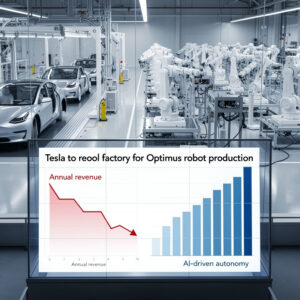
Tesla Axes Flagships for Robot Revolution

Tesla Inc. is shuttering production of its pioneering Model S sedan and Model X crossover next quarter, redirecting precious Fremont factory space to mass-manufacture Optimus humanoid robots. CEO Elon Musk framed the move as an “honorable discharge” for the vehicles that launched the company into the electric-vehicle era, signaling a bold pivot from carmaking to artificial intelligence in the physical world.

During the Q4 2025 earnings call on January 28, 2026, Musk announced: “We’re going to take the Model S and X production space in our Fremont factory and convert that into an Optimus factory with the long-term goal of having a million units a year of Optimus robots.” The decision comes amid Tesla’s first annual revenue decline, with 2025 sales dropping 3% to $94.8 billion and vehicle deliveries falling 9% to 1.64 million units, as reported by Automotive News.

Q4 revenue slid 3% to $24.9 billion, while net income plunged 61% to $840 million. Model S and X sales, bundled with Cybertruck, tumbled 40% to 50,850 units in 2025, representing a tiny fraction of output. In Europe, Model S deliveries cratered 70% to 538 units and Model X fell 63% to 639, per the same report.

Pioneers Fade Amid Declining Demand

The Model S, launched in 2012 at $96,630 including shipping, and Model X, introduced in 2015 with signature falcon-wing doors starting at $101,630, once defined Tesla’s premium aspirations. But they’ve been overshadowed by mass-market Model 3 and Y, which dominated 43% of U.S. EV sales last quarter versus 1.5% for S and X, according to Sherwood News.

Musk called the discontinuation “slightly sad” but necessary as Tesla transitions to autonomy and robotics. “It’s time to basically bring the Model S and X programs to an end with an honorable discharge because we’re really moving into a future that is based on autonomy,” he said, per CNBC. Existing owners can expect long-term support, though custom orders may soon close.

No layoffs are planned; Musk indicated headcount growth at Fremont to support the robot ramp, as noted by USA Today. Fremont Mayor Raj Salwan welcomed the shift, calling it “a vote of confidence in our workforce, supplier ecosystem, and advanced manufacturing base,” via CBS San Francisco.

Optimus Emerges as Core Bet

Optimus, Tesla’s 56 kg, 170 cm tall humanoid, relies on AI for tasks like sorting, lifting, and carrying. Gen 3, the first mass-production design, unveils this quarter, with volume output by late 2026 and external sales in 2027 at under $20,000 per unit. Musk envisions it as the “biggest product of all time,” driving unprecedented economic growth: “If you have ubiquitous AI that is essentially free or close to it and ubiquitous robotics, you will have an explosion in the global economy that is truly beyond all precedent,” he told Euronews.

The Fremont lines, previously yielding 100,000 vehicles yearly, target 1 million Optimus annually despite a “completely new supply chain” with no shared parts, Musk explained to Fox Business. Currently in R&D, Optimus performs basic factory tasks but awaits material deployment.

Tesla plans six new production lines in 2026 across vehicles, robots, energy, and batteries, leveraging existing sites. CFO Vaibhav Taneja forecasted capital expenditures exceeding $20 billion, more than double 2025’s $8.5 billion, including $2 billion in Musk’s xAI to bolster physical AI, per Automotive News.

Financial Pressures Fuel the Pivot

Tesla’s automotive revenue dropped 11% in 2025 amid global EV competition and a U.S. “consumer credit cliff.” Yet Q4 beat estimates with $0.50 adjusted EPS versus $0.45 expected. Full Self-Driving subscriptions doubled to 1.1 million, and robotaxi pilots expanded sans safety drivers in Austin since mid-January 2026, eyeing seven more cities by mid-year, as detailed by The Guardian.

Cybercab, a steerless two-door robotaxi, ramps slowly in Texas from H1 2026. Musk predicts human driving shrinking to 5% or 1%, with autonomy dominating. Morgan Stanley projects over 1 billion humanoids by 2050 in a $5 trillion market, pitting Tesla against Hyundai, BMW, Mercedes, and Mobileye, according to Automotive News.

Analysts see execution risks in unproven scaling to 10 million Optimus yearly by 2027, but the Fremont conversion underscores commitment. Tesla’s shareholder deck lists Optimus as a distinct capacity item, marking its industrial ascent, per AInvest.

Rivals and Market Realities

Hyundai’s Robot Metaplant trains bots for repetitive tasks by 2028, complex assembly by 2030. Mobileye targets $20,000 units at 50,000 annually post-Mentee Robotics acquisition. Tesla claims leads in real-world intelligence and dexterity, eyeing fivefold human productivity as an “infinite money glitch.”

Critics question timelines, given past delays, but Musk insists Optimus learns via observation, verbal cues, or video. Fremont’s evolution boosts California’s robotics hub status, with Model 3/Y lines intact.

As Tesla retools, investors watch Q2 2026 for final S/X units and Optimus prototypes. The bet: robots eclipse cars in transforming global manufacturing and daily life.


from WebProNews https://ift.tt/GBKcSil

Wednesday, 28 January 2026

China’s Robot Surge Targets U.S., Gulf: LimX Challenges Tesla’s Optimus Throne

SHENZHEN, China—As Elon Musk’s Tesla races to deploy its Optimus humanoid robots in factories, Chinese startups like LimX Dynamics are plotting a bolder path: cracking open U.S. and Middle East markets with machines already shipping at scale. LimX founder Will Zhang, a former Ohio State University professor, revealed in an exclusive interview that his firm is finalizing funding from its first Middle East investor, paving the way for thousands of units to land in the region starting this year.

The Shenzhen-based company, backed by Alibaba, JD.com and Lenovo with $69.31 million raised as of July 2025, began delivering its full-sized Oli robot months ago. Base models price at 158,000 yuan ($22,660), undercutting rivals, while developer versions run nearly double at 290,000 yuan. Zhang emphasized partnerships over pure capital: “More than money, I’m focused on local partnerships,” he told CNBC.

LimX’s three-year blueprint kicks off in 2026 with several thousand robots headed to the Middle East for research, development and service trials—building real-world proof points for global sales. U.S. talks with business partners are underway, showcased at CES in Las Vegas, though details remain preliminary. Europe beckons too, with its vast yet splintered opportunities.

LimX’s Tech Edge Sharpens Global Ambitions

Central to LimX’s pitch is its new agentic AI operating system, COSA, unveiled earlier this month. It enables real-time body adjustments—like catching tennis balls or executing voice-commanded somersaults—ditching remote controls for autonomous chains of decisions. “We don’t think it has to be that the U.S. leads and China follows” in innovation, Zhang asserted to CNBC. Rapid progress, he added, means humanoids could work alongside people in five to 10 years.

China’s humanoid dominance is no fluke. Firms led by Shanghai’s AgiBot shipped the lion’s share of last year’s global total—roughly 13,000 units, quintupling 2024 volumes—far eclipsing Tesla and Figure AI, per Omdia data cited in Bloomberg. AgiBot alone moved 5,168 units, followed by Unitree and UBTech.

Morgan Stanley doubled its 2026 China sales forecast to 28,000 units, shifting from government and entertainment buyers to businesses. By 2050, annual sales could hit 54 million units domestically. “We expect sales to businesses to be the key driver this year,” analyst Shen Zhong told CNBC.

Tesla Optimus Faces Mounting Pressure

Tesla shipped Optimus units to business clients last year but holds off public sales until late 2027, Musk said at Davos. “The company will offer them for sale ‘when we are confident that there is very high reliability, very high safety and the range of functionality is also very high,’” he stated, per Axios. Musk envisions “more robots than people,” with Optimus eyeing $20,000-$30,000 pricing.

Yet Chinese rivals undercut on cost and speed. Unitree’s entry-level model sells for $6,000, AgiBot’s scaled-down version $14,000—half Tesla’s target—displayed at CES 2026, where Chinese bots dazzled with table tennis and kung fu, as reported by Times of India. Musk warned in April 2025: “I’m a little concerned that on the leaderboard, ranks 2 through 10 will be Chinese companies.”

AgiBot’s Genie Sim 3.0, built on Nvidia Isaac Sim, slashes training costs and bridges simulation to reality. The firm eyes U.S. expansion for labor-short sectors and promo roles, alongside Japan. Omdia projects global shipments soaring to 2.6 million by 2035.

China’s Supply Chain Arsenal Fuels Export Push

Beijing’s “15th five-year plan” spotlights embodied AI, subsidizing over 150 firms. Unitree preps a $7 billion IPO; UBTech, Hong Kong-listed, eyes 5,000 units in 2026, 10,000 in 2027 after $400 million raised. Xpeng’s Iron humanoid, with 60 joints and human-like gait, hits mass production next year using proprietary chips.

“China currently leads the United States in the early commercialization of humanoid robots,” Horváth partner Andreas Brauchle told CNBC. Supply chains yield cost edges: prototypes now $150,000-$500,000, targeting $20,000-$50,000. RBC Capital pegs global market at $9 trillion by 2050, China over 60%.

U.S. counters lag: Commerce Secretary meetings and potential executive orders loom, but China scales faster amid demographic crunches. Analysts like McKinsey’s Karel Eloot note hand dexterity gaps, yet Chinese demos—often polished—risk bubbles, warns Horváth.

Gulf Gateway Beckons Amid Geopolitical Flux

LimX’s Middle East foray aligns with regional AI bets, like Saudi’s Humaine eyeing data centers. No specific investor named, but Reliable Robotics distributes LimX in UAE, Saudi Arabia and GCC states. 2026 shipments target R&D case studies for services, testing Oli’s voice AI in diverse climes.

U.S. entry leverages CES buzz, local partners mitigating tariffs—echoing EV battles. China dominates shipments (top five firms), Tesla ninth. Figure seventh. As LimX valuation surges post-Middle East cash, Zhang eyes IPO but demurs.

Industry insiders watch warily: China’s manufacturing muscle versus U.S. AI prowess. “The depth of China’s supply chain means companies can develop and manufacture robots at a significant cost advantage,” Counterpoint’s Ethan Qi said to CNBC. The race intensifies, with humanoids poised to reshape labor worldwide.


from WebProNews https://ift.tt/ckAmfId

SK Hynix’s $10 Billion AI Gambit: Reshaping U.S. Chip Power Plays

South Korea’s SK hynix Inc., the world’s top supplier of high-bandwidth memory chips powering Nvidia’s AI accelerators, unveiled plans this week to launch a U.S.-based AI solutions firm with a $10 billion commitment. Tentatively named AI Company or AI Co., the entity will emerge from restructuring its California subsidiary Solidigm, an enterprise solid-state drive maker born from a $9 billion acquisition of Intel’s NAND business in 2021. This move positions SK hynix to centralize SK Group’s AI strategies amid surging demand for memory in data centers.

The announcement, detailed in a PR Newswire release, comes as SK hynix reported record 2025 results: annual sales of 97.1 trillion won ($70.4 billion) and operating profit of 47.2 trillion won, surpassing Samsung Electronics for the first time among Korean listed firms. Fourth-quarter operating profit hit 19.1 trillion won on 32.8 trillion won in revenue, fueled by AI memory shortages, as noted by The Korea Herald.

“The planned establishment of AI Co. is aimed at securing opportunities in the emerging AI era,” SK hynix stated, pledging to “proactively seize opportunities in the upcoming AI era and deliver exceptional value to its partners in AI.” AI Co. will invest in U.S. innovators, forging synergies with SK affiliates like SK Telecom and SK Square, while leveraging HBM leadership—chips essential for overcoming AI data bottlenecks.

Solidigm’s Pivot to AI Frontier

Solidigm will retain its name as AI Co., transferring SSD operations to a new Solidigm Inc. to preserve brand continuity, per the CNBC report on the announcement. This restructuring transforms a storage-focused unit into an AI hub, managing roughly 10 trillion won ($6.92 billion) in overseas AI assets, including stakes in Bill Gates-backed TerraPower, a small modular reactor firm vital for AI power needs, according to BusinessKorea and Reuters.

Preceding media speculation in Maeil Business prompted a regulatory filing where SK hynix confirmed reviewing AI investment options. The firm aims to become a “key partner in the AI data center ecosystem,” accelerating global AI via U.S.-Korea ties. No firm timeline was set, but the official name will follow later in 2026.

SK hynix’s HBM dominance—over 50% market share through 2026, per Goldman Sachs—underpins this expansion. The company mass-produces HBM3E and HBM4, showcased at CES 2026 with 16-layer HBM4 at 48GB capacity, as Justin Kim, President of AI Infra, emphasized customer collaborations for ecosystem value.

Record Profits Fuel Aggressive Bets

AI-driven gains doubled operating profit, with HBM revenue more than doubling yearly. SK hynix outpaced expectations, achieving a 58% Q4 margin rivaling TSMC. This windfall funds not just AI Co., but parallel investments: a $3.87 billion advanced packaging fab in Indiana for HBM production starting 2028, and a 19 trillion won ($13 billion) P&T7 plant in Cheongju, Korea, operational by late 2027.

The Indiana site, in West Lafayette near Purdue University, targets next-gen HBM for AI GPUs like ChatGPT trainers. Cheongju’s M15X fab accelerates to 1c DRAM for HBM4 next month, addressing “tremendous” AI demand, per CEO Sungsoo Ryu in Reuters comments. These facilities form a triad with Icheon, bolstering supply resilience.

X posts echoed the buzz, with users noting U.S. investments amid Trump tariff pressures, linking to Reuters on South Korea’s concessions. Finaxus highlighted SK hynix’s ($SKM) semiconductor push via Yahoo Finance.

Geopolitical Chess in AI Supply Chains

U.S. investments align with Trump administration priorities, following threats of tariffs unless foreign chipmakers build domestically. President Trump signaled flexibility with South Korea on Tuesday, post tariff talks. AI Co. sidesteps domestic capital rules by focusing on foreign assets like TerraPower, revalued amid AI data center power surges.

Competitors scramble: Samsung expands HBM capacity 50% in 2026; Micron eyes New York megafab. SK hynix’s strategy integrates memory with ecosystem plays, from Nvidia partnerships—including an SK Group “AI factory” using CUDA-X for HBM development—to server modules like SOCAMM2.

Morgan Stanley raised 2026 earnings forecasts 56%, citing tight HBM pricing into 2026 from China demand for Nvidia H200s. Bank of America dubs it a “supercycle,” naming SK hynix top pick with DRAM revenue up 51%.

Broader Ecosystem Synergies Emerge

AI Co. will deploy the $10 billion via capital calls, scouting U.S. firms for partnerships enhancing SK’s portfolio. This includes power infrastructure via TerraPower ($250 million SK stake since 2022) and telecom via SKT. Global big tech’s AI race demands high-end memory, positioning SK hynix centrally.

At CES 2026, SK hynix demoed AI system zones visualizing custom HBM, alongside LPDDR6 and CuD prototypes. The company eyes server DDR5 and eSSD growth, with NAND sales rebounding on AI storage.

X chatter from @DJone01 and @tenet_research tied the unit to Nvidia supply chains, underscoring $6.9 billion asset management for long-term AI boom.

Charting AI Memory Dominance

Analysts project HBM3E dominating 2026 shipments at two-thirds, HBM4 ramping via M15X. UBS notes SK hynix as first HBM3E for Google’s TPUs. BofA forecasts memory ASP rises of 33% DRAM, 26% NAND.

SK hynix’s U.S. foothold via AI Co. and Indiana fab challenges TSMC’s packaging lead, offering full-stack HBM solutions. This $10 billion bet, atop domestic mega-investments, cements its pivot from memory vendor to AI enabler, as global demand outstrips supply through 2028.


from WebProNews https://ift.tt/D6aMb1T

Tuesday, 27 January 2026

Microsoft’s Foxconn Redemption: 15 Data Centers Resurrect Wisconsin Ghost Site

In a unanimous vote that signals redemption for one of the most notorious industrial flops in recent U.S. history, the Mount Pleasant, Wisconsin, village board on January 26 approved Microsoft’s plans for 15 new data centers on the sprawling former Foxconn site. The approval covers nearly 9 million square feet of development, with a taxable value surpassing $13 billion, poised to transform the 3,000-acre expanse once promised as a manufacturing mecca into a cornerstone of the artificial intelligence infrastructure boom.

The site, southeast of Milwaukee near Interstate 94, has languished since Foxconn’s 2017 pledge of a $10 billion factory heralded by then-President Donald Trump. That vision evaporated, leaving the village with over $250 million in debt from land acquisitions and infrastructure, and Foxconn employing just 1,000 statewide by 2023. Microsoft began acquiring parcels in 2023 and 2024, building on two existing data centers under construction and now expanding northwest across two lots on Durand Avenue and International Drive. CNBC reported the board’s swift endorsement after the village planning commission’s prior unanimous nod on January 21.

Foxconn’s Shadow Fades Amid AI Surge

Village President David DeGroot defended the project’s longevity during public comments, pushing back against a critic who called jobs temporary. “I’m addressing this to all of the union folks that are here. When I heard that these jobs are temporary from somebody, if I was you, I would take umbrage to that, because it’s my understanding that you are going to be out there on those sites for the next 10 years, doing your jobs, plying your trade, and I don’t see anything temporary in 10 years,” DeGroot said, as six supporters outnumbered three opponents. Community Development Director Samuel Schultz assured no extra water beyond the 8.4 million gallons annually allocated from Racine, fitting within existing entitlements.

Microsoft’s footprint here builds on over $7.3 billion committed to date, including a $3.3 billion first-phase AI data center announced with President Joe Biden in 2024 and a $4 billion second site revealed in September 2025 by Wisconsin native Brad Smith, Microsoft’s president. Each new building dwarfs a Walmart Supercenter at over 560,000 square feet—15 equate to 40 such stores—per village documents reviewed by the Milwaukee Journal Sentinel. Construction could span years, with final engineering plans and permits next.

Power and Water Demands Test Local Limits

The expansion requires three new substations, amplifying concerns over energy and water in a region near Lake Michigan. Microsoft’s existing campus peaks at 702,000 gallons daily or 8.4 million yearly, with first-phase estimates at 234,000 daily, drawn from Racine Water Utility under strict Department of Natural Resources rules for return to watersheds. Smith pledged in a “community-first” AI initiative: “We will minimize our water use, and we will replenish more of your water than we will use.” The company supports rate structures shielding residents from power cost hikes, partnering on solar offsets and grid modernization with MISO, as noted by Reuters.

Clean Wisconsin has sued Racine for records, citing opacity amid broader alarms that Mount Pleasant and a Vantage project nearby could demand 3.9 gigawatts—exceeding all Wisconsin homes’ usage. Yet Mount Pleasant Trustee Ram Bhatia highlighted pre-existing Foxconn infrastructure mitigating issues: “We have built the infrastructure… most of the concern that our community had were addressed at that time.” Resident Alfonso Gardner praised Smith’s roots: “They’re the third largest company… Brad has a good heart. He was born and raised here.” WISN covered the warm reception, contrasting Caledonia’s opposition that scrapped Microsoft’s northern plans.

Economic Lifeline from AI Ambitions

Tax revenue could reach tens of millions annually, with Microsoft guaranteeing $1.4 billion assessed value by 2028 in key tax districts, per Racine County Economic Development Corp. Proceeds fund $250 million debts, creek restorations, STEM via Gateway Technical College, and more. Foxconn, retaining Area I operations, released land in Areas II and III, investing over $1 billion total. Prior phases promise 800-2,300 union construction jobs lasting a decade, though operations lean automated at 500 permanent roles.

Smith credits the site’s readiness: “Foxconn wasn’t able to deliver against the vision. But… it created a foundation. And that is an indispensable part of what brought Microsoft to Wisconsin.” This aligns with hyperscalers’ global race, Microsoft’s $80 billion fiscal 2026 capex fueling Azure and OpenAI ties amid power crunches elsewhere. Mount Pleasant’s Plan Commission fast-tracked reviews, with FOX6 Milwaukee dubbing it a budding hub.

Broader Ripples in Tech Infrastructure Wars

Approvals coincide with Microsoft’s earnings eve and Maia 200 chip unveil, underscoring AI urgency despite occasional pauses—like 2025 halts in Wisconsin and beyond for demand calibration. The Racine County Eye sees Microsoft as the largest taxpayer, with union work sustaining locals. Yet environmental watchdogs decry noise, grid strain, and Great Lakes diversions echoing Foxconn’s 7 million daily gallon bid. Village mandates architectural tweaks, lighting, parking, and full utility compliance.

As Microsoft submits permits, the site evolves from “Wisconn Valley” bust to AI powerhouse, blending redemption economics with tech’s voracious needs. Officials like DeGroot eye closure of Foxconn-era districts early, repaying bonds and spurring clusters. RCEDC frames it as fulfilling 2017’s tech zone dream through billions in private capital.


from WebProNews https://ift.tt/FCQ0SKD

Monday, 26 January 2026

AI’s Workplace Creep: Daily Users Hit 12%, But Half Shun It Entirely

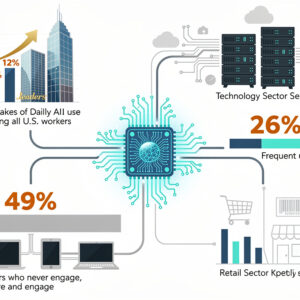
In the closing quarter of 2025, a subtle shift emerged in American workplaces: 12% of employed U.S. adults reported using artificial intelligence daily on the job, up from 10% in the third quarter and 8% in the second, according to Gallup. Yet nearly half—49%—said they never touch AI in their roles, underscoring a stark divide in adoption. Frequent use, defined as at least a few times weekly, climbed to 26%, a three-point gain, while overall usage held steady after earlier surges.

This plateau in total adoption signals maturation among early adopters, even as barriers persist for others. Gallup’s survey of 22,368 employed adults, conducted October 30 to November 13, 2025, via its probability-based panel, carries a margin of error of plus or minus 1 percentage point. The data reveals deepening engagement in select pockets, with leaders and knowledge workers pulling ahead.

Leaders Surge Ahead in AI Reliance

Executives and leaders reported 69% total AI use—at least a few times yearly—compared to 55% for managers and 40% for individual contributors. Frequent use among leaders hit 44%, far outpacing the 30% for managers and 23% for individual contributors, per Gallup. This hierarchy suggests top-down momentum, yet broad rollout lags.

Remote-capable roles showed 66% total use, including 40% frequent and 19% daily, versus 32% total, 17% frequent, and 7% daily in non-remote positions. Knowledge-based sectors dominate: technology at 77% total (57% frequent, 31% daily), finance leaping six points to 64%, and professional services up five to 62% (36% frequent), as detailed in the Gallup analysis.

Retail trails at 33% total (19% frequent, 10% daily), with manufacturing around 43% after a three-point Q4 bump. These disparities highlight how AI embeds in desk-bound, cerebral tasks but struggles in frontline operations.

Industry Fault Lines Exposed

Technology workers lead with about six in 10 using AI frequently and three in 10 daily, though growth may plateau after 2024-2025 spikes, noted AP News citing Gallup. Chatbots and virtual assistants power 61% of workplace AI tasks, followed by consolidating information or generating ideas at four in 10 users.

Real-world examples illustrate the grind: Home Depot associate Gene Walinski taps AI hourly on his phone for supply queries, saying, “I think my job would suffer if I couldn’t [use AI] because there would be a lot of shrugged shoulders and ‘I don’t know’ and customers don’t want to hear that,” per AP News. Investment banker Andrea Tanzi at Bank of America synthesizes hours-long documents in minutes via internal tools like Erica.

High school art teacher Joyce Hatzidakis refines parent notes with Google Gemini, noting fewer complaints: “I can scribble out a note and not worry about what I say and then tell it what tone I want.” Yet pastor Rev. Michael Bingham rejects AI for sermons, calling chatbot outputs “gibberish” and insisting, “You don’t want a machine, you want a human being.”

Organizational Haze Persists

Only 38% of employees report employer AI implementation for productivity, matching Q3 levels, with 41% saying none and 21% unsure. This opacity fuels uneven uptake, as Gallup observes. Since Q2 2023, frequent use has doubled in remote roles but remains modest elsewhere.

Economist Sam Manning of the Centre for the Governance of AI warns of risks for 6.1 million vulnerable workers in clerical roles—mostly women, older, in smaller cities—who lack adaptable skills: “If their skills are automated, they have less transferable skills to other jobs and they have a lower savings… An income shock could be much more harmful,” he told AP News.

Job fears linger, but Gallup’s separate 2025 survey found half deem job loss from AI “not at all likely” in five years, down from six in 10 in 2023. PwC’s 2025 Global AI Jobs Barometer, analyzing a billion job ads, shows AI-exposed sectors accelerating revenue since ChatGPT’s 2022 rise.

Tools and Tasks in Focus

Among users, practical applications rule: email drafting, code writing, document summaries, image creation. Advanced coding aids appeal to 22% of frequent users versus 8% casuals, per earlier Gallup data echoed in eWeek. Q3 2025 saw 45% total use, up from 40%, with frequent at 23%.

LinkedIn commentators like Joben Kronebusch stress practical integration: “Adoption requires strategy beyond pilots,” linking to Gallup in his post. LaShonna Dorsey notes leaders and remote roles advance, polling followers on usage.

McKinsey’s 2025 State of AI survey of 1,993 global respondents found 88% organizational use in at least one function, but only 33% scaling past pilots, aligning with Gallup’s employee-side flatline, as reported by WebProNews.

Broader Economic Ripples

Anthropic’s Economic Index pegs 49% of U.S. jobs using AI for 25% of tasks, up from 36% early 2025, with augmentation trumping automation at 52%. Software debugging leads at 6% usage. Pew Research in October 2025 found 21% worker AI use, rising to 28% among bachelor’s holders.

Despite hype, Gallup Q3 barriers like unclear value (16%) endure. Fortune reports tech daily/regular use ballooned since 2023 but hints at plateau. Business Insider lists top uses: info consolidation, idea generation.

As 2026 dawns, workplaces face imperatives: tailor AI for roles, clarify policies, train laggards. The 12% daily cadre deepens reliance, but bridging the 49% non-users demands more than tools—it requires proving value across the board.


from WebProNews https://ift.tt/4KN9qId

Sunday, 25 January 2026

Set Up a Signing Order: Who Signs First and Why It Matters

Getting documents signed should not feel like herding cats, but without a clear signing order, that’s exactly what happens. The sequence in which people sign contracts, agreements, and legal documents directly impacts turnaround time, legal validity, and workflow efficiency. Businesses that establish proper signing hierarchies process documents faster than those using ad-hoc approaches, but speed is not the only benefit of setting up a signing order.

Why Signing Order Actually Matters

Many people assume that if they know how to esign a pdf and have the tools to do it, the signing sequence is just a formal afterthought. It’s not. Legal documents often require specific signing sequences to maintain validity. 

For instance, witnesses must sign after the primary parties, and notaries always sign last. Financial agreements typically require approval from multiple levels of management in hierarchical order. Employment contracts may need HR review before an executive’s final signature. When these sequences get disrupted, the entire document can become legally questionable.

Besides legal requirements, a signing order affects the practical workflow. A purchasing agreement that goes to the CFO before the department head has reviewed it creates bottlenecks. An NDA sent to five people simultaneously without clear instructions leads to confusion about who should act first. These workflow breakdowns waste time and create unnecessary delays that compound across multiple documents.

Common Signing Sequence Scenarios

Different document types follow different logic for signing order:

  • Vendor contracts: The requesting department signs first to confirm requirements, followed by procurement, legal review, and finally executive approval based on dollar thresholds.
  • Employment agreements: HR prepares and reviews first, the hiring manager signs next, the new employee signs third, and executive leadership signs last for final authorization.
  • Real estate transactions: Buyers typically sign first to make their offer official, sellers sign to accept terms, and then attorneys or escrow agents add their signatures.
  • Multi-party agreements: The initiating party signs first, followed by other parties in order of their involvement or stake in the agreement.

These patterns exist because they mirror organizational hierarchies and legal requirements while maintaining clear accountability at each stage.

The Role of Digital Signatures in Modern Signing Workflows

Digital signature platforms transform document signing by making order enforcement automatic rather than manual. Before electronic systems, maintaining proper signing sequences meant physically passing documents from desk to desk or mailing them between locations. One person forgetting to forward the document could stall everything for days.

Electronic signature solutions build signing order directly into the workflow. The system automatically sends the document to the next person only after the previous signer completes their part. This eliminates the coordination headaches that plagued paper-based processes. The technology also creates automatic audit trails showing exactly when each person signed and in what order, which proves invaluable for compliance documentation.

Security features in modern e-signature platforms verify signer identity through methods like email authentication, SMS codes, or knowledge-based verification. This ensures that the person signing fourth is actually authorized to do so, not someone who happened to receive a forwarded email. The system enforces the predetermined sequence regardless of who tries to access the document.

Set Up Your Signing Order

The right sequence should consider both legal requirements and internal approval structures. Here is an example of how businesses can set up a signing order.

Identify Required Signers

Start by listing everyone who needs to sign based on the document type and internal policies. For most business contracts, this includes the document originator, necessary approvers based on spending authority, legal counsel for certain dollar amounts, and final executive signoff. Don’t include people who only need to receive copies for their records — they can get notification after completion instead of cluttering the signing chain.

Determine the Correct Sequence

The signing order should follow these general principles:

  • Preparers before approvers: The person who drafted or requested the document should sign first to confirm completeness.
  • Lower authority before higher authority: Department managers sign before VPs, VPs sign before C-suite executives.
  • Internal before external: Get all internal approvals completed before sending to outside parties like vendors or clients.
  • Principals before witnesses: The primary parties to an agreement sign before any witnesses or notaries add their attestations.

Also, check if your industry or document type has specific legal requirements for a signing order — real estate, healthcare, and financial services often have strict regulations.

Build Flexibility Into the Process

While sequence matters, rigidity creates problems. Some platforms allow parallel signing, where multiple people at the same authority level can sign simultaneously instead of waiting for each other. This works well when you need three department heads to approve something, and their order relative to each other doesn’t matter.

Consider setting up conditional routing where the signing path changes based on document value or type. A purchase under $5,000 might only need two signatures, while anything over $50,000 triggers additional approval steps automatically.

What Happens When Someone Signs Out of Order

Signing sequence violations create real consequences. In the best case, you catch the error and simply void the document to start over. In worst-case scenarios, the improperly signed document moves forward, potentially creating legal vulnerabilities. A contract where the witness signed before the principal parties did might face challenges in court. An employment agreement signed by an executive before HR reviewed it could contain problematic clauses that should have been caught.

The financial impact adds up quickly. Documents that need to be re-executed because of signing order errors waste time across multiple departments — someone has to identify the problem, notify all parties, void the incorrect version, and restart the entire process. Multiply these incidents across dozens of documents per month, and poor signing order management becomes a drain on resources that affects both immediate costs and long-term productivity.

Make Signing Order Work for Your Organization

The key to effective signing sequences is documentation and automation. Create written policies that specify the signing order for each common document type your organization uses. Include this information in procedure manuals and employee handbooks so nobody has to guess who should sign when.

Train team members on why the signing order matters, not just what the order should be. When people understand the legal and practical reasons behind the sequence, they’re more likely to follow it correctly. Make it someone’s job to review and update signing order procedures as your organization grows or restructures.

Use technology to enforce what the policy establishes. Manual processes rely on people remembering the correct sequence every time, which inevitably fails. Digital platforms make the correct order automatic, removing human error from the equation. Most importantly, digital platforms create documentation that proves compliance when audits or legal questions arise.


from WebProNews https://ift.tt/ZNqDojK

Saturday, 24 January 2026

Silicon Symphonies: AI’s Audacious Bid for the Soul of Classical Music

BONN, Germany — In a concert hall where Ludwig van Beethoven himself once walked, an unfamiliar melody filled the air in October 2021. It was the sound of his Tenth Symphony, a work the maestro left as mere sketches upon his death in 1827. For nearly two centuries, it remained a tantalizing ‘what if’. But on this night, a full orchestra performed its third and fourth movements, brought to life not by a rediscovered manuscript, but by an artificial intelligence that had painstakingly learned the composer’s unique musical soul.

The project, a complex collaboration between musicologists and computer scientists, represents a new frontier in one of humanity’s oldest art forms. As generative AI challenges the nature of creativity in visual art and literature, its arrival in the staid, traditional world of classical music is sparking a profound debate. The core question is no longer whether an AI *can* compose music that is technically proficient, but whether it can ever imbue its work with the emotional depth, intention, and lived experience that defines great art. The answer could reshape how music is created, valued, and even understood.

An Algorithm Takes the Podium, Challenging Centuries of Compositional Tradition

The technology driving this disruption has advanced at a breathtaking pace. At the forefront is AIVA (Artificial Intelligence Virtual Artist), a system developed in Luxembourg that has achieved a remarkable milestone. By training on a massive dataset of compositions from Bach to Stravinsky, AIVA learns the intricate rules of harmony, melody, and structure. Its prowess was formally recognized when it became the first AI to be registered as a composer with France’s influential collecting society, SACEM, granting it the ability to own its copyrights and earn royalties, as detailed by The Next Web. This move propelled AI from a mere experimental tool to a legitimate, legal entity in the creative economy.

These systems operate on deep learning principles, identifying statistical patterns in existing music to generate new pieces that are stylistically coherent. When tasked with completing Beethoven’s Tenth, the AI was not just mimicking his famous works. It was trained on his entire oeuvre and the music of his contemporaries to understand his creative process—how he developed a small melodic fragment into a grand symphonic statement. The result was a composition that many found compelling, a testament to the technology’s sophistication. As noted in a report by The Guardian, the project’s leader declared it a success, suggesting the AI had managed to continue Beethoven’s work in a way that the composer himself might have done.

The Unsettling Question of Authenticity and the Ghost in the Musical Machine

Despite the technical triumph, the AI-completed symphony was met with a mix of awe and skepticism. Critics and musicians questioned whether the result was a genuine extension of Beethoven’s genius or a sophisticated pastiche—a high-tech forgery that captures the style but misses the spirit. The project highlights a central philosophical impasse: can an algorithm, which has no consciousness, no emotional life, and no experience of joy or suffering, truly create art? Art, many argue, is a fundamentally human act of communication, a transmission of feeling and experience from creator to listener.

This skepticism is not unfounded. Some critics found the AI’s creation to be emotionally hollow, a collection of well-formed musical phrases lacking the essential spark of human ingenuity. Writing for The New York Times, one reviewer described the endeavor as an exploration of the “futility of A.I. art,” suggesting that while the machine could replicate Beethoven’s harmonic language and developmental techniques, it could not reproduce the fierce, defiant humanity that animates his greatest works. The algorithm can learn what Beethoven *did*, but it cannot know *why* he did it, a distinction that may prove to be the unbridgeable gap between simulation and creation.

Beyond Replacement: Composers Embracing AI as a Powerful Collaborative Tool

While the specter of AI replacing human composers captures headlines, a more nuanced reality is unfolding in studios and conservatories. Many forward-thinking artists view AI not as a competitor, but as a revolutionary new instrument or a tireless collaborator. It can be used to generate novel melodic ideas, break through creative blocks, or handle the laborious task of orchestration, freeing the human composer to focus on the broader emotional and structural arc of a piece. The AI becomes a partner in a creative dialogue, offering possibilities that a human might not have considered.

This collaborative model reframes the technology from an existential threat to an augmentation of human creativity. As explained by a music professor in an article for The Conversation, AI tools can democratize the basics of composition, giving aspiring creators a platform to experiment with complex musical structures without years of formal theory training. In this view, AI doesn’t diminish the role of the composer; it expands the very definition of what it means to compose, creating a hybrid artistry where human intention guides machine intelligence to explore uncharted musical territory.

The Sonic Boom of New Models and the Uncharted Legal Territory Ahead

The technology itself continues to evolve, moving beyond stylistic replication to on-demand generation from simple text prompts. Systems like Google’s MusicLM can now translate a descriptive phrase like “a calming violin melody backed by a distorted guitar riff” into a plausible audio clip. This leap, detailed by Ars Technica, points to a future where bespoke music generation is instantaneous and accessible to all, with profound implications for film scoring, game soundtracks, and personal entertainment. The focus is shifting from creating a single masterpiece to providing an endless stream of functional, customized audio.

This rapid progress is forcing a reckoning with complex legal and ethical questions. If an AI is trained on a library of copyrighted music, who owns the output? How should royalties be distributed when a human uses an AI-generated motif in their own prize-winning composition? The registration of AIVA with a collecting society was a first step, but it opened a Pandora’s box of unresolved issues around ownership, influence, and compensation. As algorithms become more integrated into the creative process, the music industry will need to establish new frameworks to navigate this unprecedented fusion of human and machine authorship, ensuring that human artists are not left behind in the rush toward automated creation.


from WebProNews https://ift.tt/w8oFGtp