
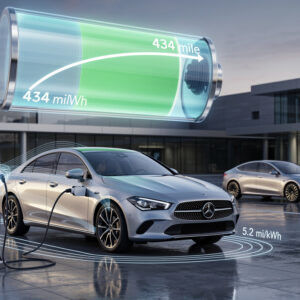
In the ever-evolving world of electric vehicles, Mercedes-Benz has long positioned itself as a pioneer of luxury and innovation. But with the introduction of the 2026 CLA electric sedan, the German automaker is challenging conventions in a segment traditionally dominated by mass-market players. Priced starting under $48,000, this entry-level EV isn’t just an affordable gateway to the brand—it’s a bold statement on efficiency, technology, and the future of premium electrification. Drawing from the company’s Vision EQXX concept, the CLA EV achieves remarkable real-world performance, including a tested range of 434 miles, far surpassing its EPA estimates.
This achievement stems from Mercedes’ focus on aerodynamic excellence and energy optimization. The car’s drag coefficient of 0.21 rivals some of the sleekest designs in the industry, allowing it to slice through the air with minimal resistance. Efficiency ratings hover around 5.2 miles per kilowatt-hour, making it one of the most frugal luxury EVs on the market. Reviews highlight how this efficiency translates to practical benefits, such as adding 200 miles of range in just 10 minutes of charging at up to 320 kW speeds.
Beyond raw specs, the CLA EV introduces a suite of advanced features that blend cutting-edge software with hardware refinements. Its 800-volt architecture enables rapid charging, while the optional two-speed gearbox in higher trims enhances highway performance without sacrificing urban agility. Early drives reveal a composed ride, with the car’s low center of gravity providing handling that feels more like a sports sedan than an entry-level model.
Efficiency Redefined in Electric Luxury
Mercedes’ strategy with the CLA EV marks a departure from the power-hungry approaches of some competitors. Instead of chasing horsepower figures, the company prioritized range and usability, resulting in a vehicle that promises up to 492 miles under WLTP testing standards. This focus on “less is more” has been praised in initial assessments, where the sedan delivered a pleasant driving experience without overwhelming acceleration.
Publications like Car and Driver have noted that this efficiency-centric design makes the CLA EV a standout in real-world scenarios, emphasizing its potential for long-distance travel. The battery, an 85 kWh unit, is optimized for minimal energy loss, incorporating silicon-anode technology for higher density and faster charging times.
Industry insiders point out that this model could reshape consumer expectations in the premium EV space. By achieving diesel-like efficiency in an electric format—around 5.0 miles per kWh—the CLA EV bridges the gap between traditional combustion engines and battery power, potentially attracting buyers hesitant about range anxiety.
Technological Innovations Driving Change
At the heart of the CLA EV’s appeal is its integration of Mercedes’ new MB.OS operating system, which leverages AI for personalized driving experiences. This platform, debuting in the CLA lineup, includes over-the-air updates and advanced driver assistance features that evolve with user habits. The infotainment system, powered by a massive hyperscreen option, offers seamless connectivity, rivaling tech-forward rivals.
Reviews from sources such as Edmunds describe the interior as a tech haven, with ambient lighting, augmented reality navigation, and voice controls that feel intuitive. The car’s electric powertrain delivers 208 horsepower in base form, with all-wheel-drive variants pushing up to 536 horsepower in AMG-tuned models, ensuring it appeals to both efficiency seekers and performance enthusiasts.
Moreover, the CLA EV’s modular architecture allows for hybrid variants, blending a 1.5-liter Miller cycle engine with electric assistance for combined outputs of 208 hp. This versatility positions Mercedes to capture a broader market, including regions where full electrification infrastructure lags.
Market Positioning and Competitive Edge
Priced competitively against models like the Tesla Model 3, the CLA EV starts at a point that undercuts many luxury EVs while offering Mercedes’ signature refinement. Business Insider’s comparison highlights how, despite a $5,000 premium over the Model 3’s top trim, the CLA provides a distinctly European driving feel—smooth, composed, and less about raw speed.
This pricing strategy is part of Mercedes’ broader push to democratize advanced EV tech. As noted in reports from Electrek, the CLA’s real-world range test of 434 miles crushes expectations, positioning it as a leader in efficiency rather than outright power. The “one-liter car” moniker, referencing its energy equivalence to a highly efficient gasoline vehicle, underscores this achievement.
For industry observers, the CLA EV represents a pivot in Mercedes’ electrification roadmap. After earlier models like the EQS faced criticism for polarizing designs and high costs, the CLA’s sleek coupe-like silhouette and accessible price point signal a more consumer-focused approach.
Impact on Broader Industry Trends
The CLA EV’s debut comes at a time when automakers are grappling with slowing EV adoption rates and increasing competition from Chinese manufacturers. By trickling down technologies from flagship models—like the heat pump system and regenerative braking refined from the EQXX—Mercedes is flipping the traditional innovation hierarchy. Archyde’s analysis suggests this could accelerate the adoption of premium features in lower segments, forcing rivals to rethink their strategies.
Posts on X from automotive enthusiasts and analysts reflect growing excitement, with users praising the CLA’s 473-mile range in wagon variants and its rapid charging capabilities. This social buzz indicates strong consumer interest, potentially boosting Mercedes’ market share in the compact luxury EV category.
Furthermore, the CLA’s emphasis on sustainability extends to its production. Mercedes claims the vehicle uses recycled materials in its interior, aligning with global pushes for greener manufacturing. This holistic approach could set new benchmarks for environmental responsibility in the sector.
Challenges and Future Prospects
Despite its strengths, the CLA EV isn’t without hurdles. Some reviews, including those from Carwow, point to potential drawbacks like limited rear legroom due to the sloping roofline, which might deter families. Charging infrastructure remains a concern in certain markets, though the car’s efficiency mitigates this somewhat.
Competitively, while it outperforms EPA estimates in tests by Edmunds—achieving 434 miles versus the official 366—the real test will be consumer uptake. Mercedes’ decision to offer both pure EV and hybrid options in the CLA lineup provides flexibility, but it also risks diluting the brand’s all-electric messaging.
Looking ahead, the CLA EV could influence Mercedes’ entire portfolio. With plans for wagon and AMG versions, it lays the groundwork for a family of efficient, tech-laden vehicles. Industry experts speculate this model might pressure competitors like BMW and Audi to accelerate their own entry-level EV developments.
Real-World Performance and User Experiences
Hands-on evaluations paint a vivid picture of the CLA EV’s capabilities. In Edmunds’ range test, the car not only exceeded expectations but also demonstrated impressive charging efficiency, adding significant mileage in short sessions. This real-world prowess is echoed in drives reported by RAC Drive, where testers lauded its balance of comfort and dynamics.
User sentiments on platforms like X highlight the excitement around features such as the 0-60 mph acceleration in 5.0 seconds for mid-tier models and the top speed of around 140 mph. These attributes make the CLA EV appealing for daily commutes and weekend getaways alike.
As Mercedes rolls out the CLA globally, its impact on sales figures will be closely watched. Early indicators suggest it could capture a significant portion of the premium EV market, especially among younger buyers seeking luxury without exorbitant costs.
Economic and Strategic Implications
From a business perspective, the CLA EV underscores Mercedes’ commitment to profitability in electrification. By leveraging economies of scale from its new MMA platform, the company aims to reduce production costs while maintaining high margins. This is crucial as EV subsidies wane in key markets.
Analyses from What Car? compare the CLA favorably to rivals, noting its superior specs and pricing. The hybrid variant, with diesel-level fuel efficiency, further broadens its appeal in transitional markets.
Strategically, this launch positions Mercedes as a leader in accessible innovation. As noted in Digital Trends’ in-depth feature, the CLA EV challenges the notion that cutting-edge tech must start at the top, potentially reshaping how automakers introduce advancements.
The Road Ahead for Mercedes and EVs
The CLA EV’s hybrid sibling, set for 2027, integrates a 48V mild-hybrid system with AI-driven efficiencies, offering a bridge for consumers not ready for full electrification. Posts on X from sources like Autocar emphasize the lineup’s versatility, with ranges up to 492 miles in EV form and hybrid efficiencies rivaling traditional diesels.
This dual approach could help Mercedes navigate regulatory pressures, such as Europe’s tightening emissions standards. By offering choices, the brand mitigates risks associated with fluctuating battery material costs and supply chains.
Ultimately, the CLA series embodies Mercedes’ vision for the future: efficient, intelligent, and inclusive. As it hits showrooms, it may well redefine what an entry-level luxury EV can be, influencing the industry’s direction for years to come.
In blending heritage with forward-thinking design, Mercedes has crafted a vehicle that doesn’t just compete—it innovates. Industry watchers will be keen to see if this game-changer lives up to its promise in a crowded field.
from WebProNews https://ift.tt/R2fZ6Qk


No comments:
Post a Comment